AI Screen Writer vs Saga AI
In the battle of AI Screen Writer vs Saga AI, which AI Writing Assistant tool comes out on top? We compare reviews, pricing, alternatives, upvotes, features, and more.
Between AI Screen Writer and Saga AI, which one is superior?
Upon comparing AI Screen Writer with Saga AI, which are both AI-powered writing assistant tools, With more upvotes, AI Screen Writer is the preferred choice. AI Screen Writer has garnered 6 upvotes, and Saga AI has garnered 4 upvotes.
Disagree with the result? Upvote your favorite tool and help it win!
AI Screen Writer
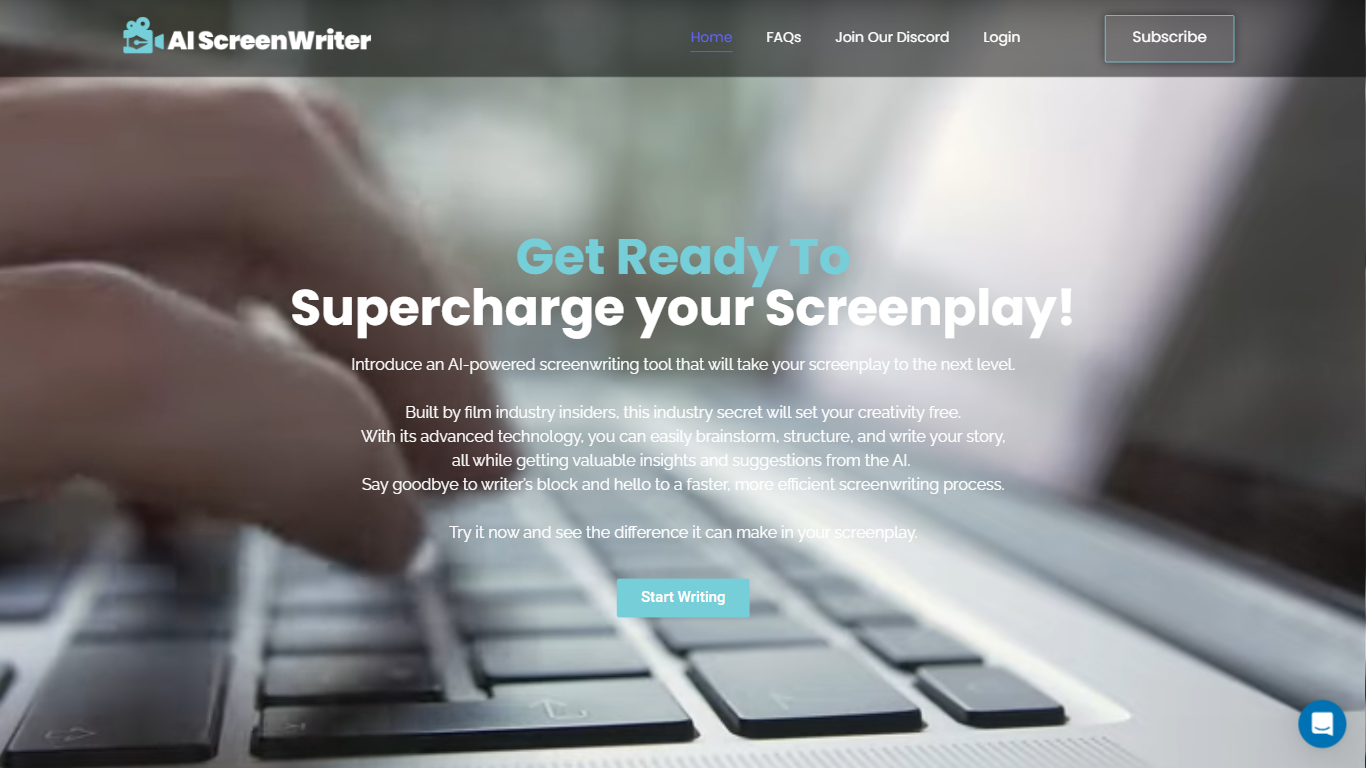

What is AI Screen Writer?
AI Screen Writer is a writing assistant for screenplays, story outlines, and character sheets. The web app walks you through character sheets, story outlines, and individual film scenes, with an editor that lets you revise generated script text instead of treating the output as final.
General-purpose writing tools can draft prose, but they rarely structure a screenplay workflow around character sheets, beat outlines, and scene generation in one project. AI Screen Writer also adds realtime output, in-app human support, and eight interface languages (Spanish, French, German, Portuguese, Tamil, Hindi, Standard Chinese, and Russian). GlassFrog Productions built it in-house; the team cites credits on Avatar, District 9, Mad Max, The Lego Movie, Cyberpunk 2077, and Total Recall.
Screenwriters, indie filmmakers, and YouTube scriptwriters are the core audience. Access runs on monthly token credits with a 10,000-token free trial, and generated content is treated as user-owned per the FAQ. Projects stay on AI Screen Writer servers while your account is active, with downloads recommended for backup.
Saga AI
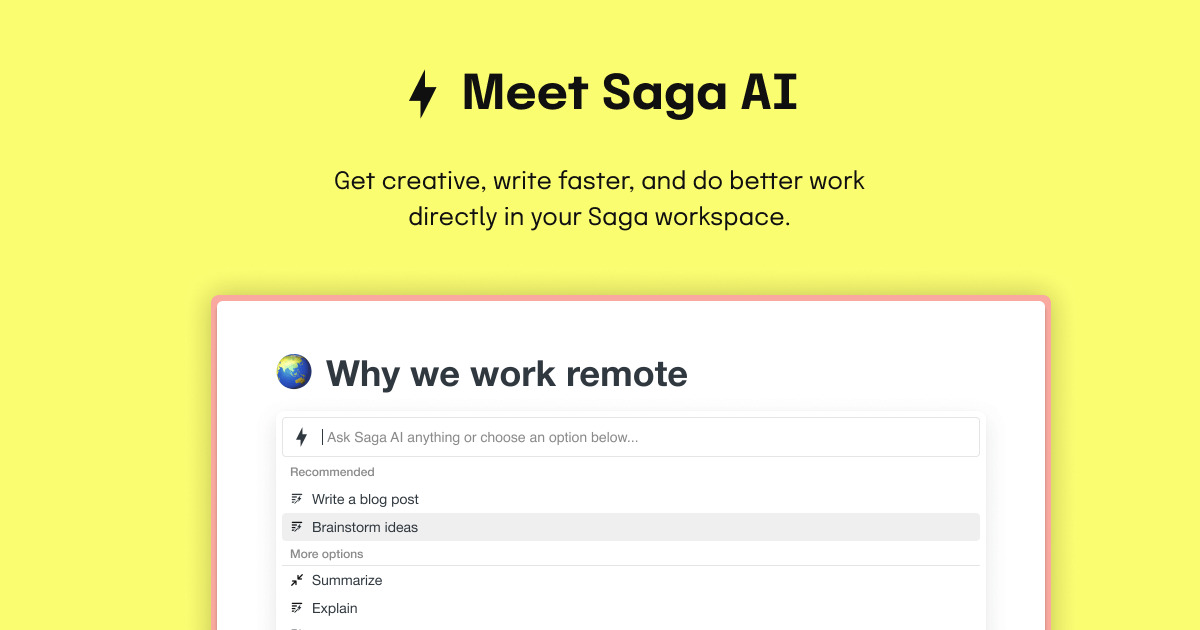
What is Saga AI?
Saga AI is the built-in writing assistant inside Saga, a workspace for notes, documents, and tasks. You draft content, fix grammar, translate text, summarize pages, and ask questions without leaving the editor. Type @ or / to open Ask AI, or select text and run rewrite, summarize, or tone commands from the Saga AI menu.
Most writing assistants sit in a separate browser tab, which means copying context back and forth. Saga AI runs inside the same pages you already work in, and the page mention feature lets it read your existing notes to answer questions or rewrite in your style. That puts it closer to Notion AI than Grammarly, though Saga also ships Mac and Windows desktop apps and targets teams who want notes and AI in one place.
Product managers use it for meeting note summaries and project briefs. Marketing teams draft blogs, emails, and social posts. Students and remote teams lean on translation across 20+ languages and one-click grammar fixes. The free plan covers 5,000 AI words per month for workspaces with up to three members.
AI Screen Writer Upvotes
Saga AI Upvotes
AI Screen Writer Top Features
Character sheet, story outline, and film scene generators in one project workflow
Edit generated screenplay, script, or character sheet text after AI output
Realtime Output streams content as the model generates it
Interface supports 8 languages including Spanish, French, German, and Hindi
Free trial includes 10,000 tokens (roughly 7,500 generated words per FAQ)
Paid plans from $10 to $50 per month with 100,000 to 500,000 monthly tokens
In-app human support without leaving the writing workspace
Saga AI Top Features
Free plan includes 5,000 Saga AI words per month for workspaces with up to 3 members
Standard plan at $6 per member per month (billed annually) unlocks unlimited Saga AI
Translate selected text to 20+ languages in one click from the editor
Mention existing Saga pages so AI answers and rewrites use your workspace content
Each AI conversation supports up to about 16,000 words of input and output combined
Uses OpenAI and Anthropic models, with GPT-5.2 listed on the Saga AI product page
AI Screen Writer Category
- Writing Assistant
Saga AI Category
- Writing Assistant
AI Screen Writer Pricing Type
- Freemium
Saga AI Pricing Type
- Freemium