Apera AI vs CSM
In the clash of Apera AI vs CSM, which AI 3D Generation tool emerges victorious? We assess reviews, pricing, alternatives, features, upvotes, and more.
When we put Apera AI and CSM head to head, which one emerges as the victor?
Let's take a closer look at Apera AI and CSM, both of which are AI-driven 3d generation tools, and see what sets them apart. The upvote count is neck and neck for both Apera AI and CSM. Every vote counts! Cast yours and contribute to the decision of the winner.
You don't agree with the result? Cast your vote to help us decide!
Apera AI
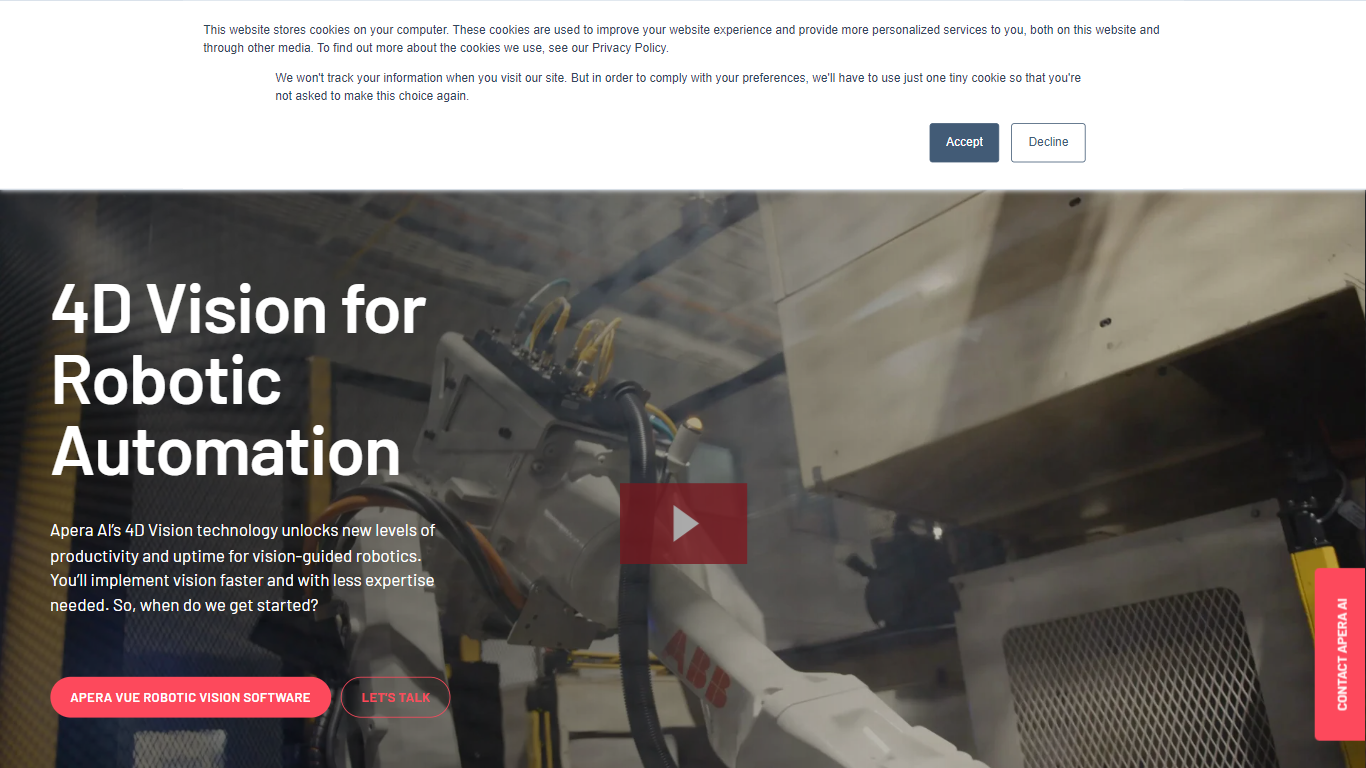

What is Apera AI?
Apera AI sells 4D Vision software and hardware that guides industrial robots through bin picking, assembly, machine tending, sorting, and packaging tasks. Its Vue robotic vision platform combines pairs of 2D cameras into a 3D scene model, then runs proprietary neural networks to pick the most graspable part and send path plans to the robot controller in as little as 0.3 seconds.
Traditional machine vision often needs reference photos or fails on shiny, clear, or randomly piled parts. Apera AI trains objects from CAD models or 3D scans using synthetic data, targets 99.99% reliability before delivery, and handles clear, translucent, and reflective parts in bright, dark, or outdoor lighting. One Vue computer can run up to four camera pairs, and commissioning after training takes about 15 minutes of calibration.
The company targets automotive, medical device, and metal fabrication plants plus the system integrators who build their cells. Projects follow a four-step Scope, Design, Install, and Support process with certified partners, a spec-based refund guarantee on vision programs, and a 30-minute support callback pledge during business hours.
CSM
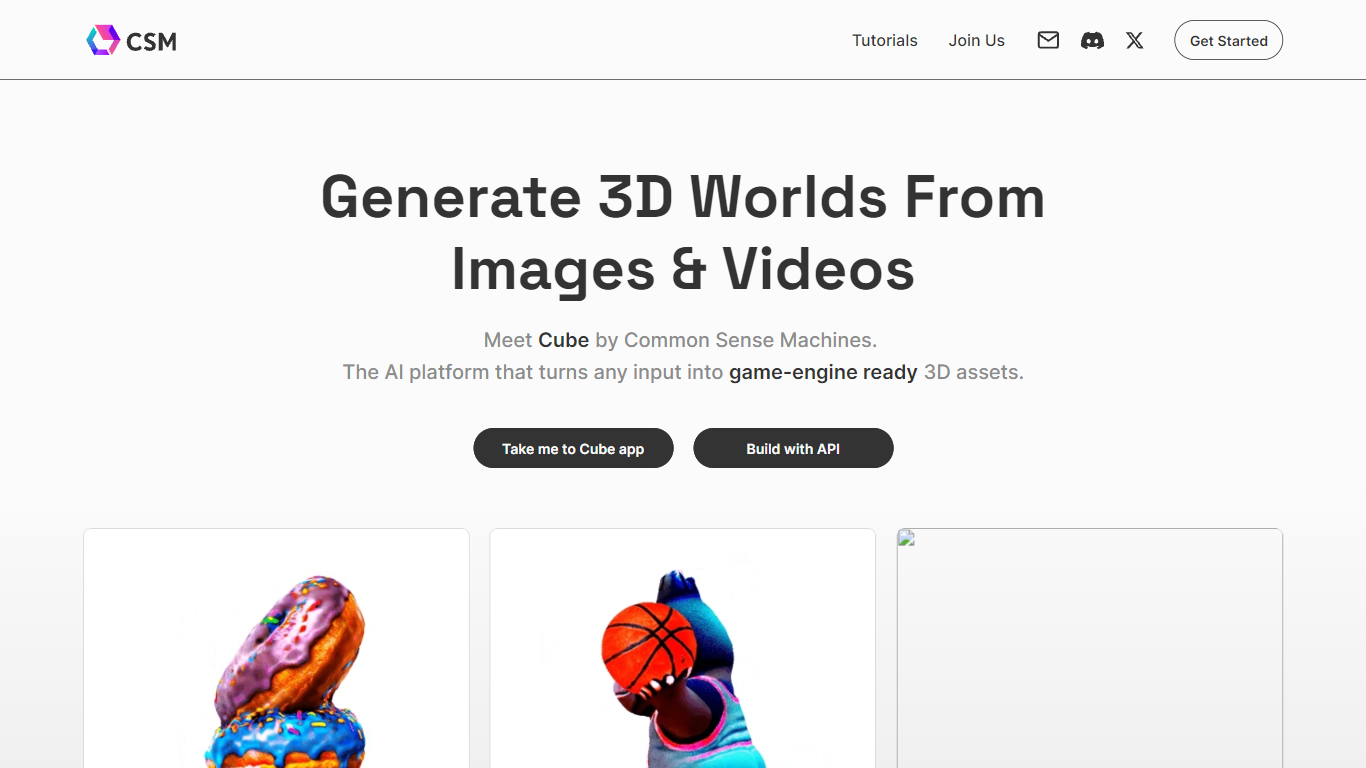
What is CSM?
Common Sense Machines, known as CSM, turns images, text, and sketches into 3D meshes and scene-ready assets through generative workflows. The company markets Cube as a 3D copilot for steps like image to 3D, text to 4D animated meshes, AI retexturing, and CAD part exports. Workflows are listed publicly as chains such as Text > Images > 3D > Environment and Image to CAD Part Mesh.
General 3D suites expect you to model everything by hand. CSM leans on generative agents and workflow templates so artists can start from a photo or prompt and iterate inside production pipelines for ecommerce visuals, games, and industrial prototyping. Premium Maker and Creative Pro plans keep outputs private and customer-owned, while the Tinkerer tier publishes under Creative Commons.
Product teams, game artists, ecommerce merchandisers, and engineers who need fast mesh drafts from reference art are the core audience. CSM also documents an API at docs.csm.ai and routes purchases through 3d.csm.ai, with [email protected] listed for contact.
Apera AI Upvotes
CSM Upvotes
Apera AI Top Features
Vue software runs up to 4 pairs of 2D cameras on one computer for large workcell coverage
Synthetic data training from CAD or 3D scans targets 99.99% reliability before the vision program ships
Part identification and robot path planning completes in as little as 0.3 seconds at 3 Hz cycle rates
Handles clear, translucent, shiny, and randomly piled parts in bright, dark, and outdoor lighting
Forge Lab provides web-based AI training and simulation so engineers test cells before installation
Foresight processing method accelerates total robot cycle time on complex sorting tasks
CSM Top Features
Image to 3D Art Workflow converts reference photos into meshes
Text to 4D Animated Mesh workflow builds motion-ready assets from prompts
Generative agent workflows chain steps like Text > Images > 3D > Environment
Image to CAD Part Mesh workflow targets engineering part exports
AI Retexturing workflow refreshes materials on existing 3D models
API docs live at docs.csm.ai for developer integrations
Maker and Creative Pro plans include monthly credits on fast dedicated servers
Apera AI Category
- 3D Generation
CSM Category
- 3D Generation
Apera AI Pricing Type
- Paid
CSM Pricing Type
- Freemium