APIPark vs Stellaris AI
In the contest of APIPark vs Stellaris AI, which AI Large Language Model (LLM) tool is the champion? We evaluate pricing, alternatives, upvotes, features, reviews, and more.
If you had to choose between APIPark and Stellaris AI, which one would you go for?
When we examine APIPark and Stellaris AI, both of which are AI-enabled large language model (llm) tools, what unique characteristics do we discover? The upvote count is neck and neck for both APIPark and Stellaris AI. Join the aitools.fyi users in deciding the winner by casting your vote.
Not your cup of tea? Upvote your preferred tool and stir things up!
APIPark
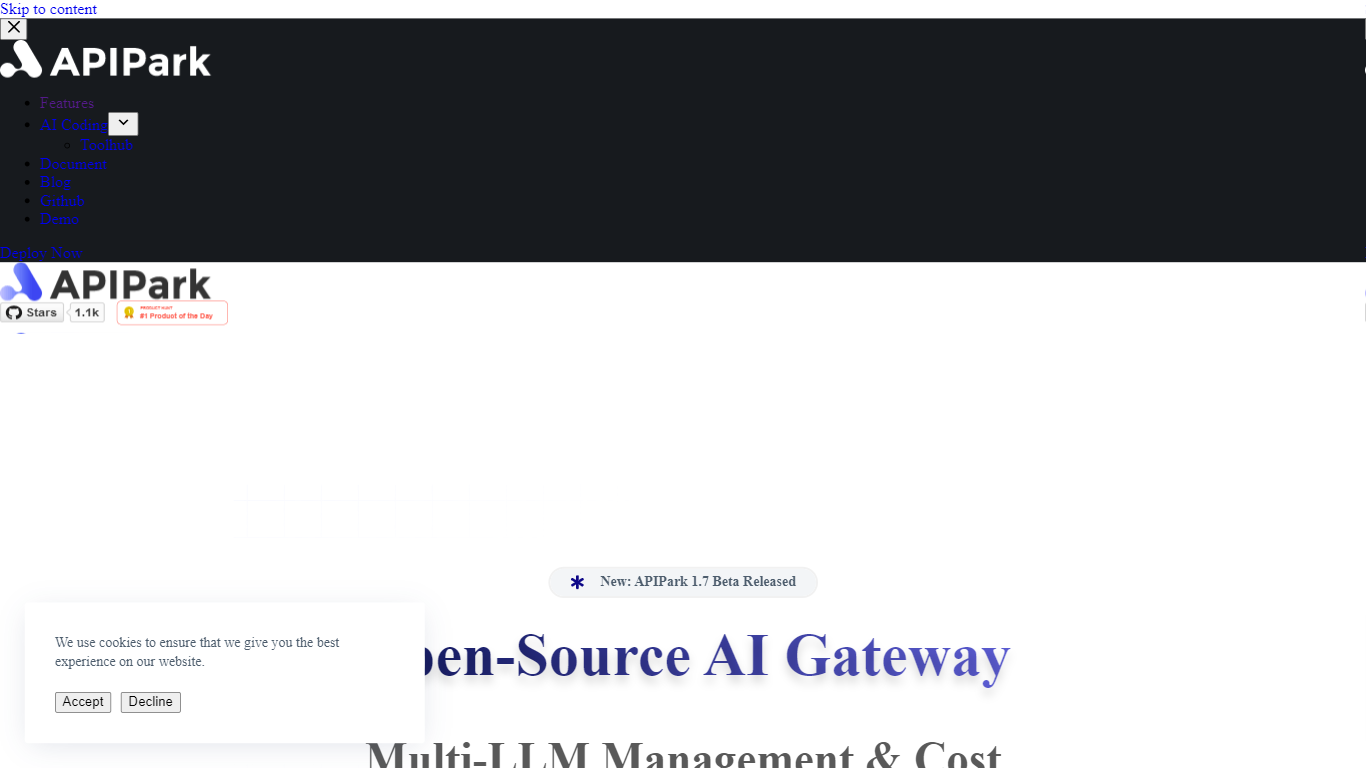

What is APIPark?
APIPark is an open-source LLM gateway and API developer portal for enterprises that need one place to call, govern, and bill AI models and internal APIs. It routes traffic to 200+ large language models through a single OpenAI-compatible endpoint, so teams stop wiring separate vendor SDKs for every model they add.
Where most API gateways only forward requests, APIPark also treats models and APIs as tradable assets. It bundles unified authentication, approval workflows, recharge billing, multi-level distribution, and profit reporting so platform teams can sell surplus model capacity or package business APIs without building a separate marketplace stack.
Platform engineers and AI teams use it to set per-tenant quotas, rate limits, and masking rules before production traffic hits upstream models. API managers get portals for publishing APIs, tracking usage, and approving access requests. The Community Edition covers core gateway and portal features; the Enterprise Edition adds advanced governance, runtime statistics, and premium support.
Stellaris AI
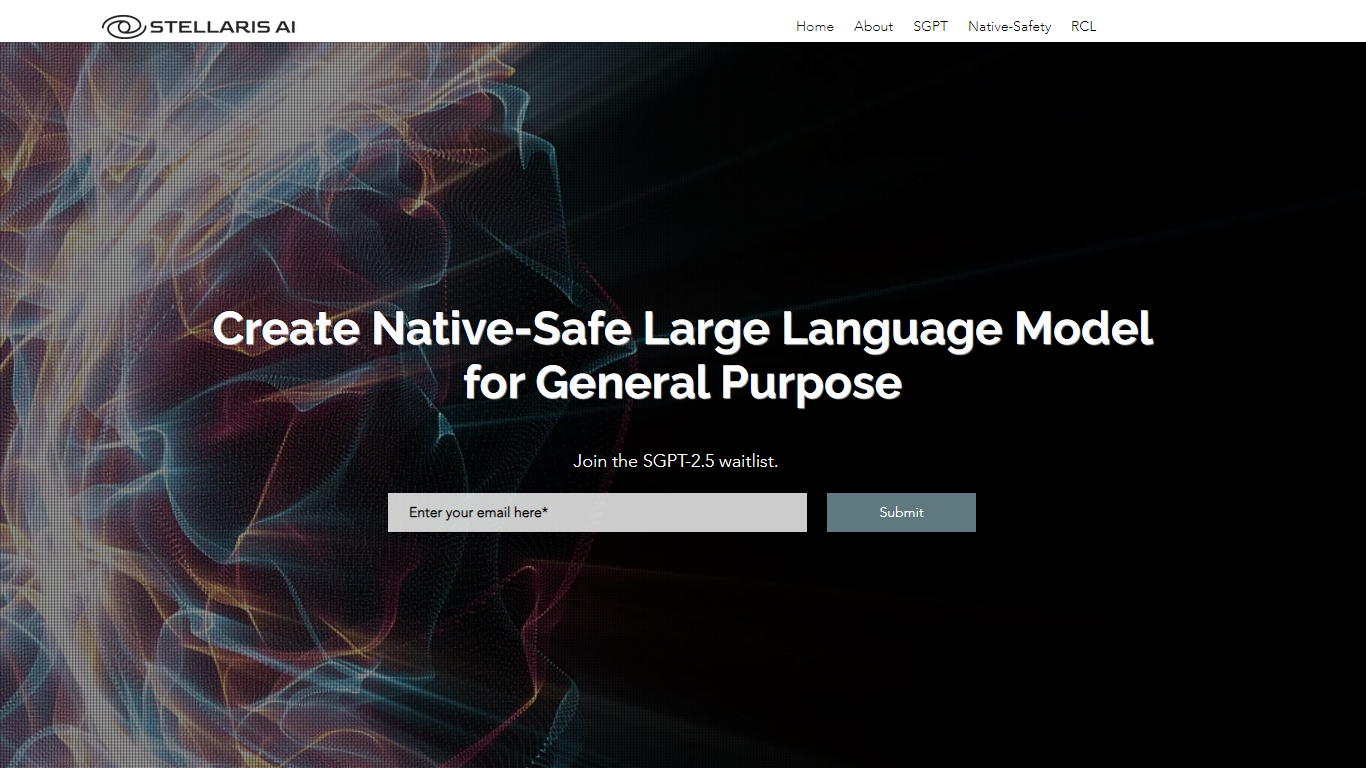
What is Stellaris AI?
Stellaris AI builds large language models marketed around native safety and human-like reasoning for real-world tasks. Its flagship SGPT line targets text and code generation, knowledge Q&A, logical reasoning, and analytics at a scale the company describes as hundreds of billions of parameters. The public site centers on a waitlist for SGPT-4.5 rather than a self-serve chat product you can open today.
Where many LLM labs bolt safety filters on after training, Stellaris AI frames safety as part of the model stack through strict source referencing and harm minimization in the architecture. It also highlights Real-time Context Learning (RCL) for adapting answers with live knowledge, a combination aimed at teams that want cited outputs instead of unchecked generation.
Researchers, enterprise AI teams, and early adopters join the SGPT-4.5 waitlist for first access. The company cites 10+ years of research and three core product pillars: Stellaris GPT, Native Safety, and RCL.
APIPark Upvotes
Stellaris AI Upvotes
APIPark Top Features
Routes 200+ LLMs through one OpenAI-compatible API signature so existing client code needs no vendor-specific rewrites
Deploy the gateway and developer portal in about 5 minutes with a single command-line install
Load balancing distributes requests across LLM instances to keep failover and throughput predictable under load
Built-in API billing tracks per-user consumption so teams can meter and monetize internal or partner API access
Fine-grained quotas cap daily or monthly spend by amount, tokens, or call counts to block runaway model usage
Data masking engine flags and masks sensitive fields in request and response payloads for compliance workflows
Stellaris AI Top Features
SGPT models described at 100B+ parameters for text, code, and reasoning tasks
Native Safety framework with strict source referencing and harm minimization
Real-time Context Learning (RCL) for live knowledge integration
Three product pillars: Stellaris GPT, Native Safety, and RCL
SGPT-4.5 waitlist open for early access signups on the homepage
APIPark Category
- Large Language Model (LLM)
Stellaris AI Category
- Large Language Model (LLM)
APIPark Pricing Type
- Freemium
Stellaris AI Pricing Type
- Freemium