Athina AI vs Stellaris AI
Compare Athina AI vs Stellaris AI and see which AI Large Language Model (LLM) tool is better when we compare features, reviews, pricing, alternatives, upvotes, etc.
Which one is better? Athina AI or Stellaris AI?
When we compare Athina AI with Stellaris AI, which are both AI-powered large language model (llm) tools, Both tools have received the same number of upvotes from aitools.fyi users. Your vote matters! Help us decide the winner among aitools.fyi users by casting your vote.
Not your cup of tea? Upvote your preferred tool and stir things up!
Athina AI

What is Athina AI?
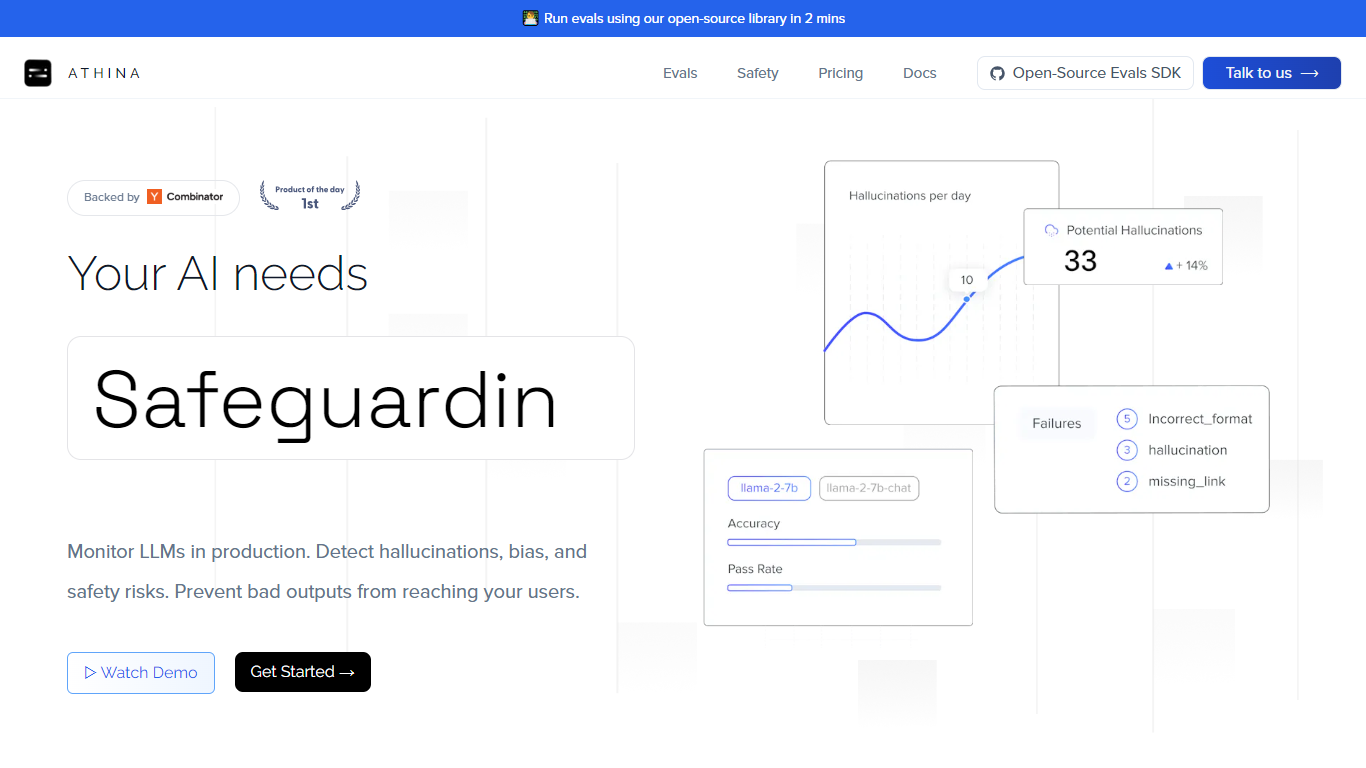
Athina AI is a collaborative development platform where teams build, test, and monitor production AI features in one workspace. It is built for mixed technical teams that need a shared place to iterate on prompts, datasets, evaluations, and live application behavior without handing every step to engineering.
The platform covers the loop from prototyping to production. Teams manage and version prompts, run experiments across models, evaluate outputs with preset or custom metrics, annotate datasets for human review, and monitor inference traces for cost, latency, and quality regressions.
Athina also offers Flows, a visual pipeline builder for chaining prompts, API calls, document retrieval, and custom code into deployable workflows. Enterprise options include self-hosted deployment in your own VPC, SOC-2 Type 2 compliance, and support for custom model providers such as Azure OpenAI and AWS Bedrock.
Teams at companies including Perplexity, You.com, Vetted, and PhysicsWallah use Athina to move AI features from experiment to production faster.
Stellaris AI
What is Stellaris AI?
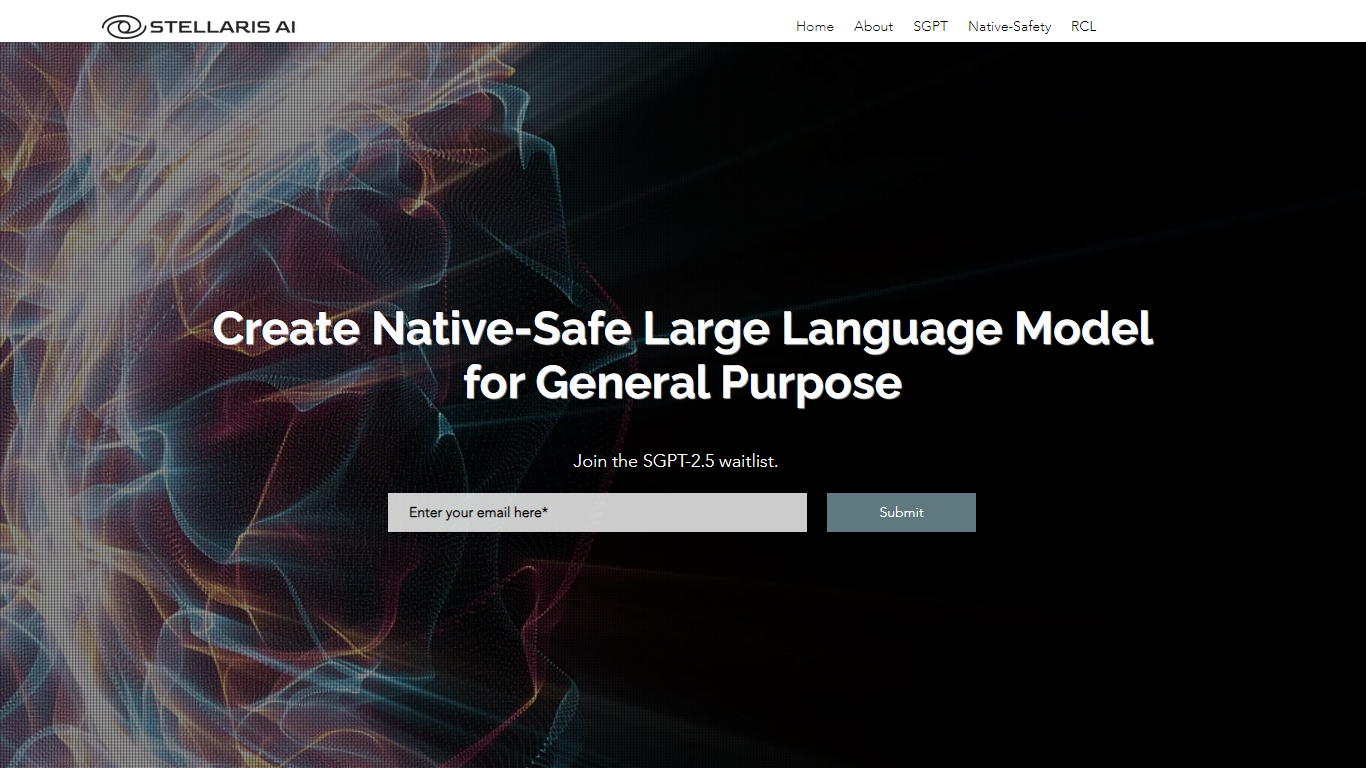
Stellaris AI builds large language models marketed around native safety and human-like reasoning for real-world tasks. Its flagship SGPT line targets text and code generation, knowledge Q&A, logical reasoning, and analytics at a scale the company describes as hundreds of billions of parameters. The public site centers on a waitlist for SGPT-4.5 rather than a self-serve chat product you can open today.
Where many LLM labs bolt safety filters on after training, Stellaris AI frames safety as part of the model stack through strict source referencing and harm minimization in the architecture. It also highlights Real-time Context Learning (RCL) for adapting answers with live knowledge, a combination aimed at teams that want cited outputs instead of unchecked generation.
Researchers, enterprise AI teams, and early adopters join the SGPT-4.5 waitlist for first access. The company cites 10+ years of research and three core product pillars: Stellaris GPT, Native Safety, and RCL.
Athina AI Upvotes
Stellaris AI Upvotes
Athina AI Top Features
Run 50+ preset evaluations or build custom evals with LLM judges, Python functions, or external APIs
Manage, test, and version prompts across any model, including custom endpoints you host
Regenerate datasets in a few clicks to compare models, prompts, or retrievers side by side
Chain prompts, APIs, retrievals, and code in Flows, then deploy pipelines with one click
Log production inferences asynchronously so monitoring does not add latency to your app
Let human QA teams annotate datasets and verify evaluation results alongside automated scoring
Query datasets with SQL and compare results in a workspace built for mixed technical teams
Stellaris AI Top Features
SGPT models described at 100B+ parameters for text, code, and reasoning tasks
Native Safety framework with strict source referencing and harm minimization
Real-time Context Learning (RCL) for live knowledge integration
Three product pillars: Stellaris GPT, Native Safety, and RCL
SGPT-4.5 waitlist open for early access signups on the homepage
Athina AI Category
- Large Language Model (LLM)
Stellaris AI Category
- Large Language Model (LLM)
Athina AI Pricing Type
- Freemium
Stellaris AI Pricing Type
- Freemium