AudioBriefly vs SciSpace (formerly Typeset)
In the face-off between AudioBriefly vs SciSpace (formerly Typeset), which AI Summarizer tool takes the crown? We scrutinize features, alternatives, upvotes, reviews, pricing, and more.
In a face-off between AudioBriefly and SciSpace (formerly Typeset), which one takes the crown?
If we were to analyze AudioBriefly and SciSpace (formerly Typeset), both of which are AI-powered summarizer tools, what would we find? The community has spoken, SciSpace (formerly Typeset) leads with more upvotes. The number of upvotes for SciSpace (formerly Typeset) stands at 24, and for AudioBriefly it's 6.
Think we got it wrong? Cast your vote and show us who's boss!
AudioBriefly

What is AudioBriefly?
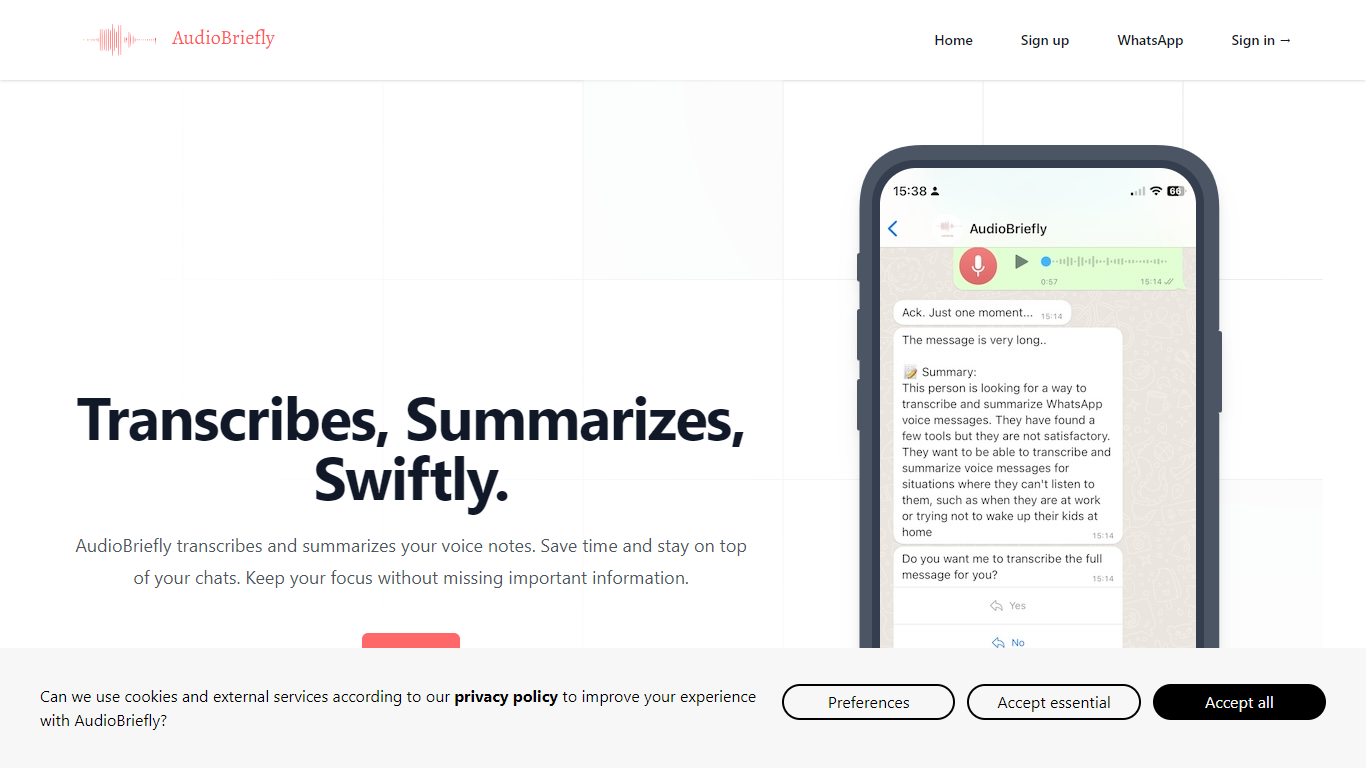
AudioBriefly turns voice notes into text and short summaries so you can read messages instead of listening to them. It works through WhatsApp and a web dashboard, which makes it useful when you get long voice memos during meetings, commutes, or busy workdays.
Send or forward a voice note to AudioBriefly on WhatsApp and you get a transcription back in seconds. Longer recordings also get a summary, and very long audio can return a summary first with an option to request the full transcript. Everything is stored in the web app so you can review or edit transcriptions from your phone or computer.
The product is built by Bandstand Software, an Italian development studio. It fits anyone who relies on WhatsApp voice messages, from professionals catching up on client notes to people who simply prefer reading over listening.
SciSpace (formerly Typeset)
What is SciSpace (formerly Typeset)?
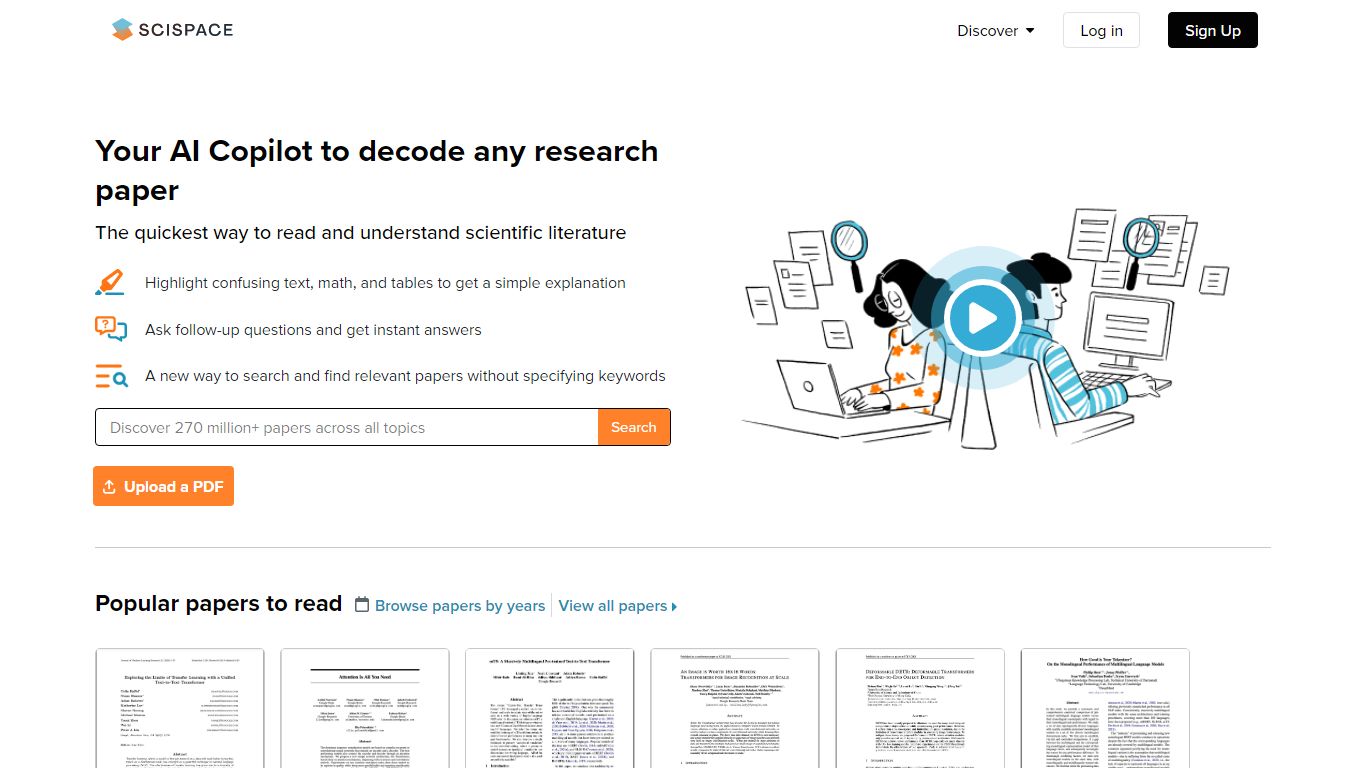
SciSpace, formerly Typeset, is a research workspace where you search a large academic paper index, chat with PDFs, and draft literature reviews with cited sources. The typeset.io URL now lands on scispace.com, which bundles an AI agent, literature review search, paraphraser, citation generator, data extraction, and AI detection in one interface.
General AI chat tools answer from the open web. SciSpace centers the workflow on papers: you can run systematic reviews across 280M+ indexed works, highlight passages for explanations, and move from reading into AI Writer drafts with references. Biomedical Agent, enterprise recruiting, and Chrome or mobile apps extend the same stack for labs and R&D teams.
Graduate students, PhD researchers, and pharma or biotech analysts use SciSpace to screen literature faster, unpack dense PDFs, and produce summaries or manuscripts with traceable citations. The platform reports adoption by 9.6 million researchers and lists SOC 2 compliance on its site.
AudioBriefly Upvotes
SciSpace (formerly Typeset) Upvotes
AudioBriefly Top Features
Forward a WhatsApp voice note and get a transcript back in seconds
Long recordings get a summary so you can skip straight to the key points
Very long audio returns a summary first, then offers the full transcript on request
Upload audio files on the web with unlimited submissions up to your monthly minute cap
Transcriptions and summaries sync to a web dashboard for reading and editing on any device
SciSpace (formerly Typeset) Top Features
Search and review literature across 280M+ indexed research papers
Chat with PDF highlights for plain-language explanations of dense sections
SciSpace Agent plus Biomedical Agent for guided research tasks
Built-in paraphraser, citation generator, AI detector, and data extraction tools
AI Writer and templates for drafting papers with cited sources
Chrome extension and mobile app for reading outside the browser tab
Premium plans with a 24-hour money-back guarantee on subscriptions
AudioBriefly Category
- Summarizer
SciSpace (formerly Typeset) Category
- Summarizer
AudioBriefly Pricing Type
- Paid
SciSpace (formerly Typeset) Pricing Type
- Freemium