Auth0 vs Opus
Compare Auth0 vs Opus and see which AI Web Apps tool is better when we compare features, reviews, pricing, alternatives, upvotes, etc.
Which one is better? Auth0 or Opus?
When we compare Auth0 with Opus, which are both AI-powered web apps tools, Both tools are equally favored, as indicated by the identical upvote count. You can help us determine the winner by casting your vote and tipping the scales in favor of one of the tools.
Don't agree with the result? Cast your vote and be a part of the decision-making process!
Auth0
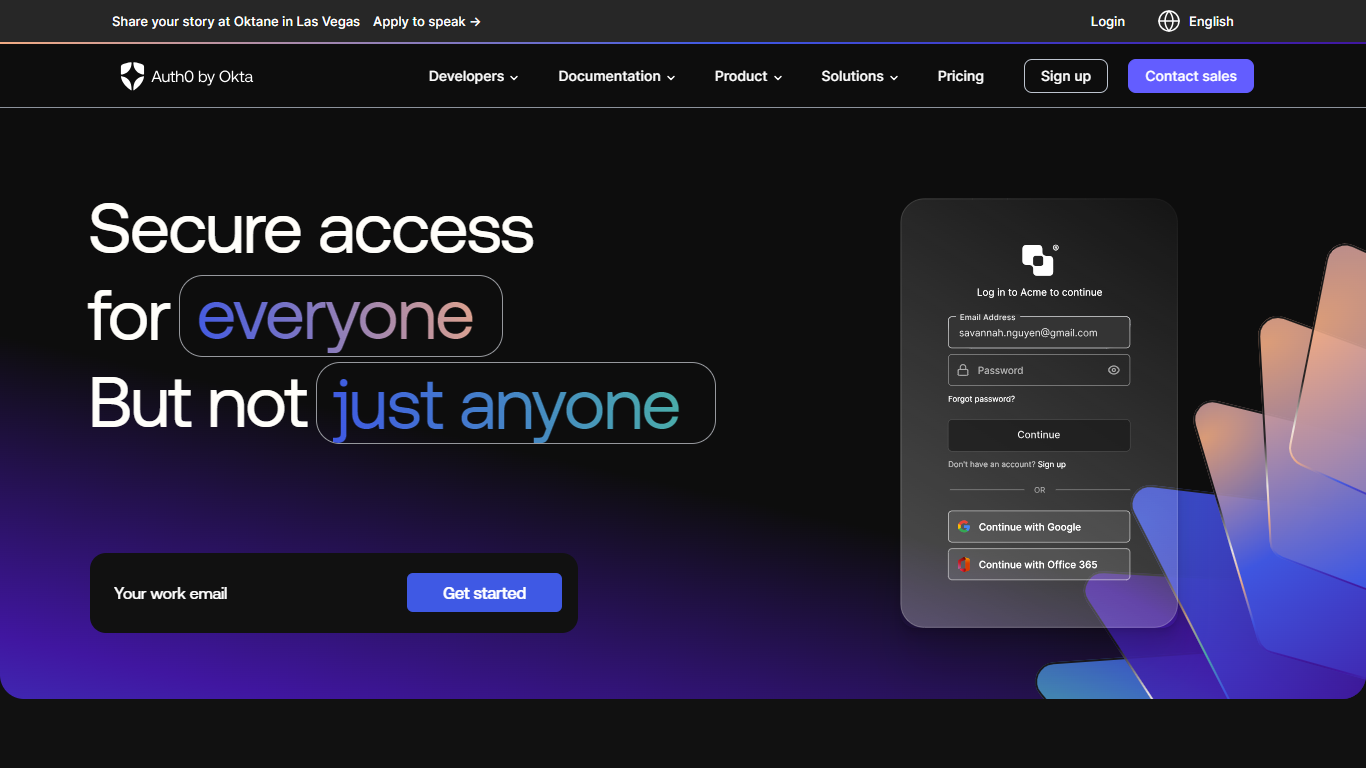

What is Auth0?
Auth0 is a customer identity and access management platform from Okta. It handles authentication and authorization for web, mobile, and API applications so development teams can add login, SSO, and access controls without building identity infrastructure from scratch.
The platform covers B2C consumer apps, B2B SaaS products, and internal tools. Developers integrate via SDKs and quickstarts for stacks like React, Next.js, iOS, Android, Java, .NET, and Python. Auth0 also ships dedicated tooling for securing AI agents, including user authentication before agent access, Token Vault for scoped API credentials, and fine-grained authorization for RAG pipelines.
Auth0 reports blocking 3 billion-plus attacks monthly across Okta and Auth0 platforms, 99.99% uptime, and 10 billion-plus authentications per month. Customers listed on the site include Siemens, Signify, Zapier, Wyndham Hotels, and the City of Los Angeles.
Opus

What is Opus?
Opus turns written stories into playable 3D scenes through text-to-video style computational production. You write scenes, characters, and dialogue in plain English, and Opus NLP extracts structure without a special scripting syntax, then builds lighting, terrain, buildings, roads, humanoid characters, and animations from that text.
Compared with traditional CGI pipelines that need separate teams for assets, lighting, and animation, Opus advertises original content at one-tenth the cost with faster turnaround. The platform targets creators who want worlds to render from words instead of manually modeling every shot in desktop production software.
Gamers, artists, musicians, storytellers, and performers use Opus to prototype interactive worlds, digitize performances, and publish immersive experiences. The public site offers early access enrollment and a demo watch flow rather than self-serve subscription pricing.
Auth0 Upvotes
Opus Upvotes
Auth0 Top Features
Universal Login and Embedded Login flows with branding controls for web and mobile apps
Single sign-on across enterprise federation, social logins, and username-password setups
Multifactor authentication with adaptive MFA that triggers only on risky login attempts
Passwordless authentication and breached password detection to reduce credential risk
Token Vault for AI agents to request short-lived tokens instead of storing third-party API keys
Fine-grained authorization APIs for access control in B2B SaaS and RAG document retrieval
Machine-to-machine authentication for APIs, background jobs, and IoT device communication
Actions and Forms extensibility to customize signup, login, and identity workflows without new backend code
30-plus SDKs and quickstarts to integrate Auth0 into common languages and frameworks in minutes
Opus Top Features
NLP parses literary English with no special syntax required
Text-to-video computational production for scenes, assets, dialogue, and VFX
Lighting, camera control, terrain, flora, buildings, and roads generated from text
Humanoid characters and animations included in the production pipeline
Advertises original content at one-tenth traditional production cost
Supports gamers, storytellers, artists, musicians, and performers on one canvas
Early access program with separate youth and professional governance seats
Auth0 Category
- Web Apps
Opus Category
- Web Apps
Auth0 Pricing Type
- Freemium
Opus Pricing Type
- Paid