Baseplate vs Krater.ai
In the clash of Baseplate vs Krater.ai, which AI Content Creation tool emerges victorious? We assess reviews, pricing, alternatives, features, upvotes, and more.
When we put Baseplate and Krater.ai head to head, which one emerges as the victor?
Let's take a closer look at Baseplate and Krater.ai, both of which are AI-driven content creation tools, and see what sets them apart. In the race for upvotes, Krater.ai takes the trophy. Krater.ai has been upvoted 10 times by aitools.fyi users, and Baseplate has been upvoted 6 times.
Think we got it wrong? Cast your vote and show us who's boss!
Baseplate

What is Baseplate?
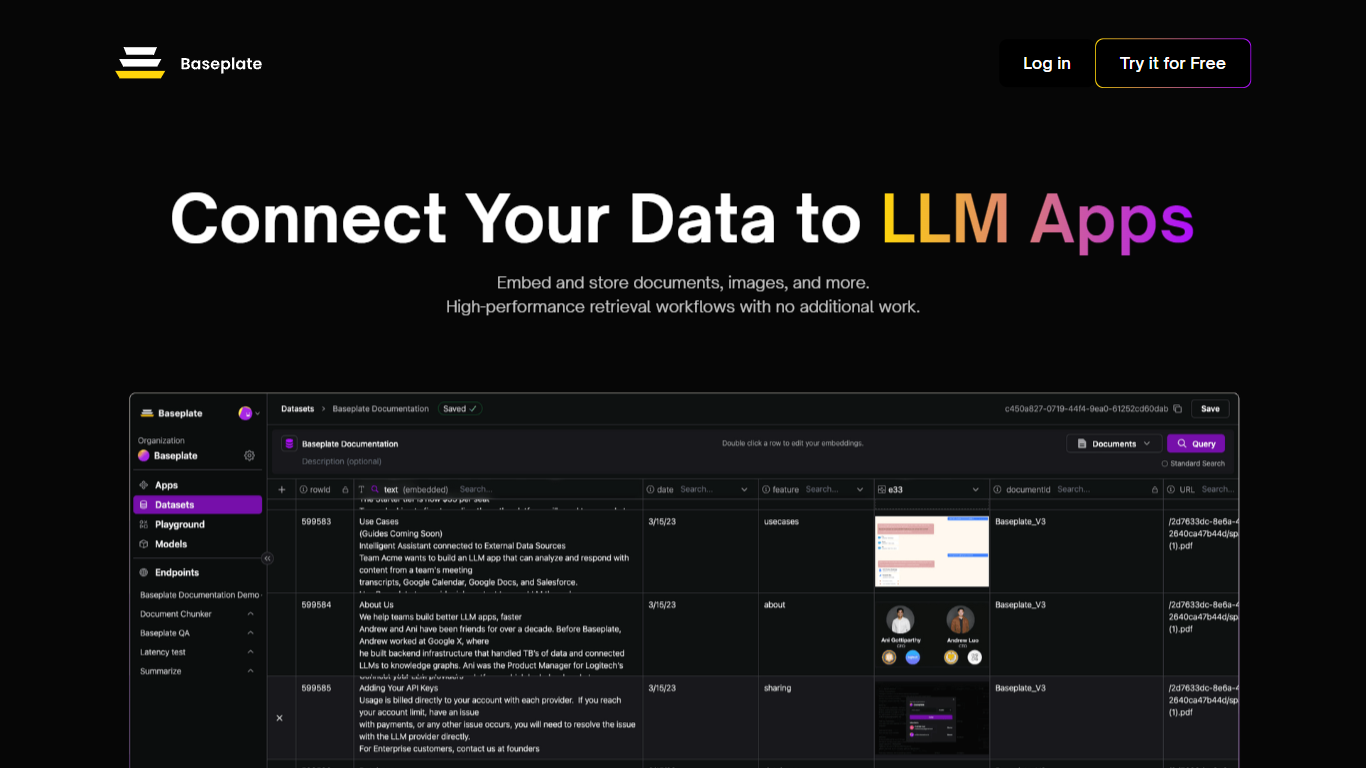
Baseplate is a backend-as-a-service platform built for LLM applications. Teams use its multimodal context database to store embeddings, text, documents, images, links, and code in one spreadsheet-style workspace instead of juggling separate vector and relational stores.
The platform covers the full retrieval stack: dataset sync from tools like Google Drive, S3, Box, and SharePoint, configurable semantic or hybrid search, prompt templates with version control, and deployable API endpoints. You can also ship one-click Slack, Discord, and Teams bots from the same console.
Baseplate targets engineering and product teams shipping retrieval-based LLM features, from customer support bots and internal knowledge hubs to teaching assistants and e-commerce shopping guides. It launched as a Y Combinator W23 company, though the marketing site and app currently show infrastructure and suspension issues while documentation remains online.
Krater.ai
What is Krater.ai?
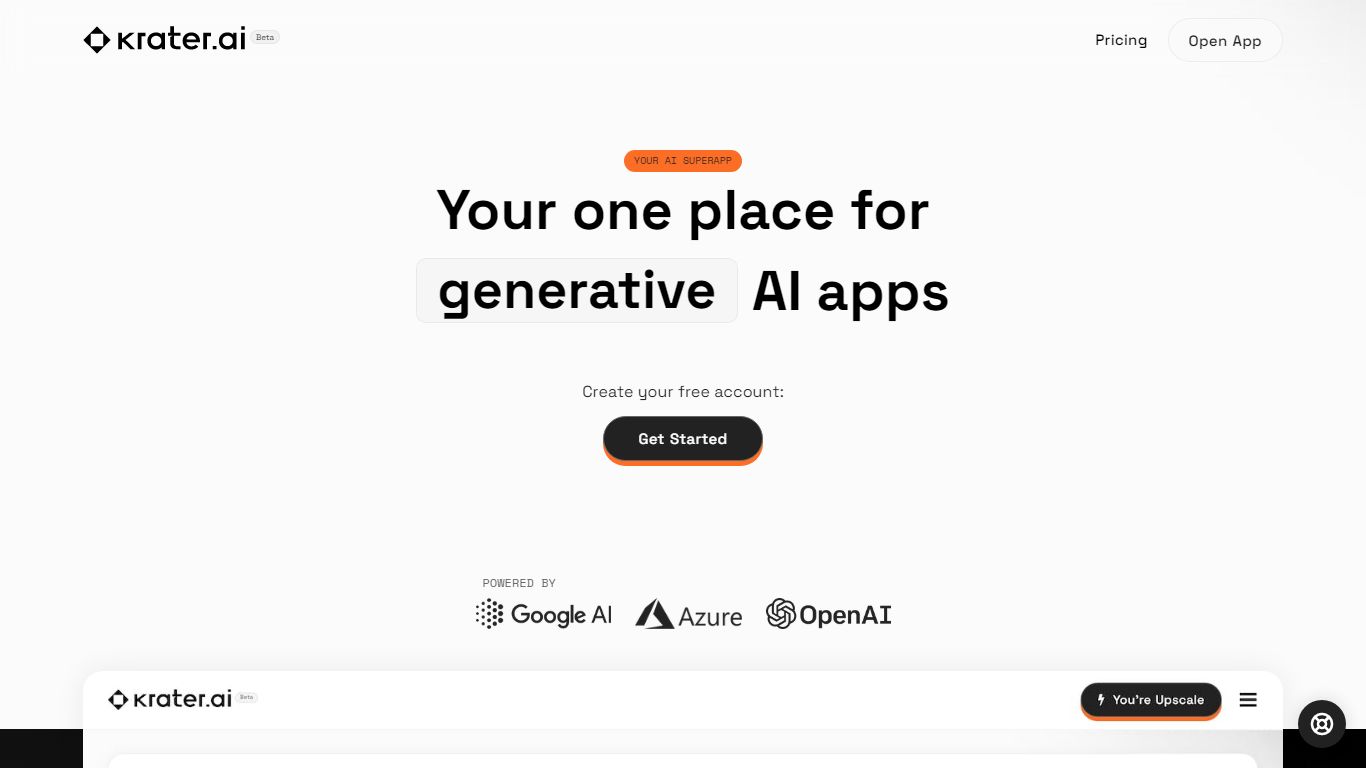
Krater.ai bundles 350+ AI models, including ChatGPT, Claude, Gemini, and Grok, into one subscription for chat, image, video, audio, and code generation. Switch models mid-conversation, run a Krater Agent that plans and executes multi-step tasks, and connect Gmail, Slack, Notion, and GitHub so the agent can take action inside your existing apps.
Paying for ChatGPT Plus, Claude Pro, and Midjourney separately adds up fast. Krater.ai replaces that stack with credit-based plans starting around $20 per month, giving you text, image, video, and voice tools in one interface. The trade-off is that you are using Krater's wrapper rather than each vendor's native app, and heavy users may burn through monthly credits quickly.
Content creators, founders, and small teams who want one workspace instead of juggling multiple AI subscriptions are the core audience. Pro includes 1,500 credits per month, Ultra offers 4,000, and Max targets teams with a 1M token context window.
Baseplate Upvotes
Krater.ai Upvotes
Baseplate Top Features
Hybrid database stores embeddings, text, code, documents, images, and links in one dataset
Sync datasets from Google Drive, S3, Box, SharePoint, and other sources via UI or API
Semantic, keyword, or hybrid search with multi-step retrieval across datasets
App builder with prompt templates, variables, and read-only deployable versions
Endpoints expose apps through API calls with logging, human feedback, and PII stripping
One-click deployment to Slack, Discord, and Teams bots from the console
Krater.ai Top Features
350+ AI models including ChatGPT, Claude, Gemini, and Grok in one chat interface
Krater Agent plans multi-step tasks, browses the web, and runs connected app actions
300+ app integrations including Gmail, Slack, Notion, and GitHub
Image generation via Flux, Ideogram, and Nano Banana Pro; video via Kling, Sora, and HeyGen
Pro plan includes 1,500 credits per month at $20 per month billed yearly
EU-hosted infrastructure with GDPR compliance and no training on your data
Baseplate Category
- Content Creation
Krater.ai Category
- Content Creation
Baseplate Pricing Type
- Freemium
Krater.ai Pricing Type
- Paid