Bookshelf vs Recall
When comparing Bookshelf vs Recall, which AI Summarizer tool shines brighter? We look at pricing, alternatives, upvotes, features, reviews, and more.
Between Bookshelf and Recall, which one is superior?
When we put Bookshelf and Recall side by side, both being AI-powered summarizer tools, Recall is the clear winner in terms of upvotes. The number of upvotes for Recall stands at 10, and for Bookshelf it's 7.
Think we got it wrong? Cast your vote and show us who's boss!
Bookshelf
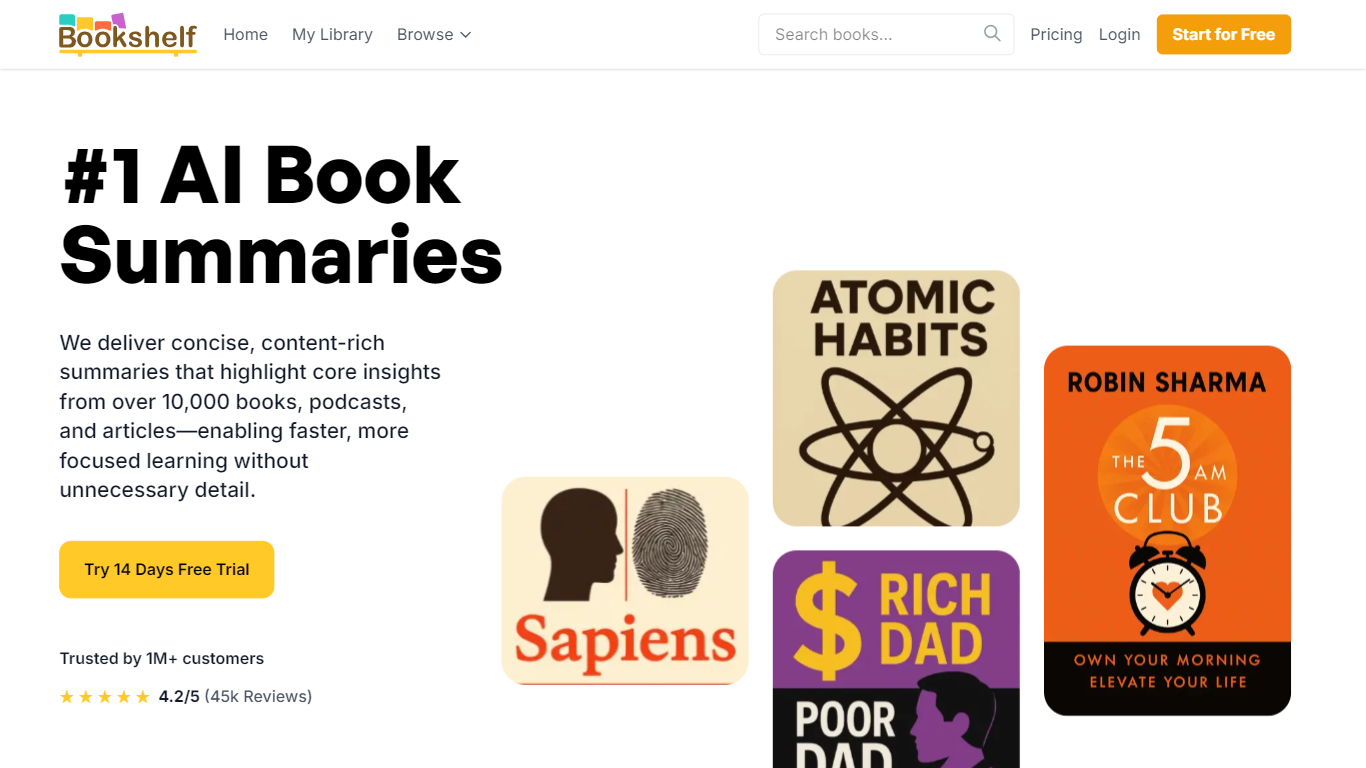

What is Bookshelf?
Bookshelf delivers 15-minute summaries of nonfiction books, podcasts, and articles you can read, listen to, or download as PDF and EPUB. The library spans 10,000+ titles across business, psychology, history, and self-help, with exercises and topic guides that go beyond a quick recap.
Blinkist made short book summaries mainstream; Bookshelf pushes the same format with heavier download options and a lifetime license. You get audio summaries, CarPlay and Android Auto support, offline listening on paid tiers, and a Basic free tier that unlocks one handpicked title per day after the trial ends.
Busy readers and commuters are the core audience. Premium unlocks unlimited access to 7,500+ summaries plus a shareable friend account. Paid plans are $9.99 per month, $59.99 per year, or a $129 lifetime license, all with a 14-day free trial.
Recall
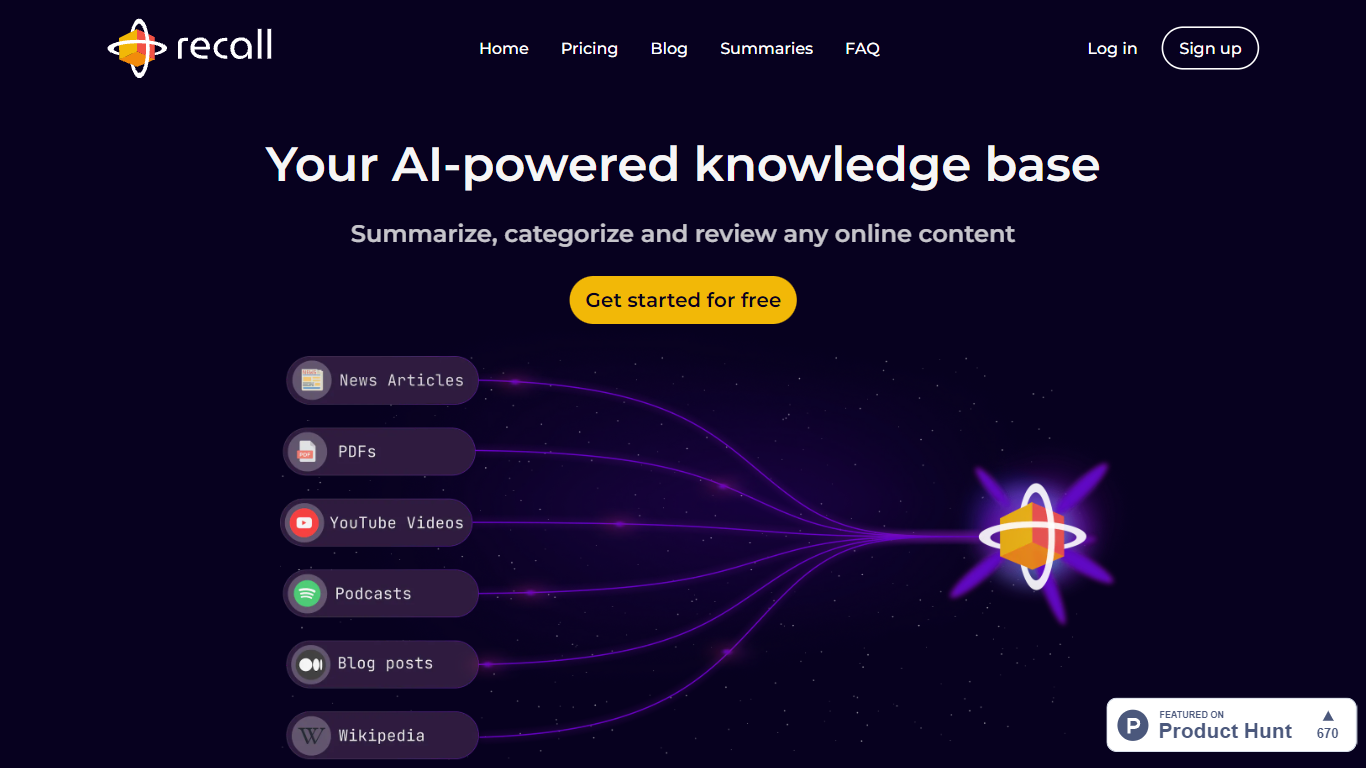
What is Recall?
Recall is a personal AI knowledge base and summarizer that saves articles, YouTube videos, podcasts, PDFs, and notes in one place. It turns each saved item into a summarized card, tags it automatically, and links related ideas in a knowledge graph you can browse or chat with. You pick the AI model for questions, including ChatGPT, Claude, or Gemini, and answers can draw on your saved library, the open web, or both.
Where NotebookLM locks you into one notebook per project and Obsidian expects you to build every link by hand, Recall treats lifelong learning as one growing library. It captures web content in a click, summarizes it, connects it without manual filing, and adds spaced repetition quizzes so saved material actually sticks. The trade-off is less team workspace structure than Notion and less local-first control than Obsidian.
Recall fits researchers, founders, students, and heavy readers who save more than they can reread. Browser extensions for Chrome and Firefox, plus iOS and Android apps, make it easy to clip on the go and pick up in the web app later.
Bookshelf Upvotes
Recall Upvotes
Bookshelf Top Features
10,000+ book, podcast, and article summaries with 15-minute read or listen formats
PDF, EPUB, and audiobook downloads plus Apple CarPlay and Android Auto support
14-day free trial on paid plans with a Basic tier of one handpicked title per day
Premium unlocks 7,500+ summaries, offline access, personalized picks, and a friend account
Monthly plan at $9.99, yearly at $59.99, or $129 lifetime one-time payment
Topic analyses and reflection exercises beyond standard chapter summaries
Recall Top Features
Free tier includes 10 AI summaries per month plus unlimited saves of articles, videos, and PDFs
Plus plan at $10 per month (billed yearly) unlocks unlimited AI summaries and automatic smart tags
Chat across your saved library, the open web, or both using ChatGPT, Claude, Gemini, or other models
Spaced repetition quizzes generated from saved cards to reinforce long-term memory
Chrome, Firefox, iOS, and Android apps plus API and MCP access to connect external AI tools
Augmented browsing resurfaces related saved cards while you read new pages on the web
Bookshelf Category
- Summarizer
Recall Category
- Summarizer
Bookshelf Pricing Type
- Freemium
Recall Pricing Type
- Freemium