Bookshelf vs SciSpace (formerly Typeset)
When comparing Bookshelf vs SciSpace (formerly Typeset), which AI Summarizer tool shines brighter? We look at pricing, alternatives, upvotes, features, reviews, and more.
Between Bookshelf and SciSpace (formerly Typeset), which one is superior?
When we put Bookshelf and SciSpace (formerly Typeset) side by side, both being AI-powered summarizer tools, With more upvotes, SciSpace (formerly Typeset) is the preferred choice. SciSpace (formerly Typeset) has received 24 upvotes from aitools.fyi users, while Bookshelf has received 7 upvotes.
Think we got it wrong? Cast your vote and show us who's boss!
Bookshelf
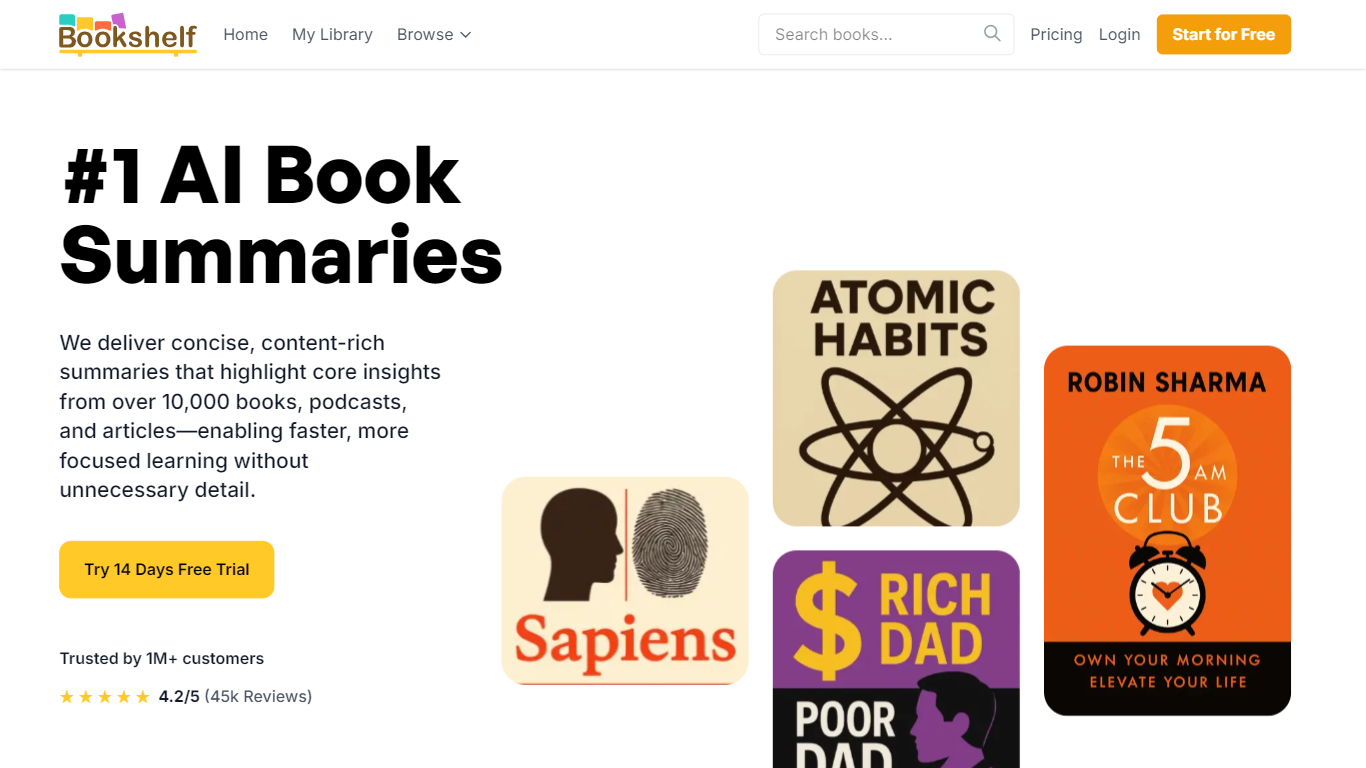

What is Bookshelf?
Bookshelf delivers 15-minute summaries of nonfiction books, podcasts, and articles you can read, listen to, or download as PDF and EPUB. The library spans 10,000+ titles across business, psychology, history, and self-help, with exercises and topic guides that go beyond a quick recap.
Blinkist made short book summaries mainstream; Bookshelf pushes the same format with heavier download options and a lifetime license. You get audio summaries, CarPlay and Android Auto support, offline listening on paid tiers, and a Basic free tier that unlocks one handpicked title per day after the trial ends.
Busy readers and commuters are the core audience. Premium unlocks unlimited access to 7,500+ summaries plus a shareable friend account. Paid plans are $9.99 per month, $59.99 per year, or a $129 lifetime license, all with a 14-day free trial.
SciSpace (formerly Typeset)
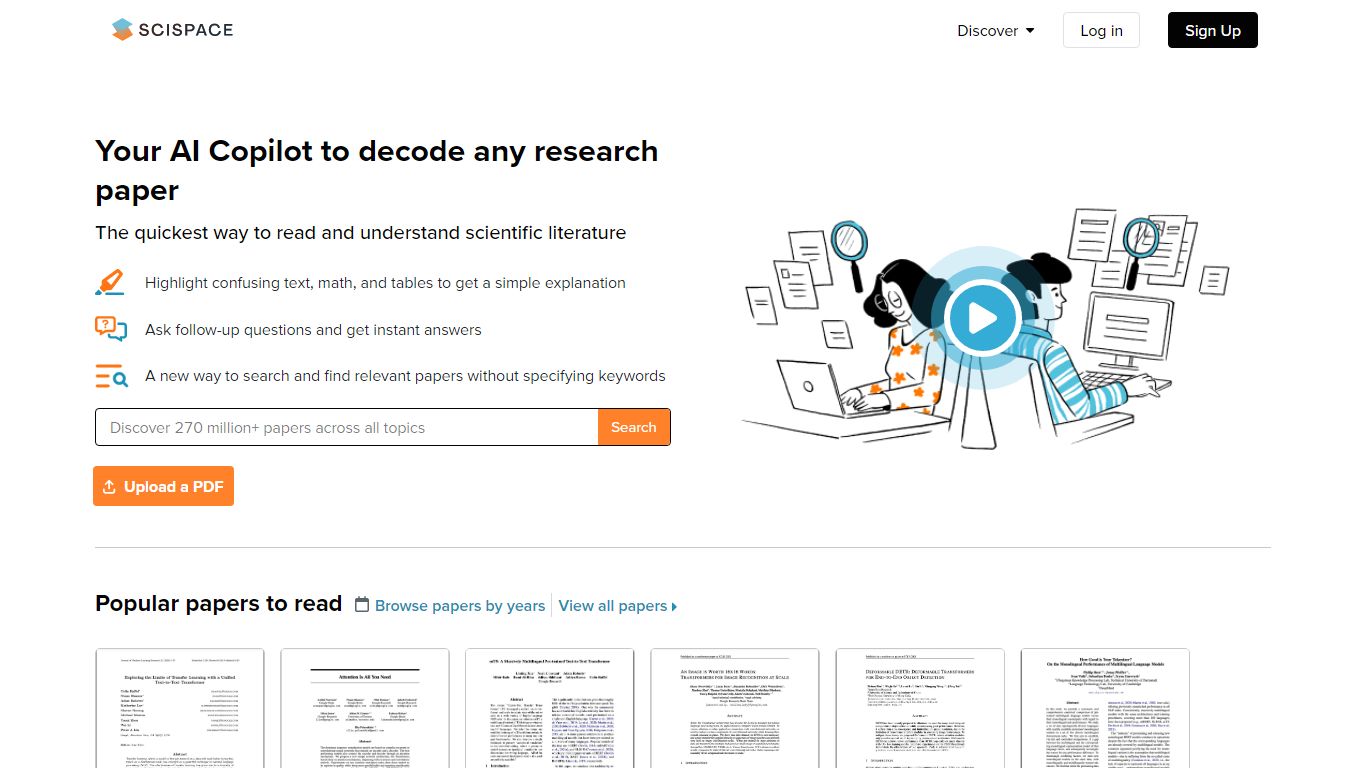
What is SciSpace (formerly Typeset)?
SciSpace, formerly Typeset, is a research workspace where you search a large academic paper index, chat with PDFs, and draft literature reviews with cited sources. The typeset.io URL now lands on scispace.com, which bundles an AI agent, literature review search, paraphraser, citation generator, data extraction, and AI detection in one interface.
General AI chat tools answer from the open web. SciSpace centers the workflow on papers: you can run systematic reviews across 280M+ indexed works, highlight passages for explanations, and move from reading into AI Writer drafts with references. Biomedical Agent, enterprise recruiting, and Chrome or mobile apps extend the same stack for labs and R&D teams.
Graduate students, PhD researchers, and pharma or biotech analysts use SciSpace to screen literature faster, unpack dense PDFs, and produce summaries or manuscripts with traceable citations. The platform reports adoption by 9.6 million researchers and lists SOC 2 compliance on its site.
Bookshelf Upvotes
SciSpace (formerly Typeset) Upvotes
Bookshelf Top Features
10,000+ book, podcast, and article summaries with 15-minute read or listen formats
PDF, EPUB, and audiobook downloads plus Apple CarPlay and Android Auto support
14-day free trial on paid plans with a Basic tier of one handpicked title per day
Premium unlocks 7,500+ summaries, offline access, personalized picks, and a friend account
Monthly plan at $9.99, yearly at $59.99, or $129 lifetime one-time payment
Topic analyses and reflection exercises beyond standard chapter summaries
SciSpace (formerly Typeset) Top Features
Search and review literature across 280M+ indexed research papers
Chat with PDF highlights for plain-language explanations of dense sections
SciSpace Agent plus Biomedical Agent for guided research tasks
Built-in paraphraser, citation generator, AI detector, and data extraction tools
AI Writer and templates for drafting papers with cited sources
Chrome extension and mobile app for reading outside the browser tab
Premium plans with a 24-hour money-back guarantee on subscriptions
Bookshelf Category
- Summarizer
SciSpace (formerly Typeset) Category
- Summarizer
Bookshelf Pricing Type
- Freemium
SciSpace (formerly Typeset) Pricing Type
- Freemium