Cerebras vs TimeComplexity.ai
In the battle of Cerebras vs TimeComplexity.ai, which AI Developer tool comes out on top? We compare reviews, pricing, alternatives, upvotes, features, and more.
Between Cerebras and TimeComplexity.ai, which one is superior?
Upon comparing Cerebras with TimeComplexity.ai, which are both AI-powered developer tools, Both tools are equally favored, as indicated by the identical upvote count. Join the aitools.fyi users in deciding the winner by casting your vote.
Don't agree with the result? Cast your vote and be a part of the decision-making process!
Cerebras

What is Cerebras?
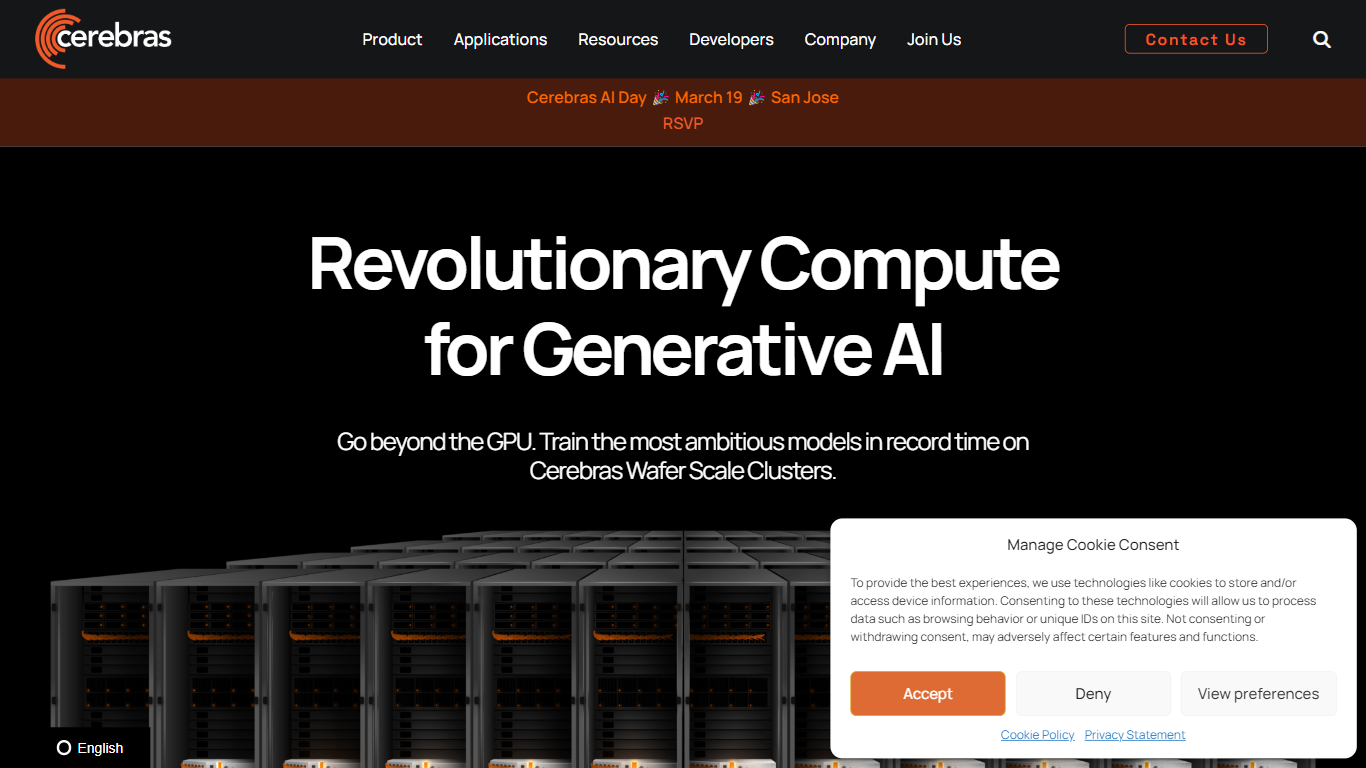
Cerebras builds wafer-scale AI chips and runs one of the fastest LLM inference platforms available today. Its CS-2 and CS-3 systems power cloud APIs, dedicated private endpoints, and on-prem deployments for teams that need low-latency responses at production scale.
The Wafer-Scale Engine is a single chip 58 times larger than typical GPUs, designed specifically for training and inference workloads. On the cloud side, developers call open models like Llama, Qwen, GLM, and GPT OSS through a simple API key, with throughput that routinely hits thousands of tokens per second on supported models.
Cerebras serves AI-native startups, enterprise research teams, and global companies across healthcare, cybersecurity, and drug discovery. Customers include OpenAI, Meta, GSK, Notion, and Mayo Clinic. You can start free on the inference API, scale through pay-as-you-go developer billing, or talk to sales for dedicated capacity and custom model weights.
TimeComplexity.ai
What is TimeComplexity.ai?
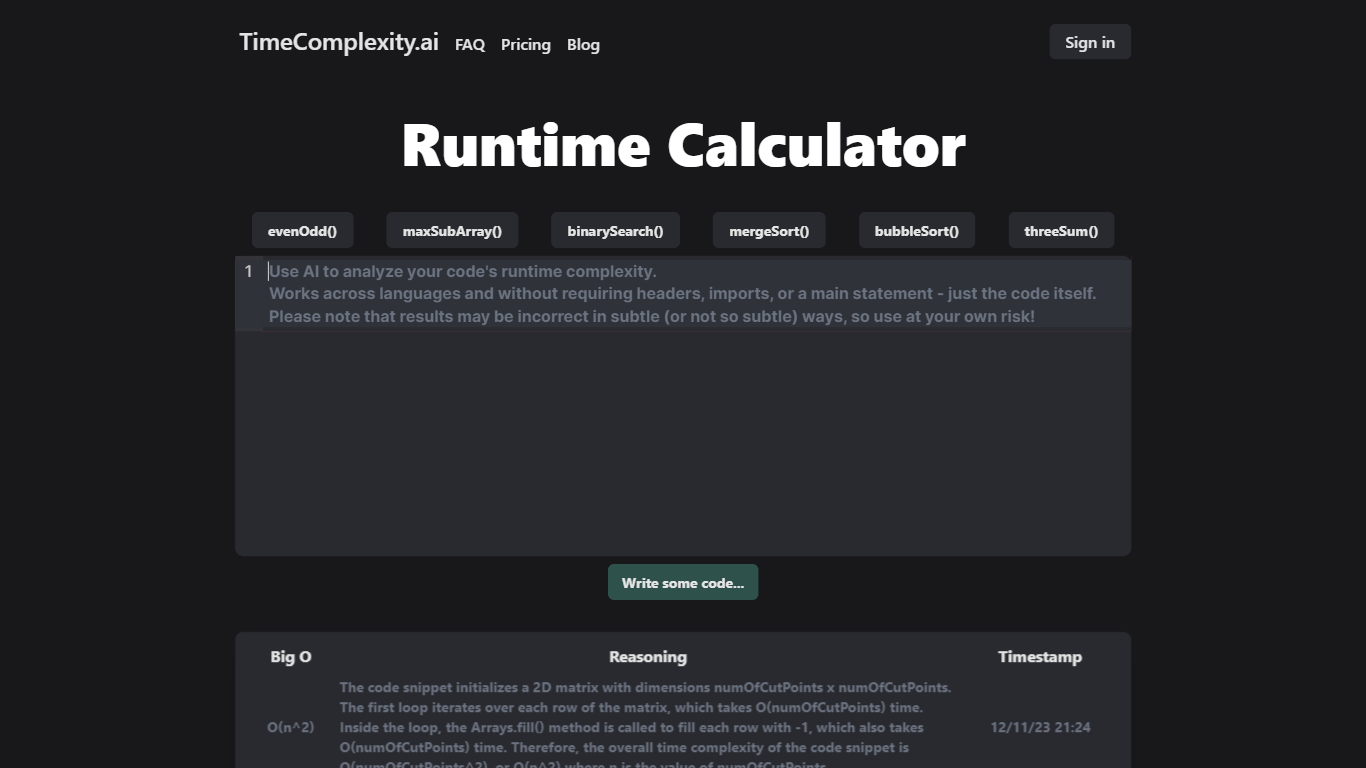
Paste a function into TimeComplexity.ai and it returns Big O runtime complexity with plain-language reasoning. You drop in an algorithm snippet, and the site responds with notation like O(n log n) plus an explanation of why that bound fits the loops and recursion it sees.
Static analyzers usually need a full file with imports and a main block. TimeComplexity.ai accepts partial snippets in Python, JavaScript, Java, C++, Go, and other languages without headers or setup code. That makes it useful for interview prep and quick checks on isolated functions pulled from a larger codebase.
Developers, CS students, and interview candidates use TimeComplexity.ai to sanity-check algorithm bounds before submitting homework or reviewing pull requests. Anonymous users get 20 queries per day, signed-in users get 50, and the $5 per month Pro plan removes the daily cap.
Cerebras Upvotes
TimeComplexity.ai Upvotes
Cerebras Top Features
Wafer-Scale Engine chip built 58x larger than standard GPUs
Cloud inference API with models like Llama, Qwen, GLM, and GPT OSS
Gemma 4 runs at 1,500+ tokens per second on Cerebras hardware
GPT OSS 120B hits roughly 3,000 tokens per second on the developer tier
Deploy on-prem with CS-2 or CS-3 for full data and model control
Partner integrations through AWS Marketplace, OpenRouter, Hugging Face, and Vercel
Free account includes $5 in credits on the inference API per pricing page
TimeComplexity.ai Top Features
Returns Big O notation plus written reasoning for each pasted code snippet
Accepts partial code without headers, imports, or a main function across common languages
Uses GPT-3.5 Turbo with a formatted prompt, per the site FAQ
Anonymous users receive 20 queries per day; signed-in users receive 50 free queries daily
Pro plan at $5 per month unlocks unlimited queries with query history and deletion
Each analysis gets a shareable ID so you can link results with teammates
Cerebras Category
- Developer
TimeComplexity.ai Category
- Developer
Cerebras Pricing Type
- Freemium
TimeComplexity.ai Pricing Type
- Freemium