Chord vs OpenRead
Explore the showdown between Chord vs OpenRead and find out which AI Research tool wins. We analyze upvotes, features, reviews, pricing, alternatives, and more.
When comparing Chord and OpenRead, which one rises above the other?
When we contrast Chord with OpenRead, both of which are exceptional AI-operated research tools, and place them side by side, we can spot several crucial similarities and divergences. With more upvotes, OpenRead is the preferred choice. OpenRead has received 8 upvotes from aitools.fyi users, while Chord has received 6 upvotes.
Feeling rebellious? Cast your vote and shake things up!
Chord

What is Chord?
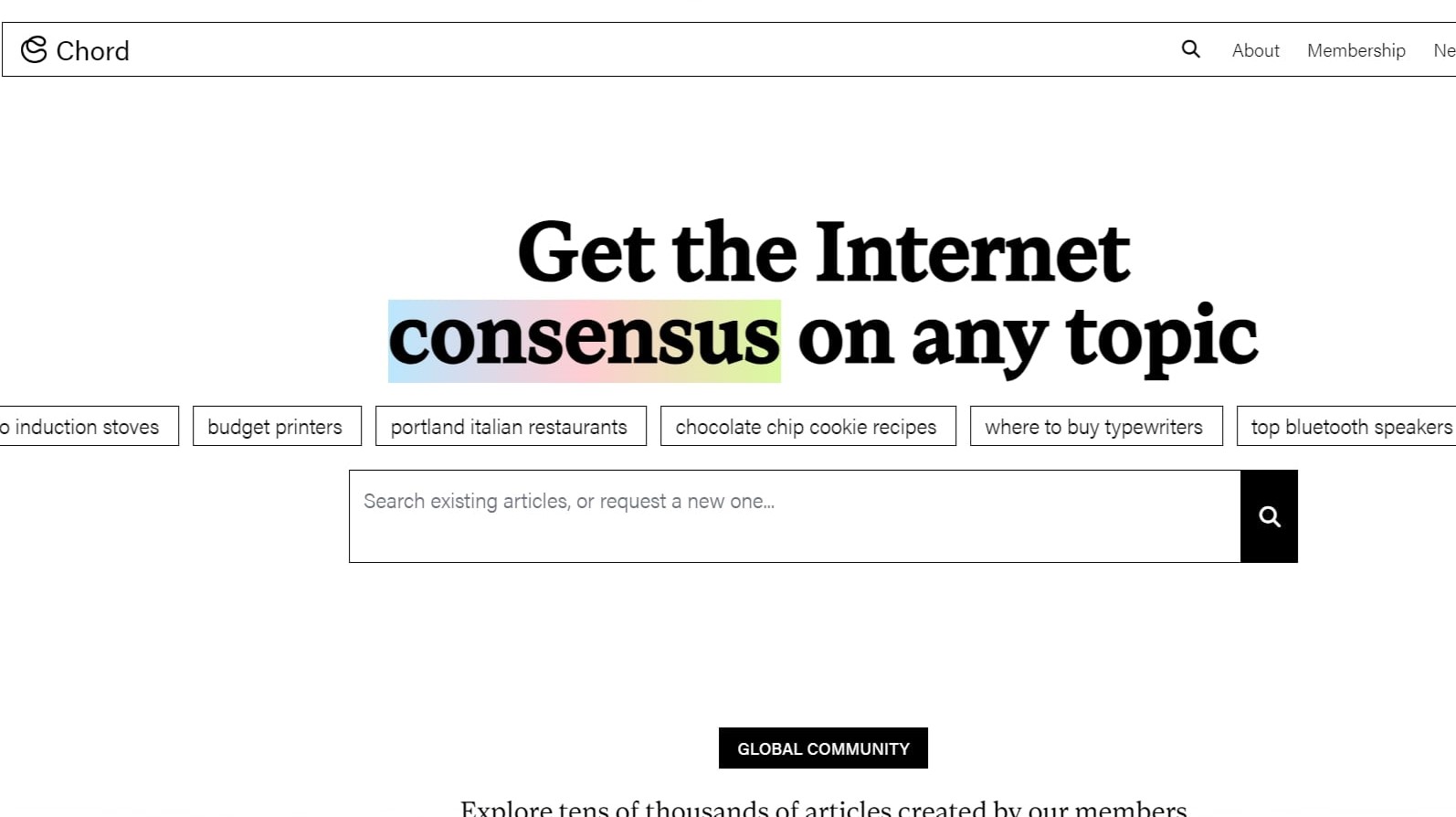
Chord is an innovative platform designed to bring you transparent, organic recommendations on a myriad of topics, from the softest sheet materials to the best travel mugs, and even the top bluetooth speakers. Harnessing the power of AI, Chord conducts real-time web research to deliver personalized articles that reflect the internet consensus on any given subject. Simply provide a topic of interest, and within minutes, Chord synthesizes the research findings into an easily digestible article. Whether for personal use or to inform decision-making, Chord ensures the information provided is authentic and accurately represents collective internet knowledge, without influence from advertisers or affiliate programs. Contributions remain anonymous by default, with a privacy toggle available for user control, embodying a community-focused resource for reliable and unbiased insights.
OpenRead
What is OpenRead?
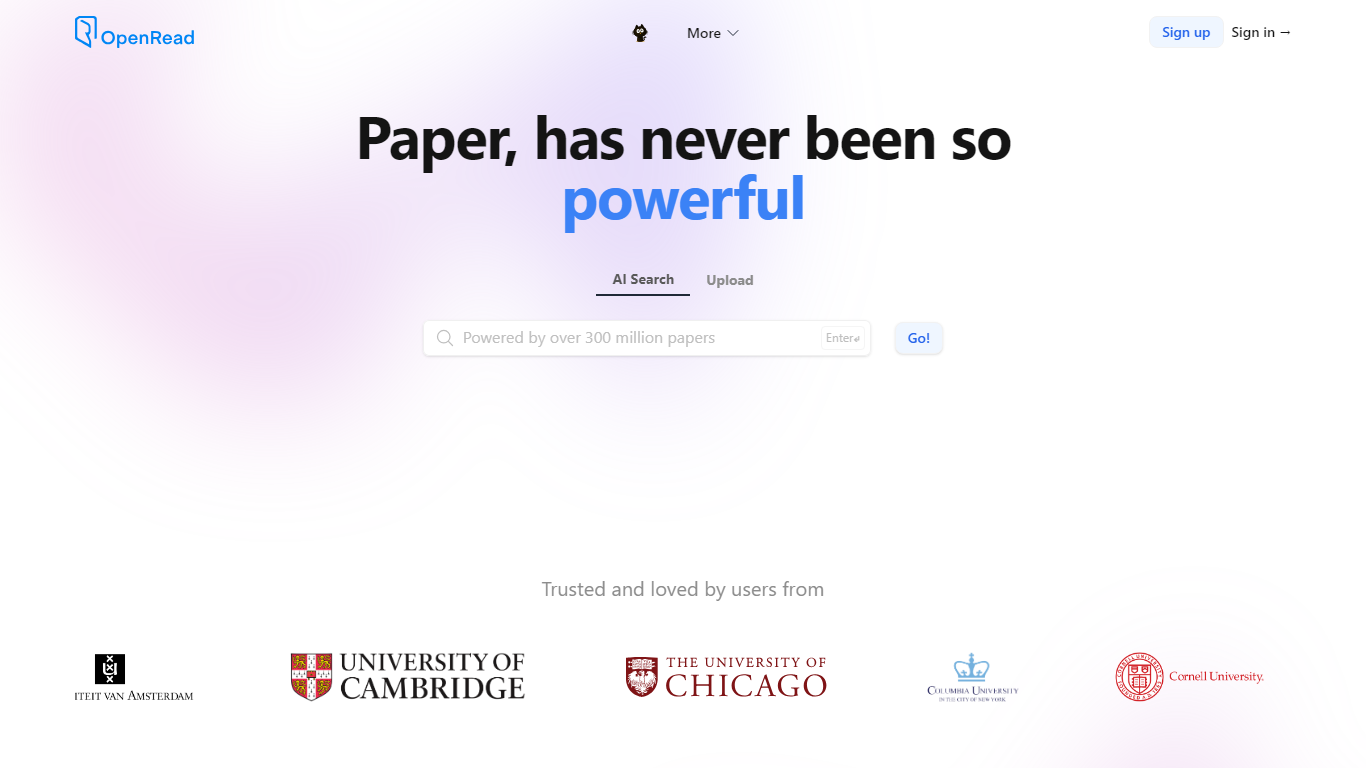
OpenRead helps you search, read, and annotate academic papers with AI tools built for research workflows. Type a natural language question and the platform matches meaning across more than 300 million papers, then layers Paper Espresso summaries, Paper Q&A deep dives, and a related-paper graph on top of the PDF you are reading.
Generic literature search stops at keyword hits. OpenRead pairs semantic paper and web search with in-document tools like Paper Compare for up to five papers at once, unlimited PDF parsing on paid tiers, and Oat, its research assistant that routes tasks across multiple frontier models. Premium subscribers get unlimited Paper Espresso and Paper Q&A usage plus 10 million monthly credits for premium-model chats inside Oat.
Universities can buy seat licenses at $200 per seat annually with SSO, admin dashboards, and training-data opt-outs. The free plan still includes unlimited PDF uploads up to 2MB per file, which is unusual for academic AI readers that gate parsing behind paid walls.
Chord Upvotes
OpenRead Upvotes
Chord Top Features
Real-Time Web Research: Conducts thorough online research swiftly while you enjoy a short break.
AI-Powered Synthesis: Utilizes AI to transform research into comprehensible and informative articles.
Personalization: Tailors recommendations and articles to the user's specific topic of interest.
Transparency: Ensures recommendations are unaffected by advertiser or affiliate money.
Privacy Control: Allows users to keep their generated articles anonymous with a simple privacy setting.
OpenRead Top Features
Semantic search matches natural language queries across 300 million academic papers
Paper Espresso condenses papers into quick relevance reads before you commit time
Paper Q&A answers targeted questions inside a single uploaded PDF
Paper Compare lines up up to 5 papers to spot contradictions across studies
Free plan includes 5 Paper Espresso and 5 Paper Q&A runs per month plus unlimited PDF parsing up to 2MB
Premium at $20 per month unlocks unlimited Paper Espresso, Paper Q&A, and Oat chat with image upload
Oat assistant routes chats to Gemini, Claude, GPT, and Grok models with 10 million monthly premium credits
Chord Category
- Research
OpenRead Category
- Research
Chord Pricing Type
- Freemium
OpenRead Pricing Type
- Freemium