Claude 3 \ Anthropic vs Gopher
In the contest of Claude 3 \ Anthropic vs Gopher, which AI Large Language Model (LLM) tool is the champion? We evaluate pricing, alternatives, upvotes, features, reviews, and more.
If you had to choose between Claude 3 \ Anthropic and Gopher, which one would you go for?
When we examine Claude 3 \ Anthropic and Gopher, both of which are AI-enabled large language model (llm) tools, what unique characteristics do we discover? Claude 3 \ Anthropic is the clear winner in terms of upvotes. The upvote count for Claude 3 \ Anthropic is 8, and for Gopher it's 6.
Disagree with the result? Upvote your favorite tool and help it win!
Claude 3 \ Anthropic
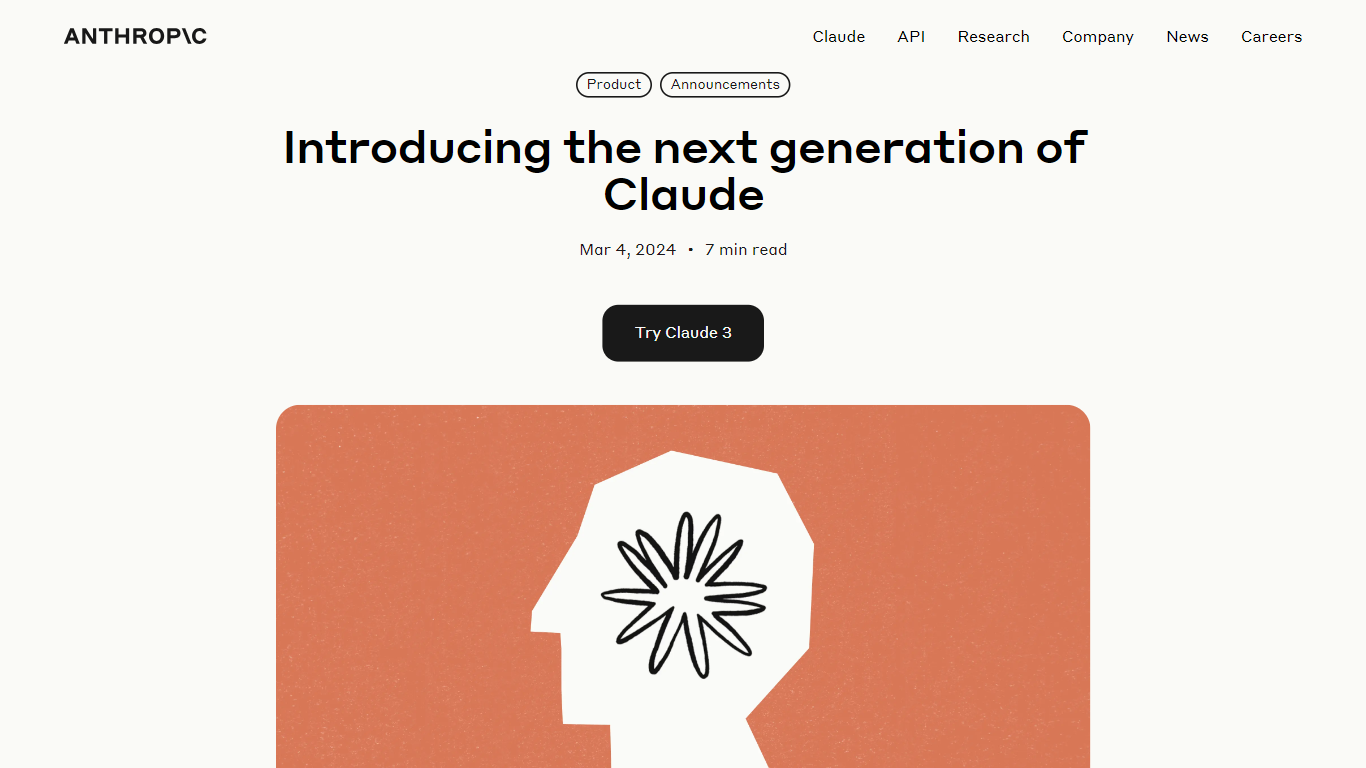

What is Claude 3 \ Anthropic?
Claude 3 is Anthropic's third-generation large language model family, released in March 2024. It includes three tiers: Haiku for speed and cost, Sonnet for balanced performance, and Opus for the highest reasoning depth. Each model targets a different tradeoff between intelligence, latency, and price.
The family handles text, code, analysis, and vision tasks. Claude 3 models process photos, charts, graphs, and technical diagrams. They support a 200K token context window at launch, with inputs exceeding 1 million tokens available to select customers. Opus and Sonnet launched on claude.ai and the Claude API in 159 countries, with Haiku following shortly after.
Anthropic built Claude 3 with Constitutional AI safety methods and Responsible Scaling Policy guardrails. The models are available through the Claude API, Amazon Bedrock, and Google Cloud Vertex AI. Sonnet powers the free tier on claude.ai, while Opus is available to Claude Pro subscribers.
Gopher
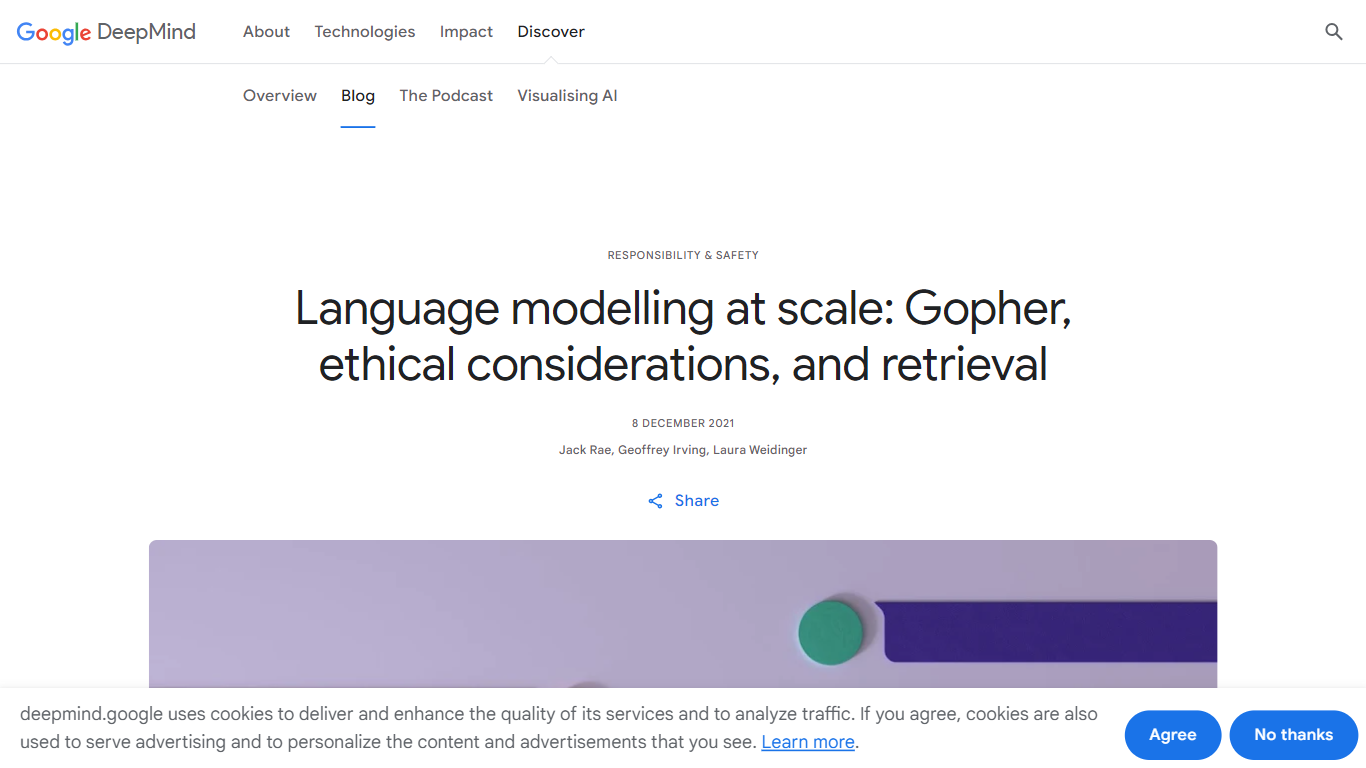
What is Gopher?
Gopher is a 280-billion-parameter transformer language model Google DeepMind announced in December 2021. DeepMind trained a family of models from 44 million to 280 billion parameters to study how scale affects text prediction, reading comprehension, fact-checking, and toxic-language detection.
Compared with general-purpose chatbots, Gopher was a research release, not a public app. DeepMind paired the model paper with an ethics taxonomy covering 21 risks across six themes and a separate Retrieval-Enhanced Transformer (RETRO) architecture that pulls passages from an internet-scale index to cut training cost and trace outputs back to sources.
The blog post targets AI researchers studying scaling laws, safety taxonomies, and retrieval-augmented language models. Gopher beat prior models on several Massive Multitask Language Understanding (MMLU) categories but still struggled with logical reasoning, common-sense questions, repetition, stereotypical bias, and confidently wrong answers in dialogue tests.
Claude 3 \ Anthropic Upvotes
Gopher Upvotes
Claude 3 \ Anthropic Top Features
Three model tiers (Haiku, Sonnet, Opus) let you pick the right balance of speed, cost, and reasoning depth
200K token context window at launch, with 1M+ token inputs available to select enterprise customers
Vision support for photos, charts, graphs, PDFs, and technical diagrams
Near-instant responses from Haiku for live chat, auto-complete, and data extraction workloads
Available on claude.ai, the Claude API, Amazon Bedrock, and Google Cloud Vertex AI
Gopher Top Features
280-billion-parameter transformer model, the largest in a series scaling from 44 million parameters
Stronger reading comprehension, fact-checking, and toxic-language detection as model size grows
MMLU benchmark gains across humanities, science, medicine, and general knowledge categories
Dialogue tests where Gopher cited Wikipedia correctly on cell biology without dialogue fine-tuning
Companion ethics paper mapping 21 large language model risks across six thematic areas
RETRO retrieval architecture matches transformer quality with an order of magnitude fewer parameters
Claude 3 \ Anthropic Category
- Large Language Model (LLM)
Gopher Category
- Large Language Model (LLM)
Claude 3 \ Anthropic Pricing Type
- Freemium
Gopher Pricing Type
- Free