ClipMaker vs Timebolt
Dive into the comparison of ClipMaker vs Timebolt and discover which AI Video Editing tool stands out. We examine alternatives, upvotes, features, reviews, pricing, and beyond.
When comparing ClipMaker and Timebolt, which one rises above the other?
When we compare ClipMaker and Timebolt, two exceptional video editing tools powered by artificial intelligence, and place them side by side, several key similarities and differences come to light. The upvote count favors Timebolt, making it the clear winner. The upvote count for Timebolt is 18, and for ClipMaker it's 6.
Think we got it wrong? Cast your vote and show us who's boss!
ClipMaker
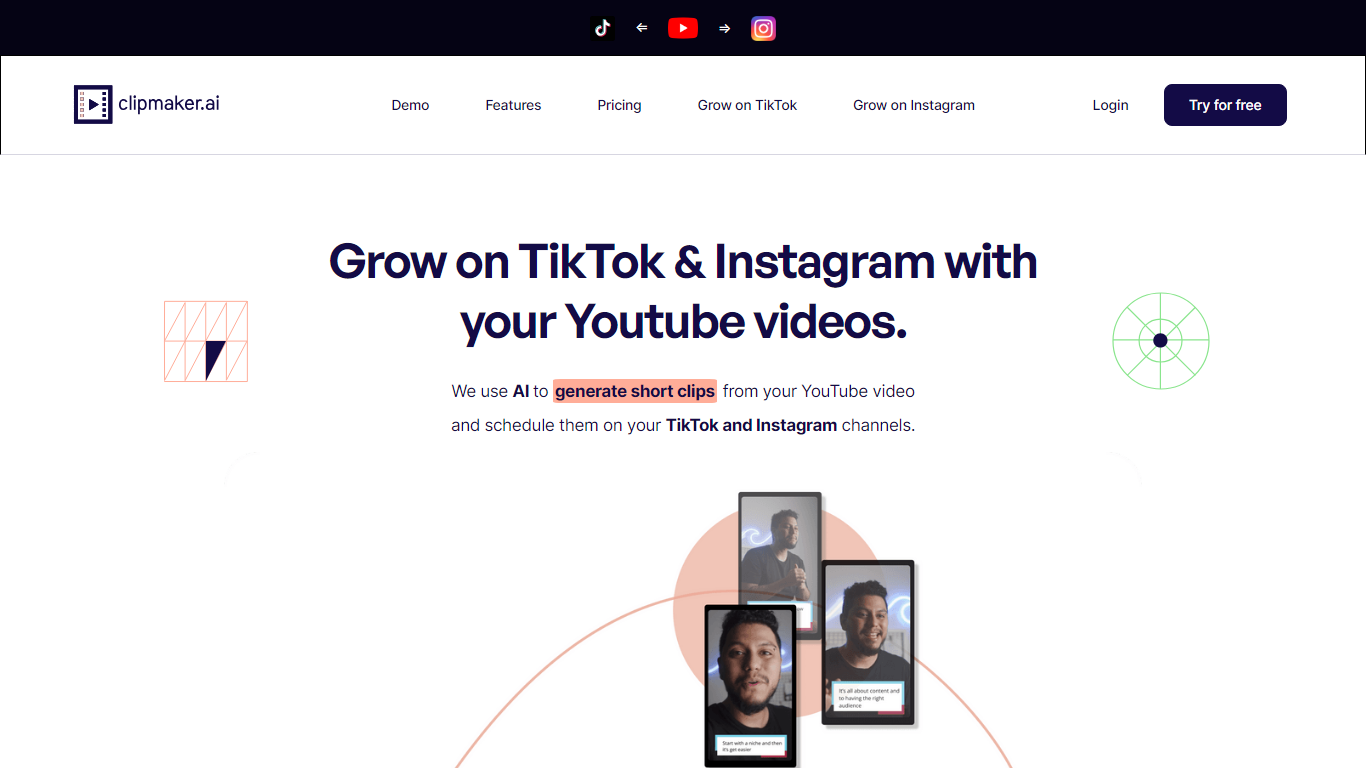

What is ClipMaker?
ClipMaker turns long YouTube uploads into short clips sized for TikTok and Instagram. Paste a YouTube URL, and the tool analyzes the video, generates multiple clips with auto captions, applies your template, and can auto-schedule posts when you connect your channels.
Repurposing tools like Opus Clip focus on finding viral moments. ClipMaker also wires in scheduling and channel growth positioning: it monitors new YouTube publishes, creates clips for each upload, and posts to TikTok and Instagram so you are not manually re-editing the same long video every week.
YouTube creators who want short-form reach without a separate editor are the target audience. The free Starter plan includes 20 minutes of video credit per month; Pro is $35 with 150 minutes and Premium is $95 with 600 minutes plus auto scheduling. The site also offers done-for-you service tiers starting at $399 per month for human-assisted production.
Timebolt
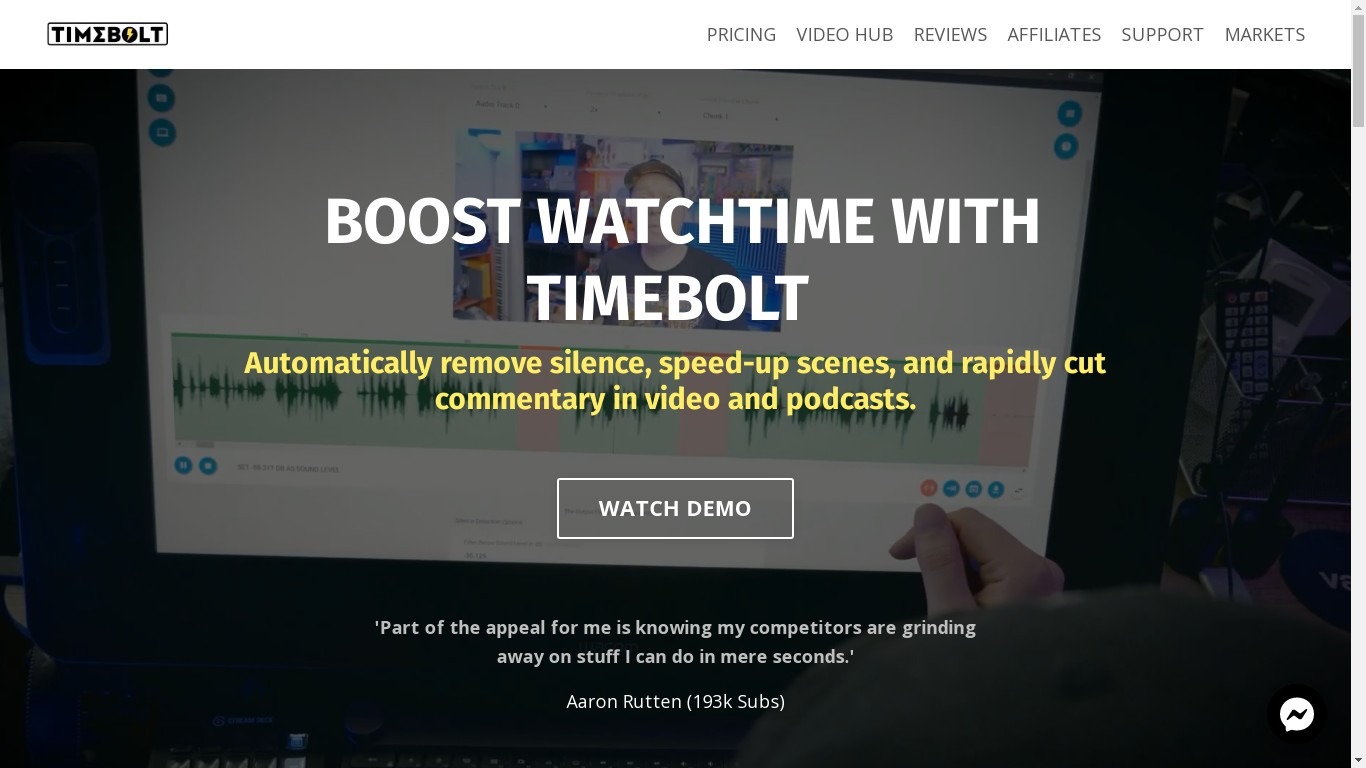
What is Timebolt?
Timebolt is a desktop video editor built around waveform-first jump cuts for podcasts, interviews, and screen recordings. It strips silence, filler words, and bad takes with 0.01 second cut control, then exports timelines to Premiere Pro, Final Cut Pro, DaVinci Resolve, or Camtasia without re-cutting by hand.
Most text-based AI editors guess where pauses live and leave hundreds of missed cuts per hour. Timebolt measures the audio waveform first, which is why its benchmark claims zero mistakes left per hour while rivals like Descript and Gling still need manual cleanup. That trade-off favors editors who want frame-tight cuts over a chat-style transcript workflow.
Podcasters, YouTubers, and course creators use Timebolt to shrink raw talking-head footage before publishing. Post-production teams also route Riverside multicam sessions through Timebolt XML exports so senior editors finish polish work in their preferred NLE.
ClipMaker Upvotes
Timebolt Upvotes
ClipMaker Top Features
Generates short clips from YouTube videos with AI chapter detection and up to 10 clips per video
Auto captions on every clip with templates for consistent branding across posts
Auto-schedule feature posts new clips to TikTok and Instagram when you publish on YouTube
Free Starter plan with 20 minutes of video credit per month and 10-minute max uploads
Pro at $35/month includes 150 video minutes; Premium at $95 adds 600 minutes and auto scheduler
Exports clips formatted for TikTok, Instagram, LinkedIn, Facebook, and YouTube Shorts
Timebolt Top Features
0.01 second cut control on waveform-based silence removal
Processes an hour of footage in about 13 seconds for jump cuts
Exports XML timelines to Premiere Pro, Final Cut Pro, and DaVinci Resolve
UMCHECK removes filler words automatically from recorded speech
Free 4K screen capture tool for Mac and Windows
Benchmark reports zero missed cuts per hour versus hundreds on rival AI editors
ClipMaker Category
- Video Editing
Timebolt Category
- Video Editing
ClipMaker Pricing Type
- Freemium
Timebolt Pricing Type
- Freemium