Cognee vs Velos (formerly GradientJ)
When comparing Cognee vs Velos (formerly GradientJ), which AI Large Language Model (LLM) tool shines brighter? We look at pricing, alternatives, upvotes, features, reviews, and more.
Between Cognee and Velos (formerly GradientJ), which one is superior?
When we put Cognee and Velos (formerly GradientJ) side by side, both being AI-powered large language model (llm) tools, Neither tool takes the lead, as they both have the same upvote count. Your vote matters! Help us decide the winner among aitools.fyi users by casting your vote.
Disagree with the result? Upvote your favorite tool and help it win!
Cognee

What is Cognee?
Cognee turns documents, chats, tickets, and API data into graph memory language model agents can recall across sessions. It builds linked entity graphs from that context so agents stop restarting from scratch each run. You can connect Slack, GitHub, or Linear so coding agents and support bots share one permission-aware company brain.
Plain RAG returns similar text chunks. Cognee pairs vector search with knowledge graphs and auto-generated ontologies, so recall pulls connected entities and cited facts rather than isolated snippets. The SDK centers on four verbs, remember, recall, forget, and improve, and the same surface ships over HTTP and MCP for Claude Code, Codex, and OpenClaw.
Platform teams use it for coding agent memory, GraphRAG pipelines, deal intelligence, and customer-facing agents that need grounded answers. Run it with pip locally, self-host in Docker or on-prem, or move to Cognee Cloud when you want managed scale. The project reports 30.4k GitHub stars and 5M+ SDK runs per month, with production deployments at Bayer and Knowunity.
Velos (formerly GradientJ)
What is Velos (formerly GradientJ)?
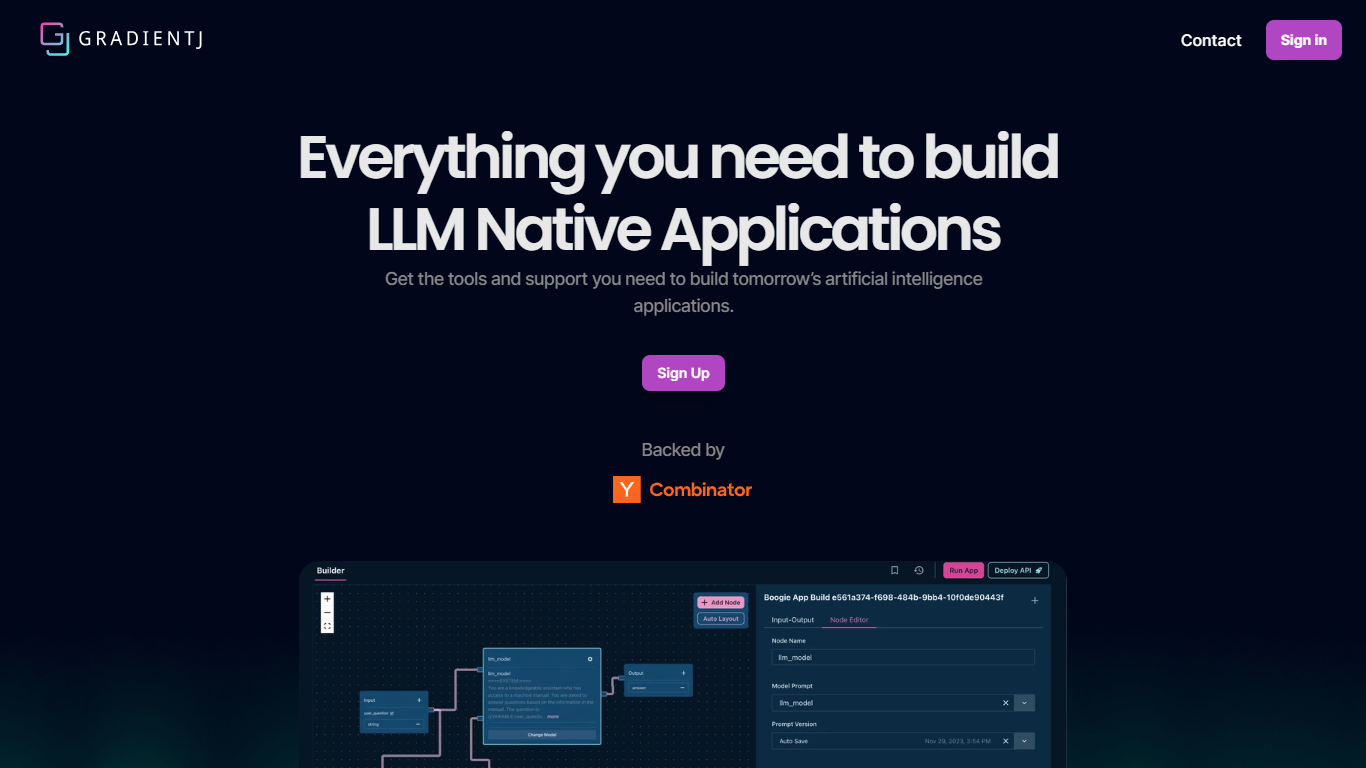
Velos is a managed automation platform for back-office teams that want to replace outsourced manual work with software. It targets insurance carriers, MGAs, and finance operations that still rely on BPOs or internal staff for document-heavy workflows like bordereaux, policy servicing, and month-end close.
The company learns your process rules, tests against your real data, and turns recurring work into auditable workflows that combine code with large language models. Velos handles design, deployment, and ongoing management so teams get faster turnaround without adding headcount every time volume spikes.
It is built for organizations handling sensitive, high-volume operations where accuracy matters. Customers include commercial insurance teams, private equity firms, and fractional CFO shops looking to automate multi-hour processes that used to require offshore teams or manual spreadsheets.
Cognee Upvotes
Velos (formerly GradientJ) Upvotes
Cognee Top Features
pip install cognee connects Claude Code, Codex, or any MCP client in minutes
remember, recall, forget, and improve as the core API across SDK, HTTP, and MCP
30.4k GitHub stars and 5M+ SDK runs per month listed on the homepage
Hybrid graph and vector memory links entities across long conversations and sources
Free Cognee Cloud tier includes 1M tokens and one workspace at $0 per month
Ingest from Slack, Notion, Linear, Google Drive, S3, and code repos into one recall layer
BEAM 100K benchmark shows Cognee scoring 0.79 on the SDK results page
Velos (formerly GradientJ) Top Features
Turns your SOPs into auditable workflows that mix code with large language models
Automates bordereaux, policy servicing, premium reconciliation, and month-end close
Tests automations against your real data and learns your edge cases before going live
Underwriting support that extracts, enriches, and flags submissions before they reach an underwriter
Post-bind policy checking that catches rating errors and compliance gaps early
Real-time visibility into every workflow outcome and exception as work runs
Cognee Category
- Large Language Model (LLM)
Velos (formerly GradientJ) Category
- Large Language Model (LLM)
Cognee Pricing Type
- Freemium
Velos (formerly GradientJ) Pricing Type
- Paid