Cognee vs Stellaris AI
In the clash of Cognee vs Stellaris AI, which AI Large Language Model (LLM) tool emerges victorious? We assess reviews, pricing, alternatives, features, upvotes, and more.
When we put Cognee and Stellaris AI head to head, which one emerges as the victor?
Let's take a closer look at Cognee and Stellaris AI, both of which are AI-driven large language model (llm) tools, and see what sets them apart. Both tools are equally favored, as indicated by the identical upvote count. Your vote matters! Help us decide the winner among aitools.fyi users by casting your vote.
Want to flip the script? Upvote your favorite tool and change the game!
Cognee

What is Cognee?
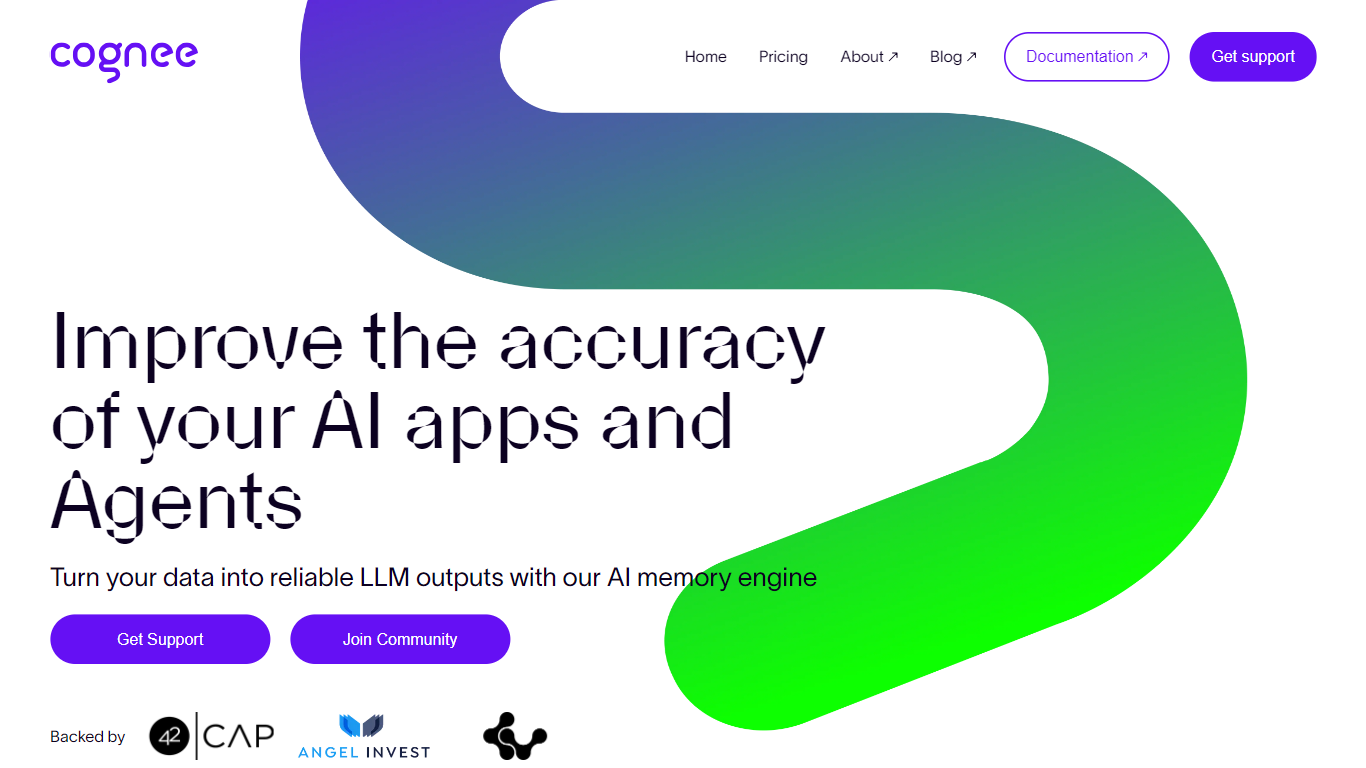
Cognee turns documents, chats, tickets, and API data into graph memory language model agents can recall across sessions. It builds linked entity graphs from that context so agents stop restarting from scratch each run. You can connect Slack, GitHub, or Linear so coding agents and support bots share one permission-aware company brain.
Plain RAG returns similar text chunks. Cognee pairs vector search with knowledge graphs and auto-generated ontologies, so recall pulls connected entities and cited facts rather than isolated snippets. The SDK centers on four verbs, remember, recall, forget, and improve, and the same surface ships over HTTP and MCP for Claude Code, Codex, and OpenClaw.
Platform teams use it for coding agent memory, GraphRAG pipelines, deal intelligence, and customer-facing agents that need grounded answers. Run it with pip locally, self-host in Docker or on-prem, or move to Cognee Cloud when you want managed scale. The project reports 30.4k GitHub stars and 5M+ SDK runs per month, with production deployments at Bayer and Knowunity.
Stellaris AI
What is Stellaris AI?
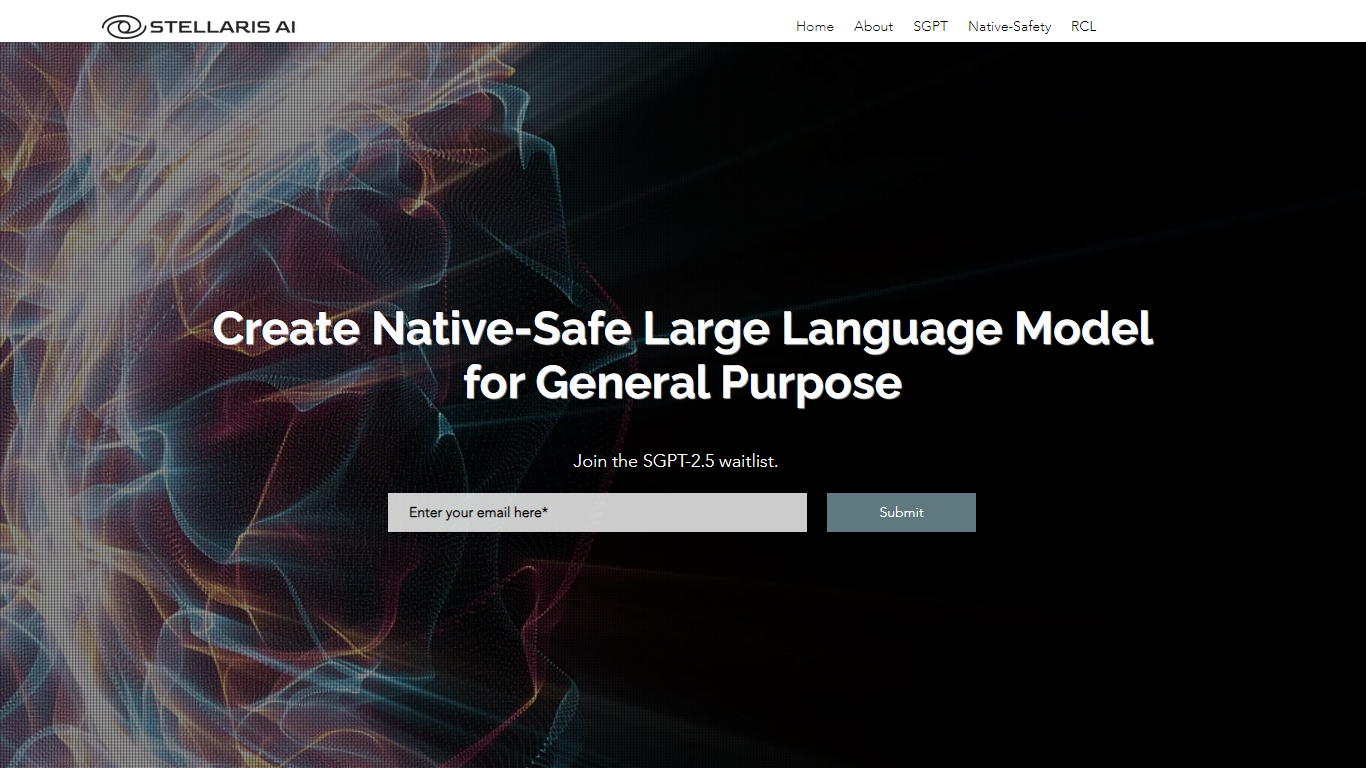
Stellaris AI builds large language models marketed around native safety and human-like reasoning for real-world tasks. Its flagship SGPT line targets text and code generation, knowledge Q&A, logical reasoning, and analytics at a scale the company describes as hundreds of billions of parameters. The public site centers on a waitlist for SGPT-4.5 rather than a self-serve chat product you can open today.
Where many LLM labs bolt safety filters on after training, Stellaris AI frames safety as part of the model stack through strict source referencing and harm minimization in the architecture. It also highlights Real-time Context Learning (RCL) for adapting answers with live knowledge, a combination aimed at teams that want cited outputs instead of unchecked generation.
Researchers, enterprise AI teams, and early adopters join the SGPT-4.5 waitlist for first access. The company cites 10+ years of research and three core product pillars: Stellaris GPT, Native Safety, and RCL.
Cognee Upvotes
Stellaris AI Upvotes
Cognee Top Features
pip install cognee connects Claude Code, Codex, or any MCP client in minutes
remember, recall, forget, and improve as the core API across SDK, HTTP, and MCP
30.4k GitHub stars and 5M+ SDK runs per month listed on the homepage
Hybrid graph and vector memory links entities across long conversations and sources
Free Cognee Cloud tier includes 1M tokens and one workspace at $0 per month
Ingest from Slack, Notion, Linear, Google Drive, S3, and code repos into one recall layer
BEAM 100K benchmark shows Cognee scoring 0.79 on the SDK results page
Stellaris AI Top Features
SGPT models described at 100B+ parameters for text, code, and reasoning tasks
Native Safety framework with strict source referencing and harm minimization
Real-time Context Learning (RCL) for live knowledge integration
Three product pillars: Stellaris GPT, Native Safety, and RCL
SGPT-4.5 waitlist open for early access signups on the homepage
Cognee Category
- Large Language Model (LLM)
Stellaris AI Category
- Large Language Model (LLM)
Cognee Pricing Type
- Freemium
Stellaris AI Pricing Type
- Freemium