Crucible vs SciSpace (formerly Typeset)
When comparing Crucible vs SciSpace (formerly Typeset), which AI Summarizer tool shines brighter? We look at pricing, alternatives, upvotes, features, reviews, and more.
In a comparison between Crucible and SciSpace (formerly Typeset), which one comes out on top?
When we put Crucible and SciSpace (formerly Typeset) side by side, both being AI-powered summarizer tools, The users have made their preference clear, SciSpace (formerly Typeset) leads in upvotes. SciSpace (formerly Typeset) has garnered 24 upvotes, and Crucible has garnered 6 upvotes.
Don't agree with the result? Cast your vote and be a part of the decision-making process!
Crucible

What is Crucible?
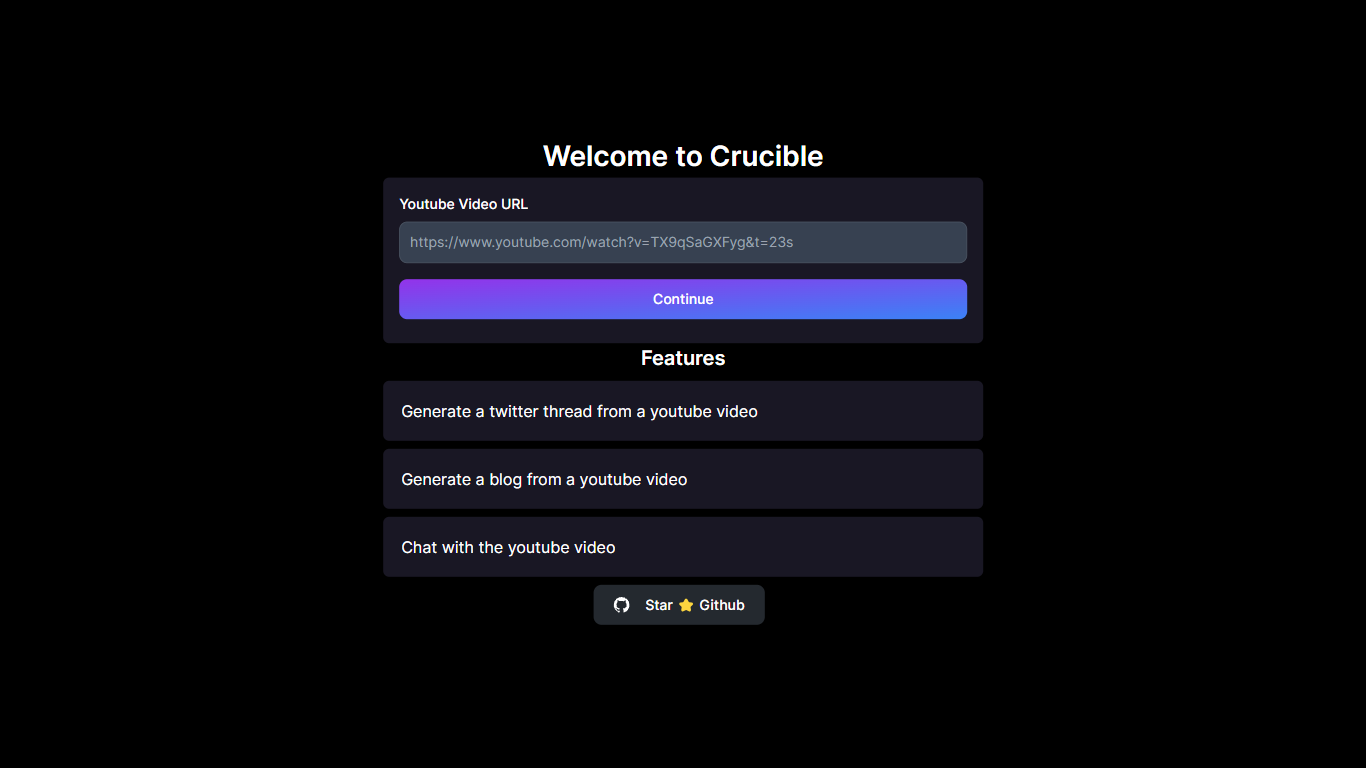
Crucible is an innovative tool designed to elevate your video content to the next level by providing a unique set of features. With Crucible, you can easily transform your YouTube videos into various formats, making your content more accessible and engaging. If you're looking to expand the reach of your content, Crucible allows you to convert your YouTube videos into well-structured blogs or comprehensive Twitter threads with just a few clicks. Additionally, it offers an interactive experience allowing you to 'chat' with your video, making it easier to navigate and extract specific information. The user-friendly interface ensures that you can make the most of these features without any hassle. Give your videos an extra edge and explore new audiences with the versatility Crucible offers.
SciSpace (formerly Typeset)
What is SciSpace (formerly Typeset)?
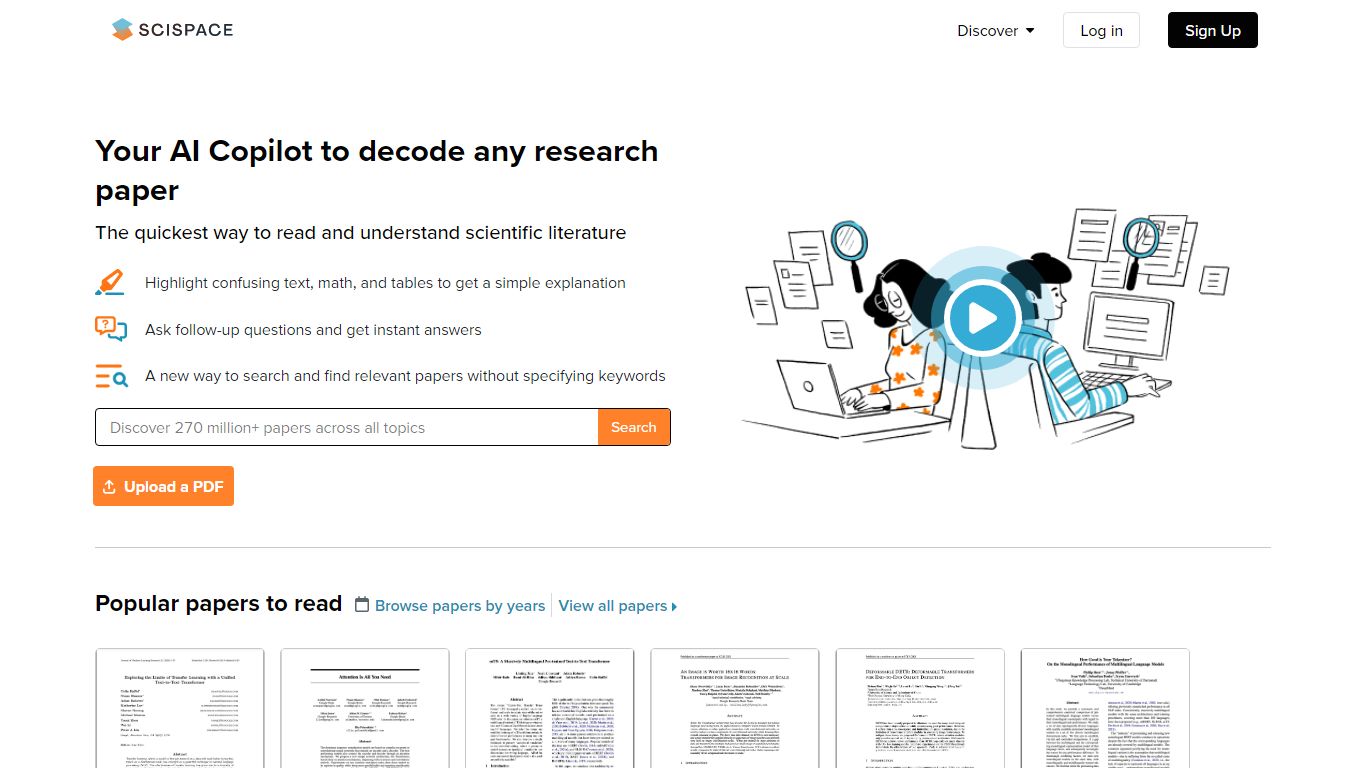
SciSpace, formerly Typeset, is a research workspace where you search a large academic paper index, chat with PDFs, and draft literature reviews with cited sources. The typeset.io URL now lands on scispace.com, which bundles an AI agent, literature review search, paraphraser, citation generator, data extraction, and AI detection in one interface.
General AI chat tools answer from the open web. SciSpace centers the workflow on papers: you can run systematic reviews across 280M+ indexed works, highlight passages for explanations, and move from reading into AI Writer drafts with references. Biomedical Agent, enterprise recruiting, and Chrome or mobile apps extend the same stack for labs and R&D teams.
Graduate students, PhD researchers, and pharma or biotech analysts use SciSpace to screen literature faster, unpack dense PDFs, and produce summaries or manuscripts with traceable citations. The platform reports adoption by 9.6 million researchers and lists SOC 2 compliance on its site.
Crucible Upvotes
SciSpace (formerly Typeset) Upvotes
Crucible Top Features
Generate a Twitter thread from a YouTube video: Convert your video content into engaging Twitter threads.
Generate a blog from a YouTube video: Turn your video into a detailed blog post effortlessly.
Chat with the YouTube video: Engage in an interactive chat with your video to extract specific information.
User-Friendly Interface: Easy to use allowing for seamless navigation and content transformation.
Broaden Audience Reach: Expand your video’s presence across multiple content platforms effectively.
SciSpace (formerly Typeset) Top Features
Search and review literature across 280M+ indexed research papers
Chat with PDF highlights for plain-language explanations of dense sections
SciSpace Agent plus Biomedical Agent for guided research tasks
Built-in paraphraser, citation generator, AI detector, and data extraction tools
AI Writer and templates for drafting papers with cited sources
Chrome extension and mobile app for reading outside the browser tab
Premium plans with a 24-hour money-back guarantee on subscriptions
Crucible Category
- Summarizer
SciSpace (formerly Typeset) Category
- Summarizer
Crucible Pricing Type
- Freemium
SciSpace (formerly Typeset) Pricing Type
- Freemium