DeepFaceLab vs PirateDiffusion
In the face-off between DeepFaceLab vs PirateDiffusion, which AI Data Science tool takes the crown? We scrutinize features, alternatives, upvotes, reviews, pricing, and more.
In a face-off between DeepFaceLab and PirateDiffusion, which one takes the crown?
If we were to analyze DeepFaceLab and PirateDiffusion, both of which are AI-powered data science tools, what would we find? Interestingly, both tools have managed to secure the same number of upvotes. Be a part of the decision-making process. Your vote could determine the winner.
You don't agree with the result? Cast your vote to help us decide!
DeepFaceLab
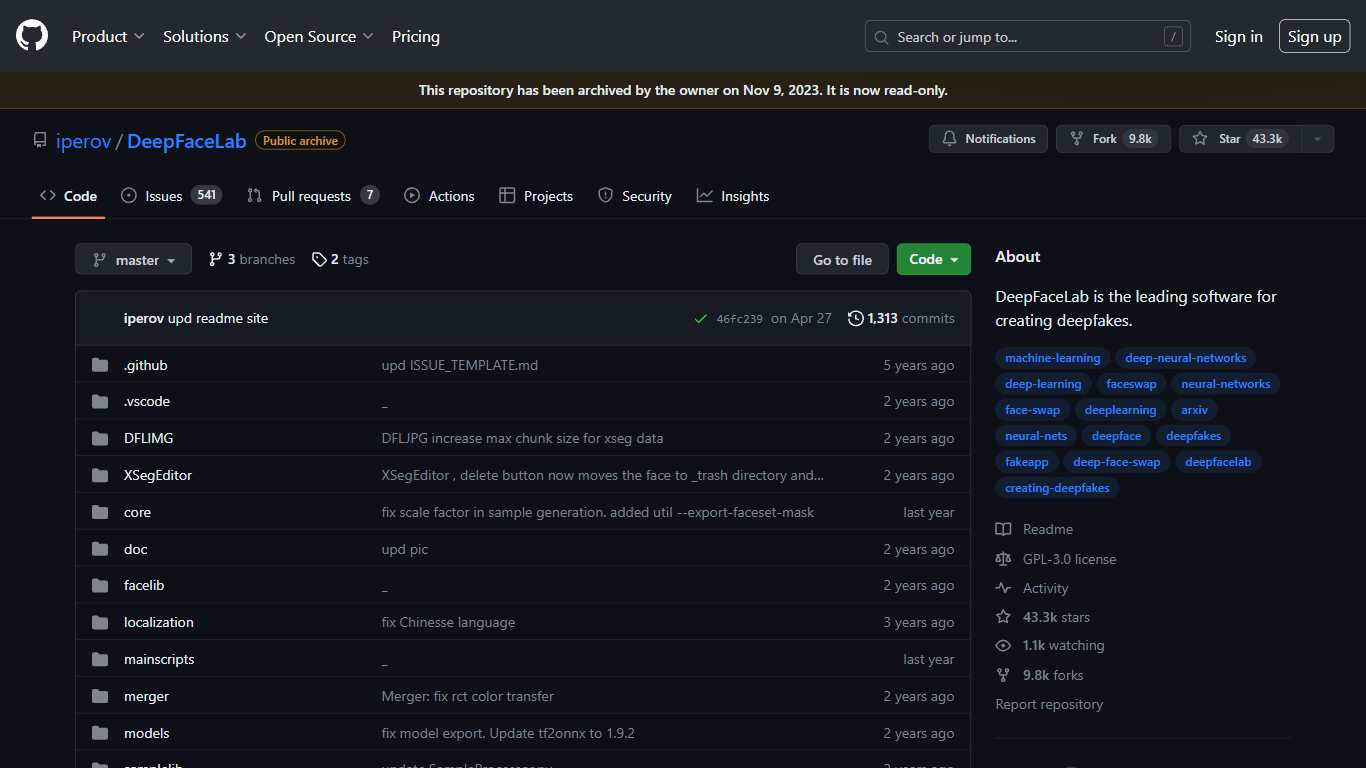

What is DeepFaceLab?
DeepFaceLab trains and runs deepfake face swaps on your own GPU through a full Python pipeline you control locally. Extract faces from source and destination videos, train a neural network model, and merge the swapped face back into footage at resolutions up to 512 pixels and beyond.
Unlike cloud deepfake apps that hide the pipeline, DeepFaceLab gives you every stage, including S3FD face extraction, XSeg masking, and model architectures like SAEHD. That depth comes with a steep learning curve: the README warns there is no one-click fix and expects comfort with After Effects or DaVinci Resolve for finishing work.
VFX artists, YouTube creators, and researchers who need local, GPU-based face replacement are the core audience. The repository was archived read-only on November 13, 2024, but the code, Windows builds, and 19,300+ GitHub stars remain accessible. The related DeepFaceLive project handles real-time streaming swaps separately.
PirateDiffusion
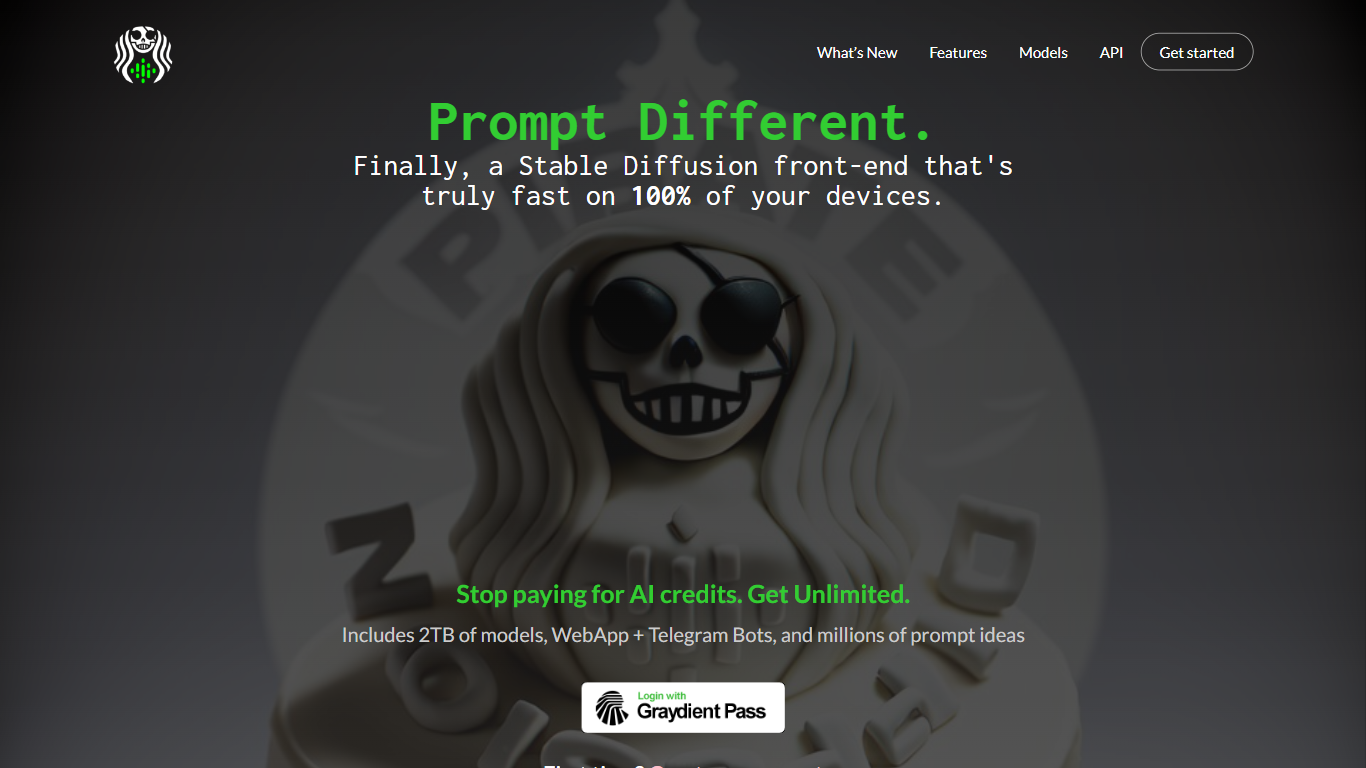
What is PirateDiffusion?
PirateDiffusion runs as @piratediffusion_bot on Telegram and generates images, video, music, and LLM chats from slash commands. Type // for guided skills, /render for manual Stable Diffusion prompts, or /wf workflows to call models like Wan 2.2, LTX 2.3, Hunyuan, FLUX 2, and SDXL without opening a desktop UI. A linked Graydient web studio at my.graydient.ai handles inpainting, file archives, and visual workflows the chat interface cannot.
Credit-based image apps meter every render. PirateDiffusion advertises unlimited generations on paid plans with no token wallet, bundling the Telegram bot with Graydient's browser webUI. That makes it better for high-volume Stable Diffusion experimentation than services that charge per image, though free accounts show ads and stay in a restricted mode until Patreon activation lifts NSFW limits.
Telegram creators, hobbyists, and community groups use PirateDiffusion for quick mobile renders, custom PollyGPT character bots, and multi-step video extensions via /wf commands. Setup starts with /start and /debug in Telegram plus a Graydient account; Plus members unlock additional LLM model switching beyond the default Llama3 /llm command.
DeepFaceLab Upvotes
PirateDiffusion Upvotes
DeepFaceLab Top Features
19,300+ GitHub stars with 928 forks and GPL-3.0 open-source license
Face replacement, de-aging, and full head swap workflows with native resolution training
S3FD face extractor and XSeg editor for precise face masking
Windows builds distributed via torrent and Mega.nz; Linux port available
Built on TensorFlow with CUDA and DirectX GPU acceleration
Related DeepFaceLive project adds real-time face swap for streaming and video calls
PirateDiffusion Top Features
Telegram bot @piratediffusion_bot with // skill shortcuts and /render manual prompts
Supports Wan 2.2, LTX 2.3, Hunyuan, FLUX 2, SDXL, and SD 3.5 model workflows
Paid plans advertise unlimited images, video, and LoRA training without credit tokens
/studio launches MiniPaint and MasterSelects editors inside the browser
/llm command runs a 70B Llama3 chat; Plus members can switch LLM models
Custom PollyGPT bots trainable via /bots /new and my.graydient.ai
Patreon-linked activation unlocks pro-pro debug mode and removes free-tier ads
DeepFaceLab Category
- Data Science
PirateDiffusion Category
- Data Science
DeepFaceLab Pricing Type
- Free
PirateDiffusion Pricing Type
- Freemium