DexCode vs Starlens
Dive into the comparison of DexCode vs Starlens and discover which AI Developer tool stands out. We examine alternatives, upvotes, features, reviews, pricing, and beyond.
In a comparison between DexCode and Starlens, which one comes out on top?
When we compare DexCode and Starlens, two exceptional developer tools powered by artificial intelligence, and place them side by side, several key similarities and differences come to light. Neither tool takes the lead, as they both have the same upvote count. Since other aitools.fyi users could decide the winner, the ball is in your court now to cast your vote and help us determine the winner.
You don't agree with the result? Cast your vote to help us decide!
DexCode

What is DexCode?
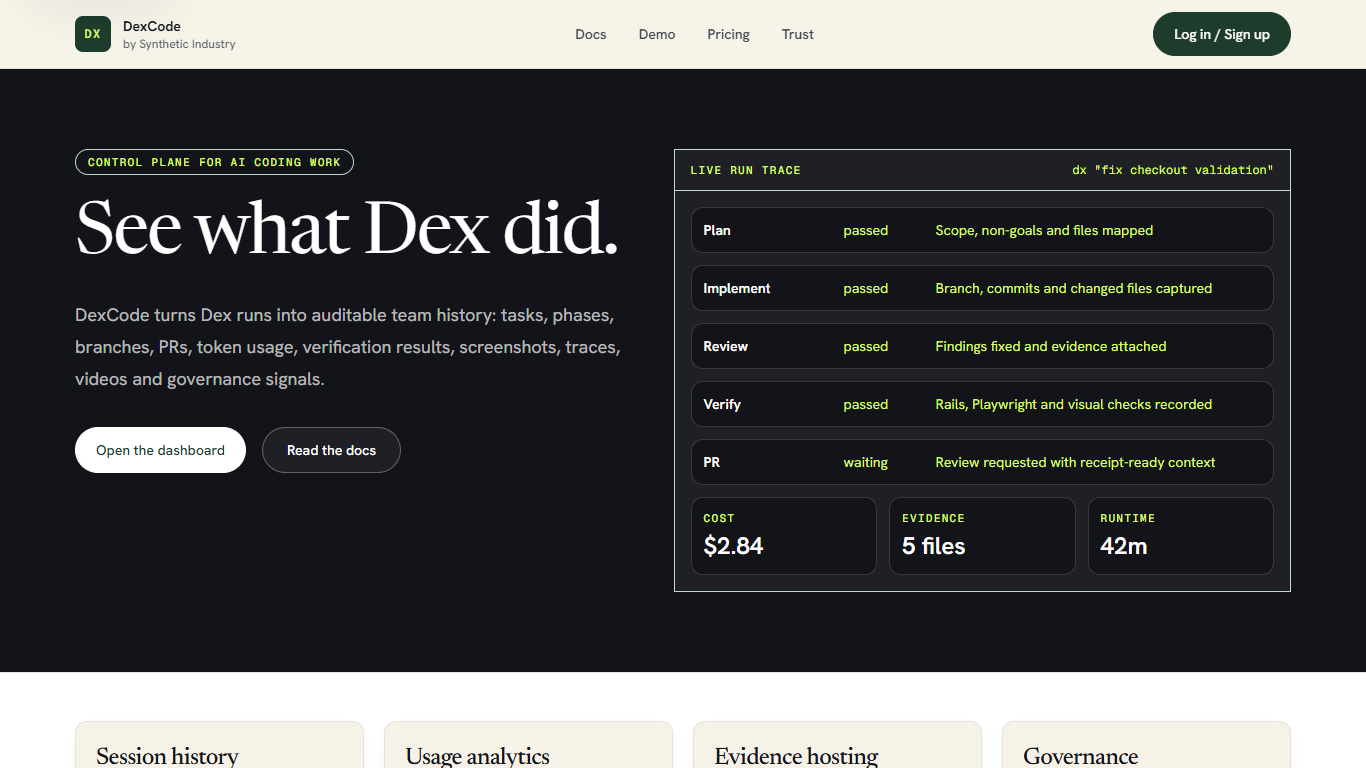
DexCode is a control plane that gives engineering teams one shared, auditable record of AI coding work. It captures what changed in each run, what passed verification, what failed, what it cost, and what still needs human review. Teams use it when they need run receipts and evidence attached to pull requests instead of digging through private chat transcripts or terminal scrollback.
Dex can keep executing in the local repo while DexCode ingests structured telemetry through an API built for append-only trace events and stable evidence links. Device login issues scoped CLI tokens that you can revoke from the dashboard, and runs store task scope, branch, commits, review findings, and PR links as durable receipts.
Engineering leads, reviewers, and platform operators use DexCode to inspect changed files, verification output, browser screenshots, token usage, budget policy, and approval status before merging AI-generated code. Governance surfaces cover budgets, provider credentials, retention policy, and audit exports for organizations that need every run to leave a readable record.
Starlens
What is Starlens?
The website offers a comprehensive platform designed to enhance productivity and streamline workflows for professionals across various industries. Its core functionality revolves around task management, collaboration tools, and performance tracking, making it an essential tool for teams looking to optimize their operations. The target audience includes project managers, team leaders, and organizations seeking to improve efficiency and communication within their teams. The unique value proposition lies in its user-friendly interface combined with powerful features that cater to both small businesses and large enterprises. Key differentiators include real-time collaboration capabilities, customizable dashboards, and integration with popular third-party applications, setting it apart from competitors in the productivity software market.
DexCode Upvotes
Starlens Upvotes
DexCode Top Features
Live run traces walk through Plan, Implement, Review, Verify, and PR phases
Roll up tokens and estimated cost by user, repo, provider, and task type
Attach screenshots, traces, videos, and logs with stable PR-ready URLs
Budgets, provider credentials, retention policy, and audit logs in one dashboard
GitHub, Playwright, and Rails CI gates sync as first-class run evidence
Starlens Top Features
Real-Time Collaboration: Enables team members to work together simultaneously on projects, enhancing communication and reducing delays.
Customizable Dashboards: Users can tailor their dashboards to display relevant metrics and tasks, improving focus and efficiency.
Integration with Third-Party Applications: Seamlessly connects with tools like Slack, Google Drive, and Trello, allowing for a unified workflow.
Performance Tracking: Provides analytics and reporting features to monitor team performance and project progress, facilitating data-driven decision-making.
User-Friendly Interface: Designed with simplicity in mind, ensuring that users can navigate the platform easily without extensive training.
DexCode Category
- Developer
Starlens Category
- Developer
DexCode Pricing Type
- Paid
Starlens Pricing Type
- Freemium