DocuTalk vs WebWhiz
In the contest of DocuTalk vs WebWhiz, which AI Customer Support tool is the champion? We evaluate pricing, alternatives, upvotes, features, reviews, and more.
If you had to choose between DocuTalk and WebWhiz, which one would you go for?
When we examine DocuTalk and WebWhiz, both of which are AI-enabled customer support tools, what unique characteristics do we discover? WebWhiz is the clear winner in terms of upvotes. WebWhiz has 8 upvotes, and DocuTalk has 7 upvotes.
Don't agree with the result? Cast your vote and be a part of the decision-making process!
DocuTalk

What is DocuTalk?
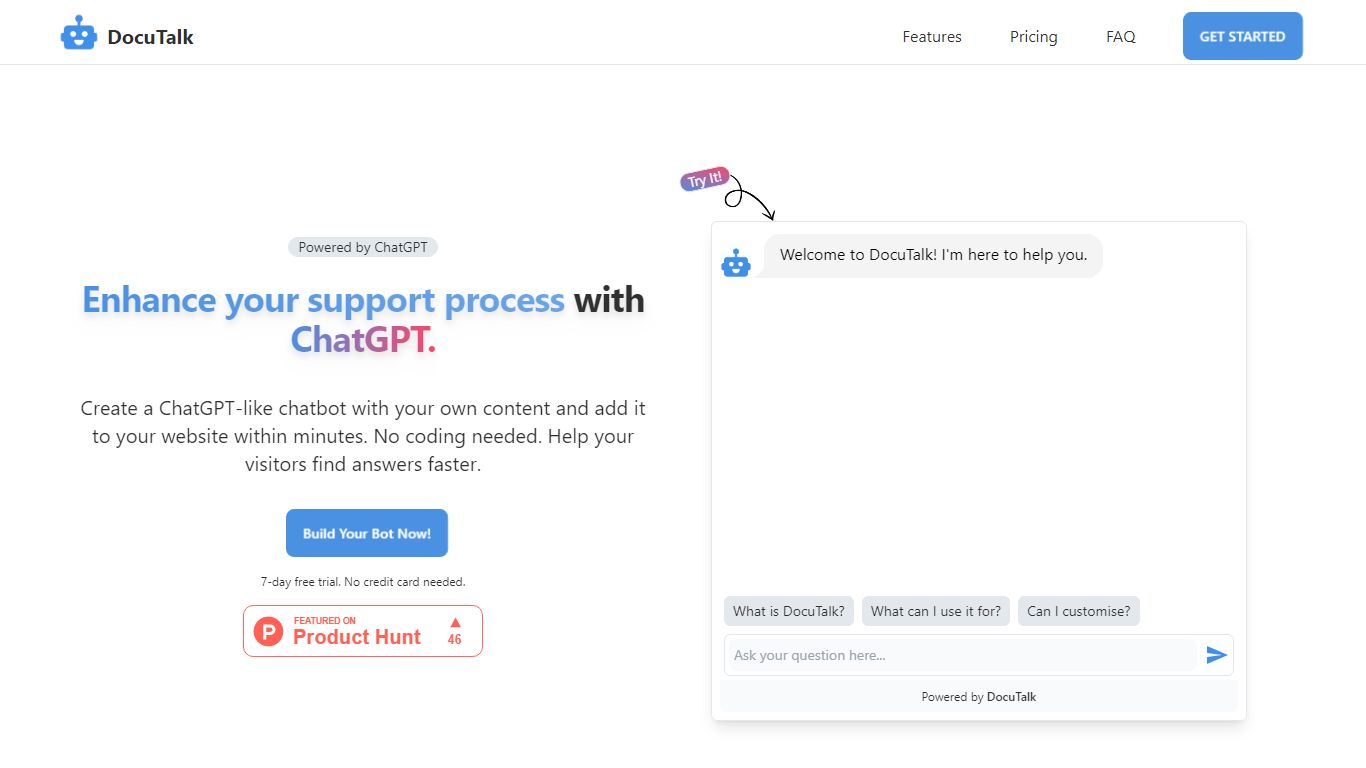
DocuTalk lets you train a website chatbot on your own content and embed it as a chat bubble or iframe without writing code. You point it at your site or upload documents, it crawls the pages and builds a knowledge base, then visitors get answers pulled from your actual material instead of generic responses.
The docutalk.co domain now redirects to FastBots.ai, which expanded the original product with multi-channel integrations (WhatsApp, Slack, Telegram), live chat handoff, and Zapier actions that trigger mid-conversation. That makes it more of an all-channel support agent than a simple website widget, though the core workflow of crawl, train, and embed stays the same.
Small business owners, SaaS support teams, and agencies use it to deflect repetitive visitor questions. The free tier includes one chatbot with 50 monthly message credits, and paid plans add more bots, crawl pages, and integrations.
WebWhiz
What is WebWhiz?
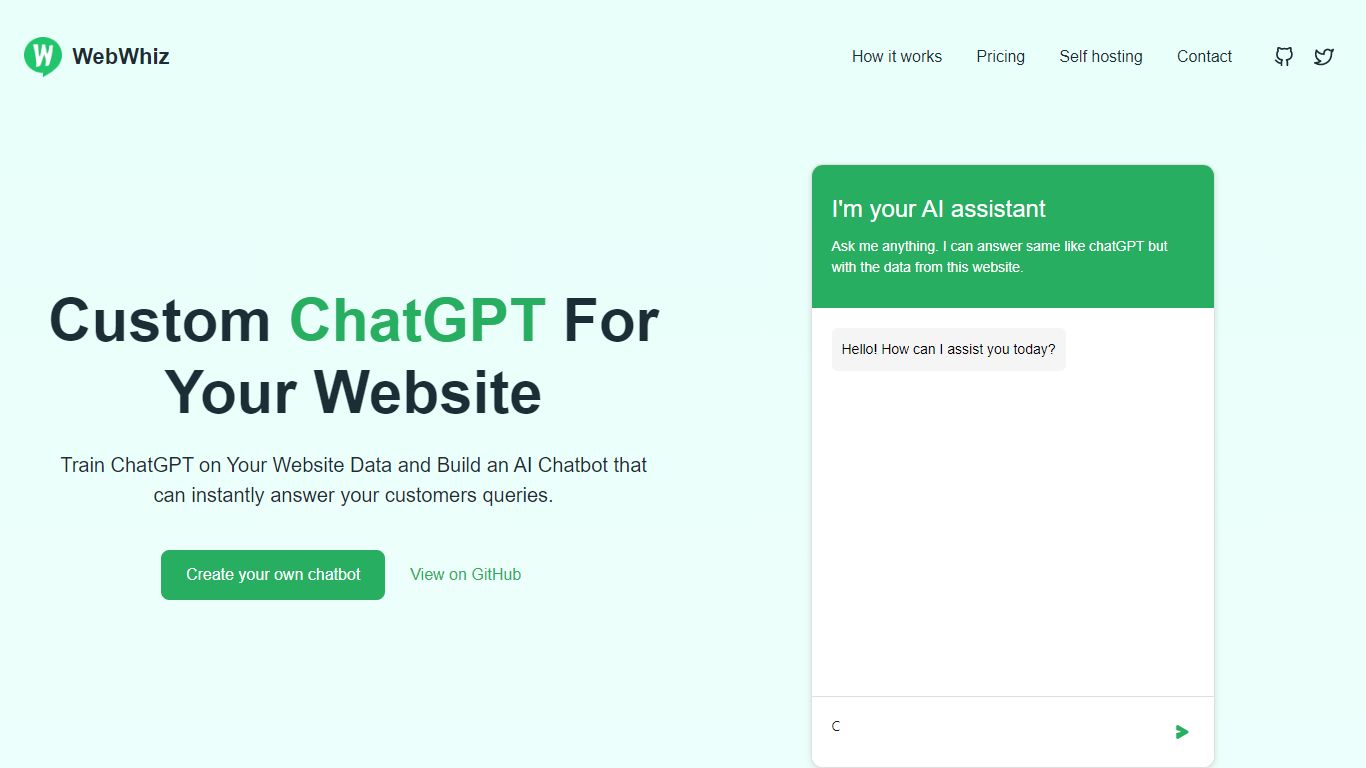
WebWhiz is a customer support chatbot you train on your own website content, then embed with a single script tag. You point it at your site URL, it crawls public pages, and builds a ChatGPT-backed assistant that answers from that material only. The hosted product runs in the EU without cookies, and the same codebase is open source under AGPL 3.0 if you want to self-host with Docker.
Most website chatbots will guess when they lack context. WebWhiz refuses to invent answers outside its training data, which is why its homepage pitches data-specific responses as the core difference. You can also paste custom text, bring your own OpenAI API key, and fine-tune replies from the project dashboard when answers drift.
It fits teams that want first-line customer support on a marketing site or docs without building a custom RAG stack. SaaS vendors, e-commerce shops, and agencies reselling white-label bots all show up in its customer logos. Plans cap messages, projects, and crawled pages, while a free self-hosting path keeps data on your own servers if you accept AGPL obligations.
DocuTalk Upvotes
WebWhiz Upvotes
DocuTalk Top Features
Crawls your website to build a chatbot knowledge base automatically
Embed as a chat bubble, iframe, or shareable link on any site
Free plan includes 1 chatbot with 50 message credits per month
Integrates with WhatsApp, Slack, Telegram, Messenger, and WordPress
Live chat handoff lets a human take over mid-conversation on Business plans
Supports GPT-4o Mini, Gemini Flash 2.0, and all major LLMs on paid tiers
Zapier AI Actions trigger app workflows like booking or email sends in chat
WebWhiz Top Features
Answers only from trained website data, not open-ended guessing
Cloud plans from $19 per month with 2,000 to 40,000 messages depending on tier
Free AGPL self-hosting via Docker with UI on port 3030
100+ language support for visitor conversations
Bring your own OpenAI API key on hosted or self-hosted setups
Remove branding add-on for $19 per month on any plan
Monthly website crawl keeps the bot trained on public pages
DocuTalk Category
- Customer Support
WebWhiz Category
- Customer Support
DocuTalk Pricing Type
- Freemium
WebWhiz Pricing Type
- Freemium