Dogfood vs Web on Demand
In the contest of Dogfood vs Web on Demand, which AI Web Apps tool is the champion? We evaluate pricing, alternatives, upvotes, features, reviews, and more.
If you had to choose between Dogfood and Web on Demand, which one would you go for?
When we examine Dogfood and Web on Demand, both of which are AI-enabled web apps tools, what unique characteristics do we discover? Neither tool takes the lead, as they both have the same upvote count. You can help us determine the winner by casting your vote and tipping the scales in favor of one of the tools.
You don't agree with the result? Cast your vote to help us decide!
Dogfood

What is Dogfood ?
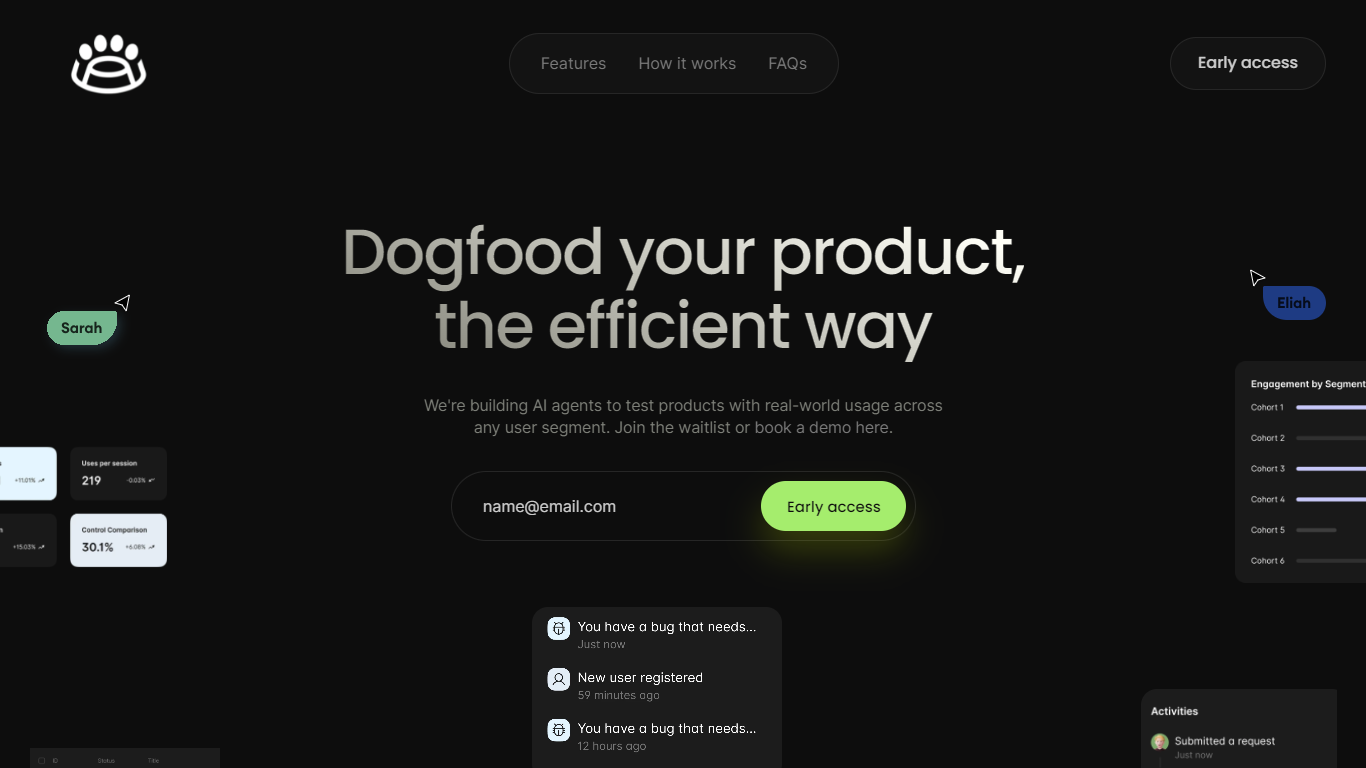
Dogfood simulates real users with multimodal AI agents to test products and features. It enables teams to receive fast, detailed feedback by mimicking diverse user behaviors. This tool helps reduce the need for extensive human testing while maintaining high-quality insights.
What sets Dogfood apart is its ability to create custom AI agents tailored to specific user groups. This targeted simulation improves the relevance of feedback compared to generic testing methods. Additionally, Dogfood supports real-time collaboration, allowing teams to quickly identify issues and understand user interactions.
Dogfood integrates existing user data to enhance the accuracy of its AI agents. Continuous testing cycles enable rapid iteration and product improvement. These features make Dogfood a cost-effective solution for thorough product validation before launch.
Web on Demand

What is Web on Demand?
Web on Demand is a no-code web apps builder for agencies, freelancers, and resellers who need client sites without PHP backends or plugin stacks. It combines drag-and-drop layouts, spreadsheet-style database editing, e-commerce tools, and an AI generator for blogs, product descriptions, and SEO metadata. Sites run on HTML and CSS, and edits happen on the live page through embedded controls instead of a separate admin dashboard.
Where WordPress or Webflow charge monthly subscriptions and hide editing behind a backend, Web on Demand sells one-time licenses starting at $1,000 and lets you click text on the published page to change it. That fits white-label workflows where clients expect to update copy themselves. The trade-off is the upfront license cost and the HTML/CSS skills needed for fully custom layouts.
Freelancers, design studios, and ISP partners use it to ship e-commerce stores, landing pages, and branded website storefronts. The AI generator helps teams draft SEO-friendly blog posts and product copy without hiring a writer for every SKU. Resellers on the Storefront plan can earn a 20% share of client hosting fees sold through their store.
Dogfood Upvotes
Web on Demand Upvotes
Dogfood Top Features
Custom AI agents mimic specific user groups for targeted feedback
Fast simulation of real-world product use saves time and costs
Integration with existing user data sources enhances AI training
Real-time collaboration with shared dashboards for team insights
Continuous testing cycles enable rapid iteration and improvement
Web on Demand Top Features
Basic license costs $1,000 as a one-time payment with no recurring platform subscription
AI generator drafts full blog posts from a short prompt and suggests keywords plus meta descriptions from a page title
Edit content on the live site with embedded controls instead of logging into a backend admin panel
Import e-commerce inventory from Google Sheets or Microsoft Excel in one click
Supports 64 languages with LTR and RTL layouts on published sites
Hosting runs on AWS with HTTPS encryption included on every business plan
Dogfood Category
- Web Apps
Web on Demand Category
- Web Apps
Dogfood Pricing Type
- Freemium
Web on Demand Pricing Type
- Paid