Dream Interpreter AI vs SciSpace (formerly Typeset)
Compare Dream Interpreter AI vs SciSpace (formerly Typeset) and see which AI Summarizer tool is better when we compare features, reviews, pricing, alternatives, upvotes, etc.
Which one is better? Dream Interpreter AI or SciSpace (formerly Typeset)?
When we compare Dream Interpreter AI with SciSpace (formerly Typeset), which are both AI-powered summarizer tools, SciSpace (formerly Typeset) stands out as the clear frontrunner in terms of upvotes. The number of upvotes for SciSpace (formerly Typeset) stands at 24, and for Dream Interpreter AI it's 6.
Don't agree with the result? Cast your vote and be a part of the decision-making process!
Dream Interpreter AI


What is Dream Interpreter AI?
Dream Interpreter AI turns overnight narratives into symbol breakdowns and tracks how those themes repeat over weeks. You log what you remember, and the app maps objects, settings, and emotions to possible meanings rather than handing you a one-line fortune. Think of it as a dream journal with built-in interpretation, not a blank notes field.
Most dream trackers stop at a text box. Dream Interpreter AI adds a searchable dream dictionary, a Dreamer Map where you can browse interpretations shared by other users, and an art view that turns a logged dream into a visual. That stack targets people who want pattern tracking plus community context, not just a private note list.
The product runs on the web and ships native iOS and Android apps from Tenet Inc. The interface supports 17 languages, from English and Spanish to Arabic, Japanese, and Korean. Unlimited logging and interpretation require the Amethyst subscription listed at $4.99 per month on the App Store.
If you wake up with fragments you cannot place, the workflow is straightforward: capture the dream immediately, let Dream Interpreter AI flag recurring symbols, and compare your entries over time. The site also publishes articles on dream journaling habits, which line up with the in-app tracking tools.
SciSpace (formerly Typeset)
What is SciSpace (formerly Typeset)?
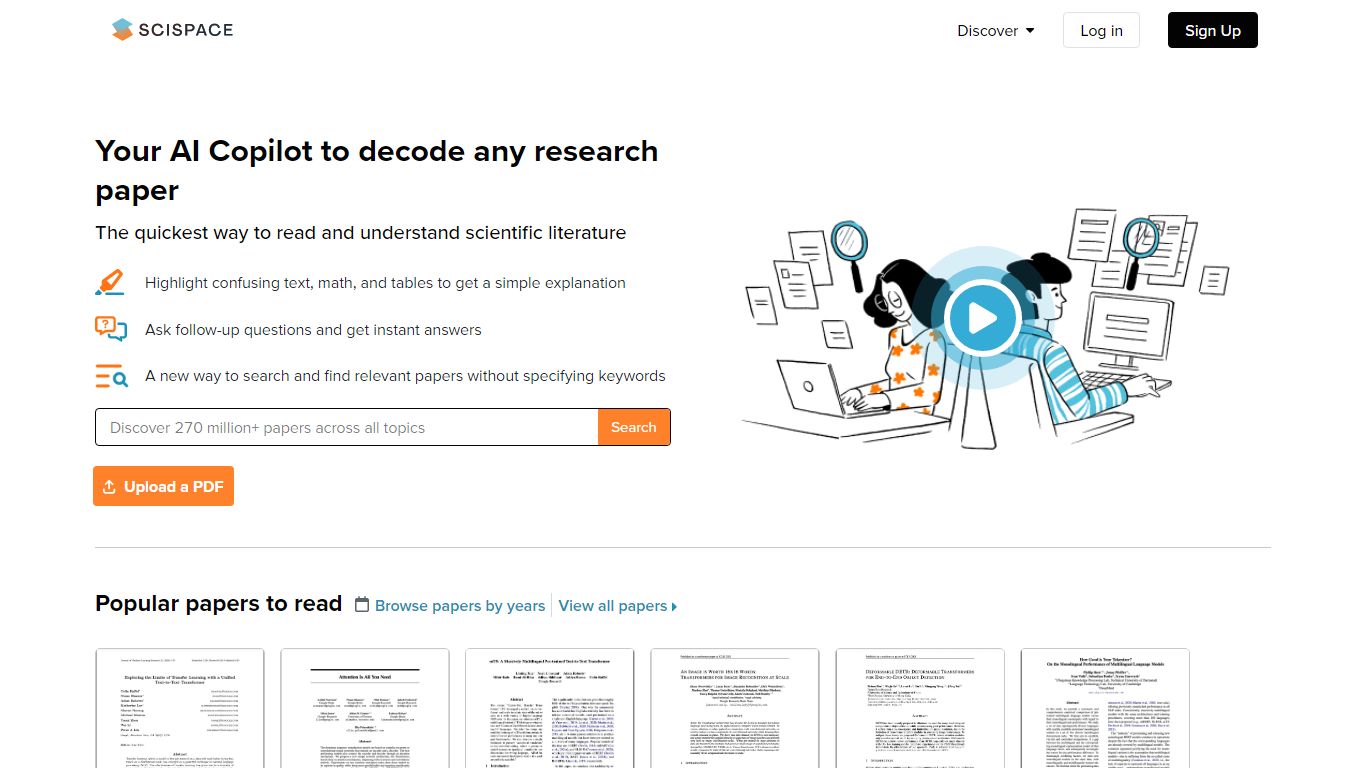
SciSpace, formerly Typeset, is a research workspace where you search a large academic paper index, chat with PDFs, and draft literature reviews with cited sources. The typeset.io URL now lands on scispace.com, which bundles an AI agent, literature review search, paraphraser, citation generator, data extraction, and AI detection in one interface.
General AI chat tools answer from the open web. SciSpace centers the workflow on papers: you can run systematic reviews across 280M+ indexed works, highlight passages for explanations, and move from reading into AI Writer drafts with references. Biomedical Agent, enterprise recruiting, and Chrome or mobile apps extend the same stack for labs and R&D teams.
Graduate students, PhD researchers, and pharma or biotech analysts use SciSpace to screen literature faster, unpack dense PDFs, and produce summaries or manuscripts with traceable citations. The platform reports adoption by 9.6 million researchers and lists SOC 2 compliance on its site.
Dream Interpreter AI Upvotes
SciSpace (formerly Typeset) Upvotes
Dream Interpreter AI Top Features
AI symbol analysis breaks down objects, settings, and emotions in each logged dream
Dream Dictionary covers common themes like fear, flying, falling, and being chased
Dreamer Map lets you share interpretations and browse dreams posted worldwide
Dream Interpretation Art turns logged dreams into visual artwork inside the app
Native iOS and Android apps with App Store ID 6468901891 and Google Play listing
Interface available in 17 languages including Arabic, Japanese, Korean, and Turkish
Amethyst subscription at $4.99 per month unlocks unlimited dream interpretations
SciSpace (formerly Typeset) Top Features
Search and review literature across 280M+ indexed research papers
Chat with PDF highlights for plain-language explanations of dense sections
SciSpace Agent plus Biomedical Agent for guided research tasks
Built-in paraphraser, citation generator, AI detector, and data extraction tools
AI Writer and templates for drafting papers with cited sources
Chrome extension and mobile app for reading outside the browser tab
Premium plans with a 24-hour money-back guarantee on subscriptions
Dream Interpreter AI Category
- Summarizer
SciSpace (formerly Typeset) Category
- Summarizer
Dream Interpreter AI Pricing Type
- Freemium
SciSpace (formerly Typeset) Pricing Type
- Freemium