Galactica vs Terracotta
In the face-off between Galactica vs Terracotta, which AI Large Language Model (LLM) tool takes the crown? We scrutinize features, alternatives, upvotes, reviews, pricing, and more.
In a face-off between Galactica and Terracotta, which one takes the crown?
If we were to analyze Galactica and Terracotta, both of which are AI-powered large language model (llm) tools, what would we find? Galactica is the clear winner in terms of upvotes. Galactica has attracted 8 upvotes from aitools.fyi users, and Terracotta has attracted 6 upvotes.
Want to flip the script? Upvote your favorite tool and change the game!
Galactica

What is Galactica?
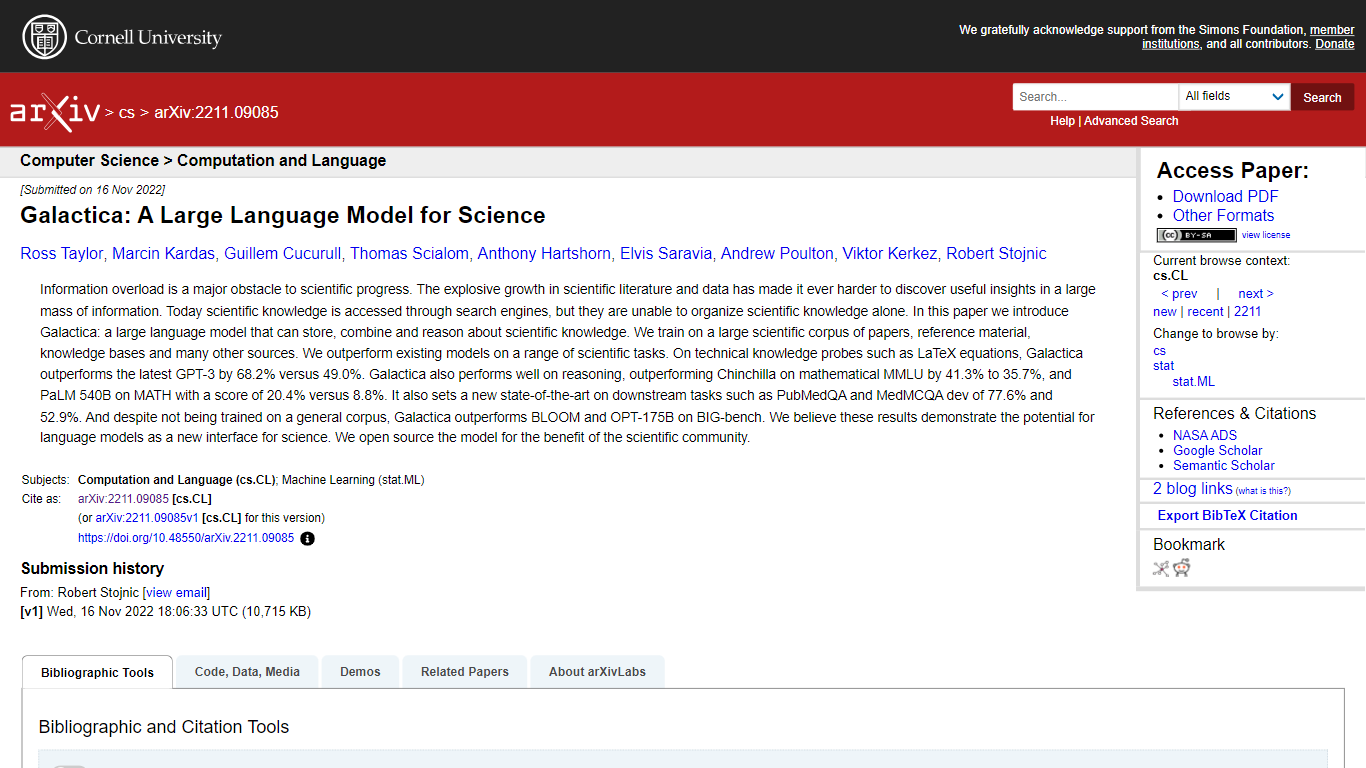
Five open-weight checkpoints from 125M to 120B parameters give researchers a science-trained language model built from 106 billion curated tokens across 48 million papers, textbooks, encyclopedias, and knowledge bases. Galactica stores, combines, and reasons across modalities including LaTeX, Python code, SMILES formulas, and amino acid sequences inside one decoder-only Transformer architecture. Meta's Papers with Code team open sourced the weights for researchers who want to study how language models organize scientific knowledge.
General-purpose LLMs train on broad web crawls where social chatter can dominate the token budget. Galactica used only curated open-access science sources, which the paper argues lets it train for multiple epochs without overfitting. Meta removed the public web demo three days after launch in November 2022 when critics showed confident but fabricated citations and equations, so today you download checkpoints from Hugging Face rather than chat through a hosted interface.
Machine learning researchers can reproduce benchmark numbers from the arXiv paper, including 77.6% on PubMedQA and 52.9% on MedMCQA dev. Computational biologists and chemists can test protein annotation and molecule tasks through Galactica's specialized tokens for amino sequences and SMILES strings. Graduate students exploring scientific QA, citation prediction, or math word problems can experiment with sizes up to 120 billion parameters without training from scratch.
Terracotta
What is Terracotta?
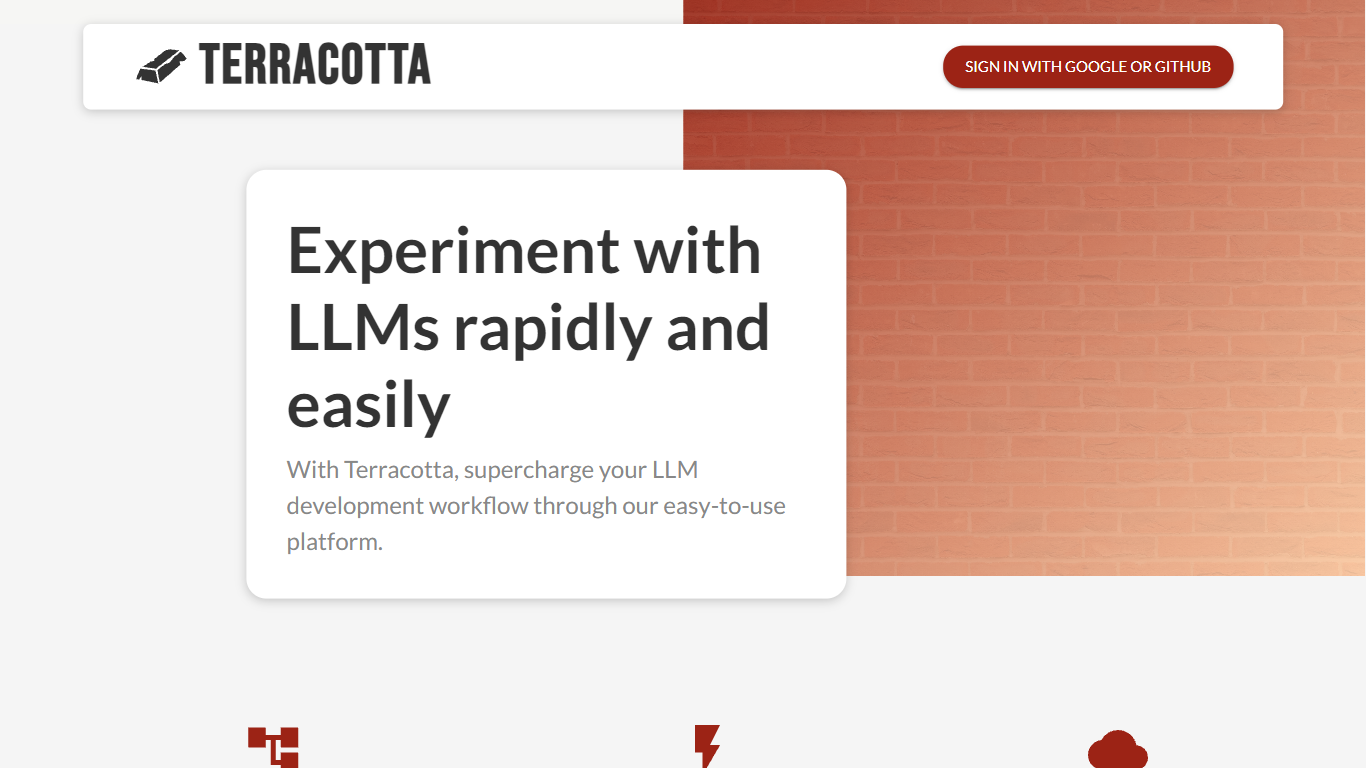
Terracotta is an Infrastructure as Code governance tool that audits every pull request before merge, checking Terraform and OpenTofu changes against live cloud resources, remote state, and your team's governance policies. It installs as a GitHub or GitLab app, posts findings in the PR thread, and builds a tamper-evident audit trail regulators can export. The product targets platform engineering teams that need security, drift, cost, and compliance checks without rewriting CI pipelines.
Static scanners like Checkov or tfsec lint HCL syntax and known misconfigurations, but they never compare a plan to what is actually running in AWS. Terracotta closes that gap by correlating code, Terraform state, and live resources so drift, cross-PR conflicts, and hidden blast radius show up before anyone clicks merge. Its guardrails are written in plain English rather than Rego or Sentinel, which lowers the bar for teams that lack a dedicated policy-as-code engineer.
DevOps leads and platform engineers at regulated shops use Terracotta to block public S3 buckets, open SSH rules, and unapproved cost spikes at review time instead of in production. Security and compliance teams get a fleet-wide dashboard with drift posture, policy compliance rates, and exportable records for SOC 2 or HIPAA audits. Developers keep working inside GitHub or GitLab because findings arrive as PR comments, not another portal to check.
Beacon, Terracotta's in-PR chat assistant, answers questions about specific findings using context from the repo, plan output, and drift reports. The Platform tier adds unlimited drift repos, IAM and blast-radius analysis, Slack notifications, and a command center dashboard for $49 per engineer per month. Enterprise customers can run Terracotta self-hosted with SSO, SAML, and custom integrations for HCP Terraform or CircleCI.
Galactica Upvotes
Terracotta Upvotes
Galactica Top Features
Five checkpoints span 125M, 1.3B, 6.7B, 30B, and 120B parameters
Training corpus totals 106 billion tokens across 48 million scientific papers
Scores 68.2% on LaTeX equation probes versus GPT-3 at 49.0%
Hits 77.6% on PubMedQA and 52.9% on MedMCQA dev benchmarks
30B model reaches 20.4% on MATH versus PaLM 540B at 8.8%
Special tokens cover citations, SMILES formulas, and amino acid sequences
Terracotta Top Features
Posts automated PR reviews on GitHub and GitLab when a Terraform or OpenTofu pull request opens, before CI runs
Compares IaC code against live cloud resources and remote Terraform state to flag drift across 119 AWS resource types
Platform plan at $49 per engineer per month includes cost analysis, IAM review, blast-radius mapping, and guardrail enforcement
Free Community tier covers 50 public repo PRs, 1 private repo at 20 PRs per month, and up to 5 seats with no credit card
Plain-English guardrails block risky changes without Rego, Sentinel, or OPA policy files
Beacon chat assistant answers in-thread questions about findings using repo, plan, and drift context
Galactica Category
- Large Language Model (LLM)
Terracotta Category
- Large Language Model (LLM)
Galactica Pricing Type
- Free
Terracotta Pricing Type
- Freemium