Gopher vs Stellaris AI
Compare Gopher vs Stellaris AI and see which AI Large Language Model (LLM) tool is better when we compare features, reviews, pricing, alternatives, upvotes, etc.
Which one is better? Gopher or Stellaris AI?
When we compare Gopher with Stellaris AI, which are both AI-powered large language model (llm) tools, The upvote count is neck and neck for both Gopher and Stellaris AI. Be a part of the decision-making process. Your vote could determine the winner.
Does the result make you go "hmm"? Cast your vote and turn that frown upside down!
Gopher
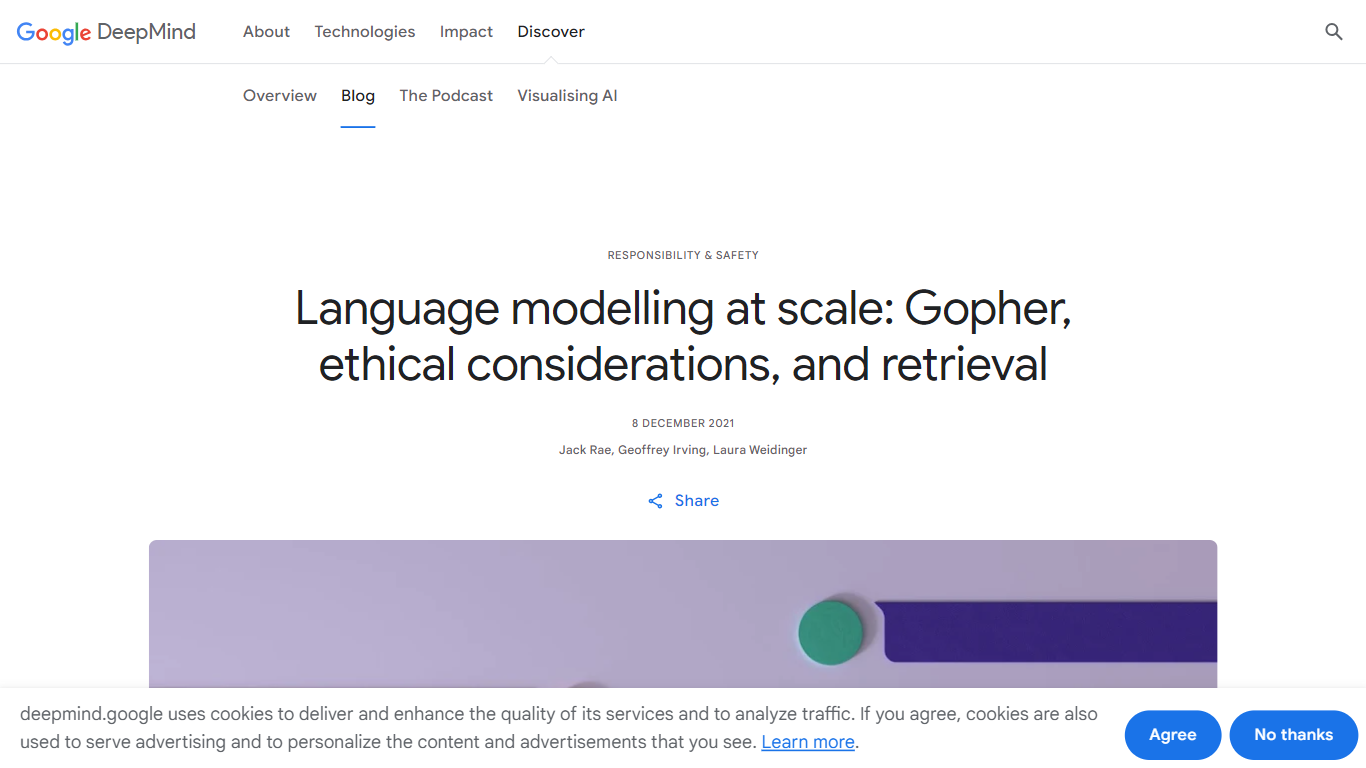

What is Gopher?
Gopher is a 280-billion-parameter transformer language model Google DeepMind announced in December 2021. DeepMind trained a family of models from 44 million to 280 billion parameters to study how scale affects text prediction, reading comprehension, fact-checking, and toxic-language detection.
Compared with general-purpose chatbots, Gopher was a research release, not a public app. DeepMind paired the model paper with an ethics taxonomy covering 21 risks across six themes and a separate Retrieval-Enhanced Transformer (RETRO) architecture that pulls passages from an internet-scale index to cut training cost and trace outputs back to sources.
The blog post targets AI researchers studying scaling laws, safety taxonomies, and retrieval-augmented language models. Gopher beat prior models on several Massive Multitask Language Understanding (MMLU) categories but still struggled with logical reasoning, common-sense questions, repetition, stereotypical bias, and confidently wrong answers in dialogue tests.
Stellaris AI
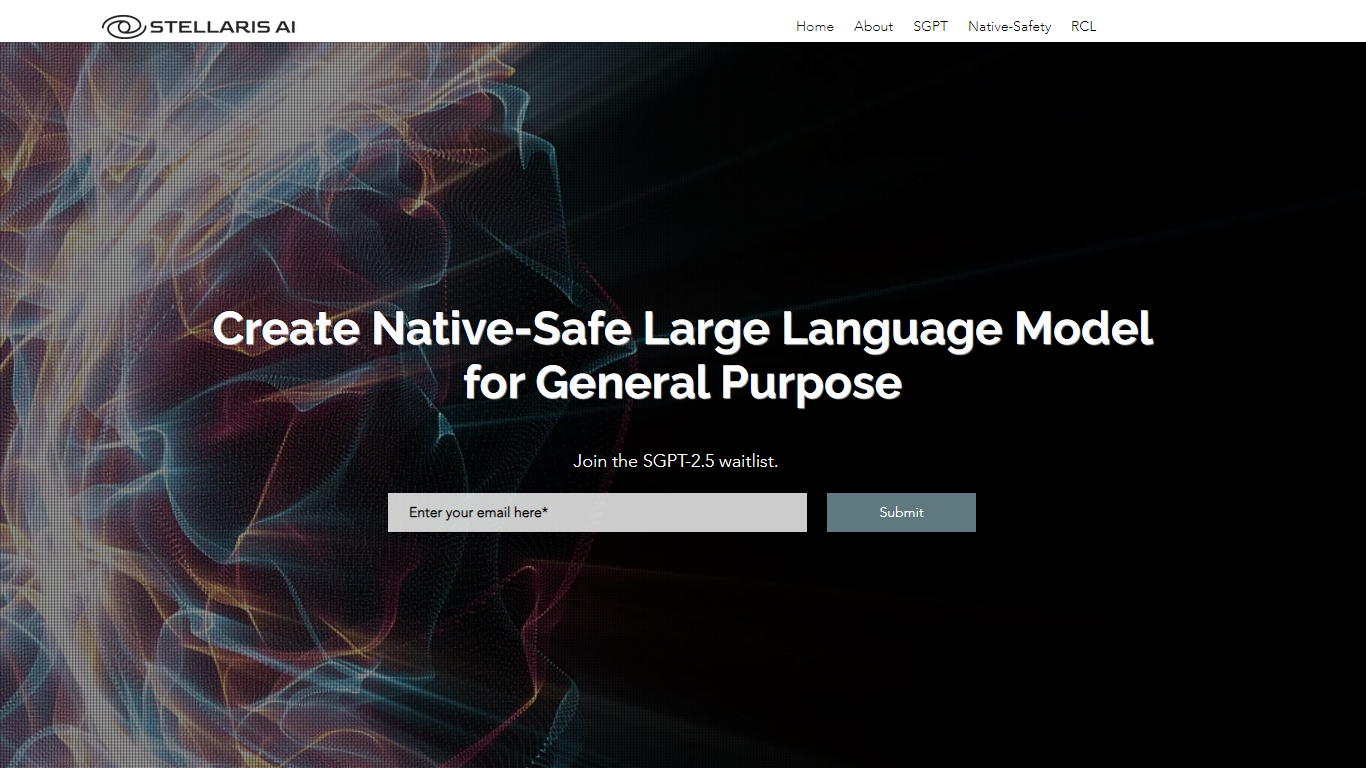
What is Stellaris AI?
Stellaris AI builds large language models marketed around native safety and human-like reasoning for real-world tasks. Its flagship SGPT line targets text and code generation, knowledge Q&A, logical reasoning, and analytics at a scale the company describes as hundreds of billions of parameters. The public site centers on a waitlist for SGPT-4.5 rather than a self-serve chat product you can open today.
Where many LLM labs bolt safety filters on after training, Stellaris AI frames safety as part of the model stack through strict source referencing and harm minimization in the architecture. It also highlights Real-time Context Learning (RCL) for adapting answers with live knowledge, a combination aimed at teams that want cited outputs instead of unchecked generation.
Researchers, enterprise AI teams, and early adopters join the SGPT-4.5 waitlist for first access. The company cites 10+ years of research and three core product pillars: Stellaris GPT, Native Safety, and RCL.
Gopher Upvotes
Stellaris AI Upvotes
Gopher Top Features
280-billion-parameter transformer model, the largest in a series scaling from 44 million parameters
Stronger reading comprehension, fact-checking, and toxic-language detection as model size grows
MMLU benchmark gains across humanities, science, medicine, and general knowledge categories
Dialogue tests where Gopher cited Wikipedia correctly on cell biology without dialogue fine-tuning
Companion ethics paper mapping 21 large language model risks across six thematic areas
RETRO retrieval architecture matches transformer quality with an order of magnitude fewer parameters
Stellaris AI Top Features
SGPT models described at 100B+ parameters for text, code, and reasoning tasks
Native Safety framework with strict source referencing and harm minimization
Real-time Context Learning (RCL) for live knowledge integration
Three product pillars: Stellaris GPT, Native Safety, and RCL
SGPT-4.5 waitlist open for early access signups on the homepage
Gopher Category
- Large Language Model (LLM)
Stellaris AI Category
- Large Language Model (LLM)
Gopher Pricing Type
- Free
Stellaris AI Pricing Type
- Freemium