GPT 4o vs Stellaris AI
In the face-off between GPT 4o vs Stellaris AI, which AI Large Language Model (LLM) tool takes the crown? We scrutinize features, alternatives, upvotes, reviews, pricing, and more.
When we put GPT 4o and Stellaris AI head to head, which one emerges as the victor?
If we were to analyze GPT 4o and Stellaris AI, both of which are AI-powered large language model (llm) tools, what would we find? The upvote count is neck and neck for both GPT 4o and Stellaris AI. Be a part of the decision-making process. Your vote could determine the winner.
Disagree with the result? Upvote your favorite tool and help it win!
GPT 4o
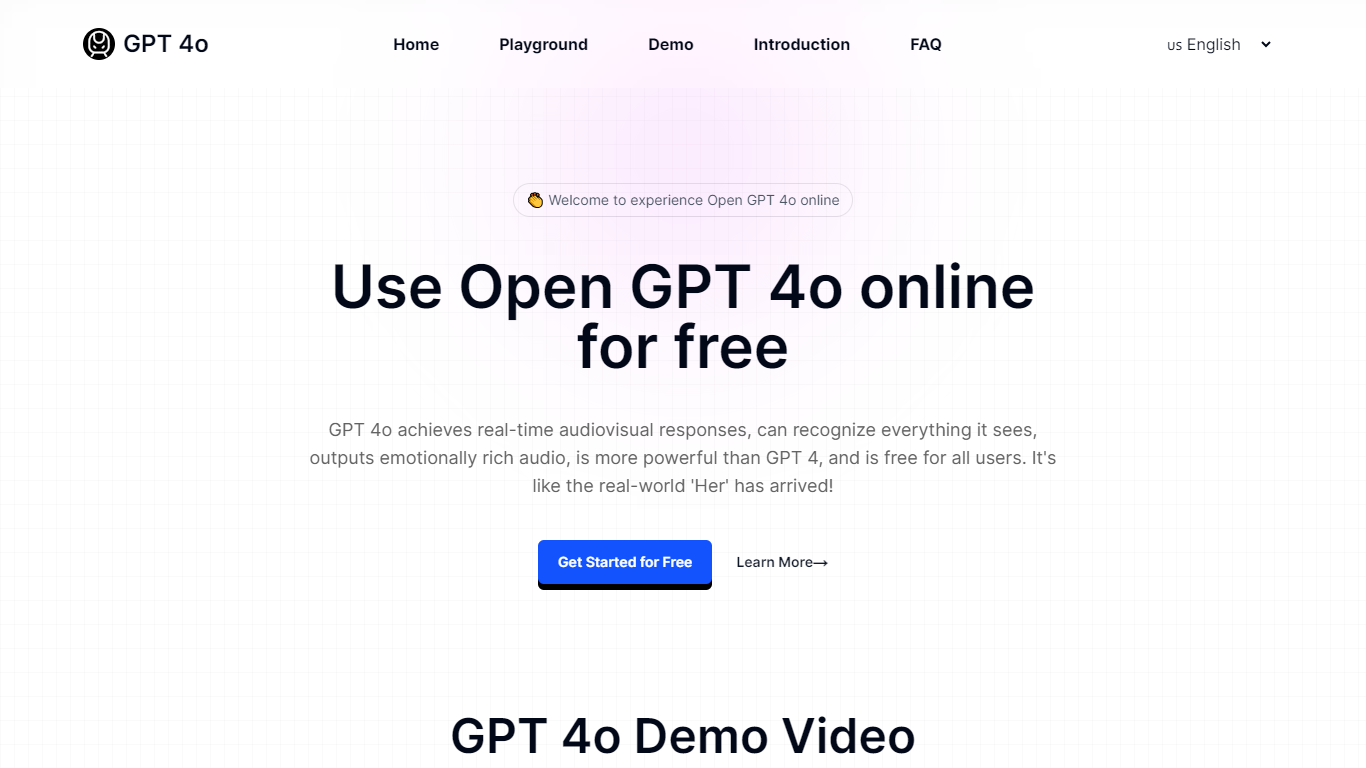

What is GPT 4o ?
Open GPT 4o is the latest innovation in AI technology, building upon the capabilities of previous models, such as GPT-4, to offer a free, advanced, and immersive multimodal experience. GPT 4o stands out with its real-time audiovisual responses, emotional audio outputs, and recognition of everything it sees, creating an interactive experience similar to conversing with a real person.
With its multimodal functionalities, GPT 4o supports combinations of text, audio, and images, allowing for diverse interactions across media types. Notably, GPT 4o is designed to function with super-fast voice response speeds and can handle interruptions naturally, enhancing the fluidity of conversations.
Users can look forward to the rich functionalities of this model, including superior visual capabilities, emotion recognition, output expressions, and support for developers through an improved and cost-effective API. Whether it's virtual assistance, real-time translation, or even a simple chat, GPT 4o offers an unparalleled AI experience for all users.
Stellaris AI
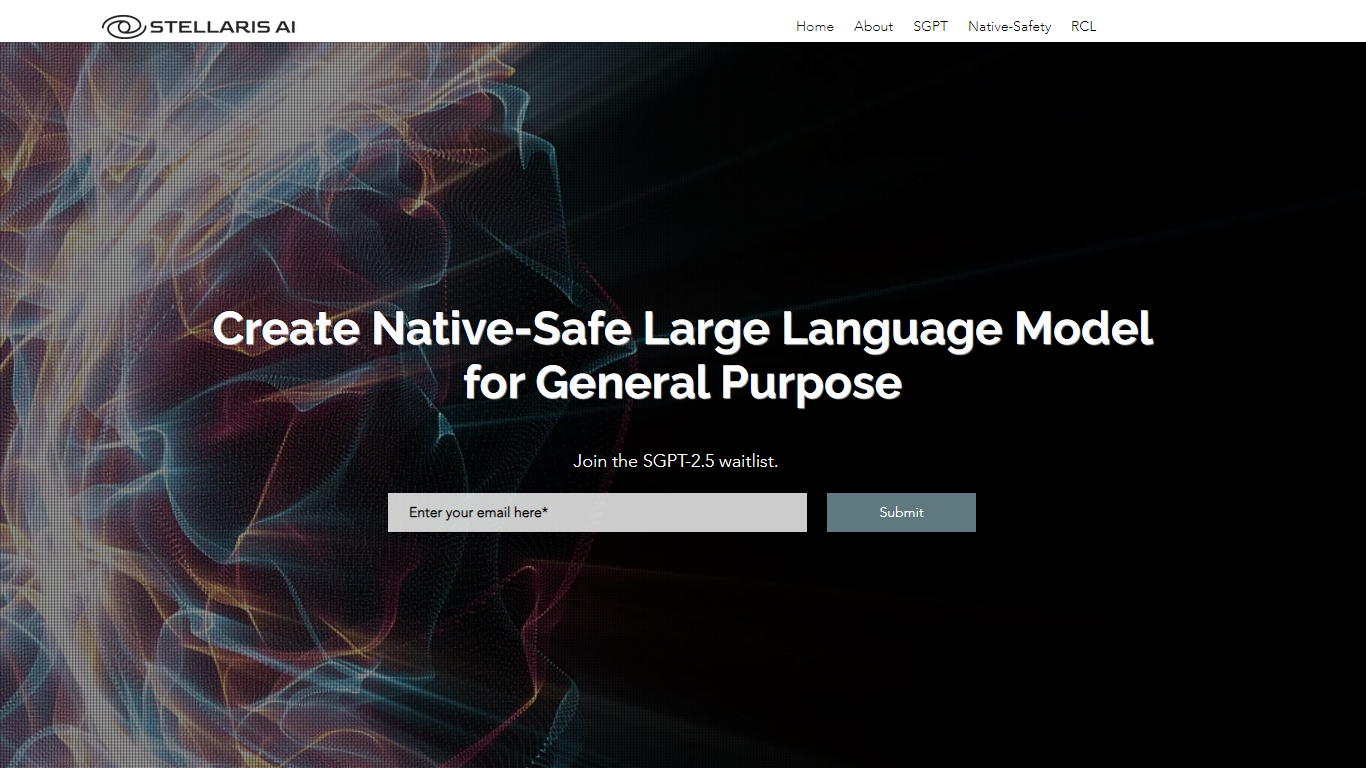
What is Stellaris AI?
Stellaris AI builds large language models marketed around native safety and human-like reasoning for real-world tasks. Its flagship SGPT line targets text and code generation, knowledge Q&A, logical reasoning, and analytics at a scale the company describes as hundreds of billions of parameters. The public site centers on a waitlist for SGPT-4.5 rather than a self-serve chat product you can open today.
Where many LLM labs bolt safety filters on after training, Stellaris AI frames safety as part of the model stack through strict source referencing and harm minimization in the architecture. It also highlights Real-time Context Learning (RCL) for adapting answers with live knowledge, a combination aimed at teams that want cited outputs instead of unchecked generation.
Researchers, enterprise AI teams, and early adopters join the SGPT-4.5 waitlist for first access. The company cites 10+ years of research and three core product pillars: Stellaris GPT, Native Safety, and RCL.
GPT 4o Upvotes
Stellaris AI Upvotes
GPT 4o Top Features
Multimodal Capabilities: Handles and generates any combination of text, audio, and images for diverse interactions.
Real-Time Voice Responses: Responds to audio inputs in as little as 232 milliseconds, mimicking human conversation speed.
Emotion Recognition and Output: Can sense and express emotions, including laughter and singing, responding to the tone and background noise accurately.
Superior Visual Capabilities: Recognizes objects, emotions, and text in images and videos, akin to human perception.
Free Access and Improved API: All-inclusive capabilities with a user-friendly, cost-effective API at a 50% discounted rate.
Stellaris AI Top Features
SGPT models described at 100B+ parameters for text, code, and reasoning tasks
Native Safety framework with strict source referencing and harm minimization
Real-time Context Learning (RCL) for live knowledge integration
Three product pillars: Stellaris GPT, Native Safety, and RCL
SGPT-4.5 waitlist open for early access signups on the homepage
GPT 4o Category
- Large Language Model (LLM)
Stellaris AI Category
- Large Language Model (LLM)
GPT 4o Pricing Type
- Freemium
Stellaris AI Pricing Type
- Freemium