Inbox Narrator vs SciSpace (formerly Typeset)
In the clash of Inbox Narrator vs SciSpace (formerly Typeset), which AI Summarizer tool emerges victorious? We assess reviews, pricing, alternatives, features, upvotes, and more.
When we put Inbox Narrator and SciSpace (formerly Typeset) head to head, which one emerges as the victor?
Let's take a closer look at Inbox Narrator and SciSpace (formerly Typeset), both of which are AI-driven summarizer tools, and see what sets them apart. The community has spoken, SciSpace (formerly Typeset) leads with more upvotes. The upvote count for SciSpace (formerly Typeset) is 24, and for Inbox Narrator it's 6.
Think we got it wrong? Cast your vote and show us who's boss!
Inbox Narrator


What is Inbox Narrator?
Inbox Narrator is a summarizer that turns unread Gmail into a morning audio briefing you can hear through Siri, Google Assistant, or a private podcast feed. After you connect Gmail with read-only access, the service uses AI to condense new messages and deliver them as spoken summaries so you can catch up while making coffee or commuting.
Unlike text-only inbox digests, Inbox Narrator bets on voice delivery and three linked modes on one subscription: spoken morning summaries, a daily email podcast, and Inbox Chat for asking questions about your mailbox. That mix targets people who want hands-free triage rather than another dashboard to scroll.
Busy professionals, founders, and anyone drowning in Gmail notifications are the core audience. Setup walks through Google sign-in, voice assistant configuration, and optional podcast subscription, with support reachable at [email protected] if billing or Siri setup gets stuck.
SciSpace (formerly Typeset)
What is SciSpace (formerly Typeset)?
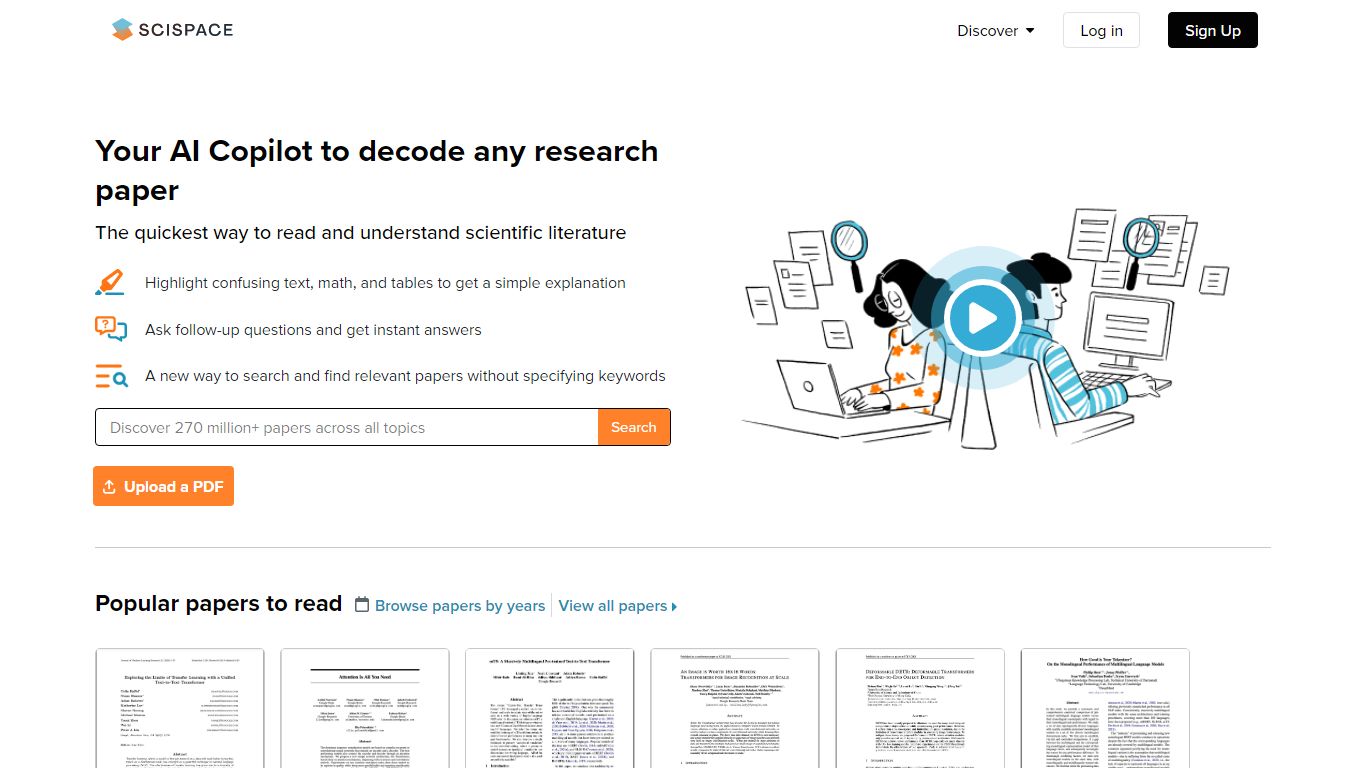
SciSpace, formerly Typeset, is a research workspace where you search a large academic paper index, chat with PDFs, and draft literature reviews with cited sources. The typeset.io URL now lands on scispace.com, which bundles an AI agent, literature review search, paraphraser, citation generator, data extraction, and AI detection in one interface.
General AI chat tools answer from the open web. SciSpace centers the workflow on papers: you can run systematic reviews across 280M+ indexed works, highlight passages for explanations, and move from reading into AI Writer drafts with references. Biomedical Agent, enterprise recruiting, and Chrome or mobile apps extend the same stack for labs and R&D teams.
Graduate students, PhD researchers, and pharma or biotech analysts use SciSpace to screen literature faster, unpack dense PDFs, and produce summaries or manuscripts with traceable citations. The platform reports adoption by 9.6 million researchers and lists SOC 2 compliance on its site.
Inbox Narrator Upvotes
SciSpace (formerly Typeset) Upvotes
Inbox Narrator Top Features
Summarizes new Gmail messages and delivers them through Siri or Google Assistant each morning
Email Podcast generates one private daily episode from your inbox for any podcast app
Inbox Chat lets you query, organize, and draft replies to Gmail through a web chat or Siri
30-day free trial, then $5 per month for all three features on one subscription
Read-only Gmail access with email content not stored on Inbox Narrator servers
Works on any device that supports Siri or Google Assistant
SciSpace (formerly Typeset) Top Features
Search and review literature across 280M+ indexed research papers
Chat with PDF highlights for plain-language explanations of dense sections
SciSpace Agent plus Biomedical Agent for guided research tasks
Built-in paraphraser, citation generator, AI detector, and data extraction tools
AI Writer and templates for drafting papers with cited sources
Chrome extension and mobile app for reading outside the browser tab
Premium plans with a 24-hour money-back guarantee on subscriptions
Inbox Narrator Category
- Summarizer
SciSpace (formerly Typeset) Category
- Summarizer
Inbox Narrator Pricing Type
- Paid
SciSpace (formerly Typeset) Pricing Type
- Freemium