Iris.ai vs Browse AI
In the face-off between Iris.ai vs Browse AI, which AI Research tool takes the crown? We scrutinize features, alternatives, upvotes, reviews, pricing, and more.
In a face-off between Iris.ai and Browse AI, which one takes the crown?
If we were to analyze Iris.ai and Browse AI, both of which are AI-powered research tools, what would we find? The community has spoken, Browse AI leads with more upvotes. Browse AI has garnered 25 upvotes, and Iris.ai has garnered 6 upvotes.
Want to flip the script? Upvote your favorite tool and change the game!
Iris.ai
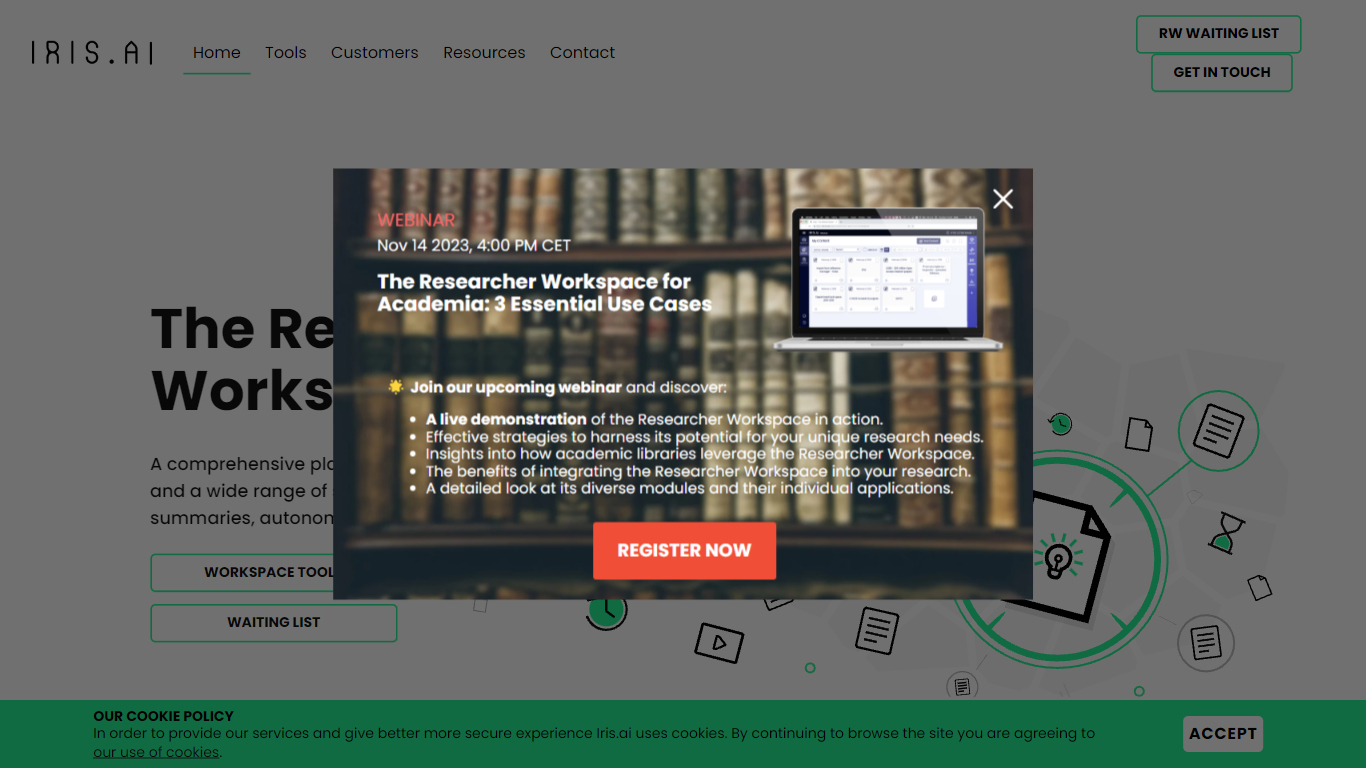

What is Iris.ai?
Iris.ai builds enterprise knowledge platforms that turn scattered PDFs, patents, reports, graphs, and tables into structured data for RAG pipelines and AI agents. Its Axion product extracts multilingual documents across 68 languages, while Neuralith and RSpace target agentic workflows and complex R&D intelligence.
General-purpose RAG tools often choke on regulated industries where contracts, clinical trials, and patent libraries need schema-aware extraction and audit trails. Iris.ai ships ISO 27001-certified processing with GDPR compliance, on-premise deployment, and a built-in LLM evaluation layer so teams in pharma, telecom, and manufacturing can trust what their agents retrieve.
Research teams, legal ops, and innovation groups at enterprises like ArcelorMittal use Axion to cut patent review time by up to 90% with 94% extraction precision. Pricing runs from a Starter one-time pack for 10 documents through Professional tiers with about 100k pages to Enterprise deals from roughly €0.05 per page.
Browse AI
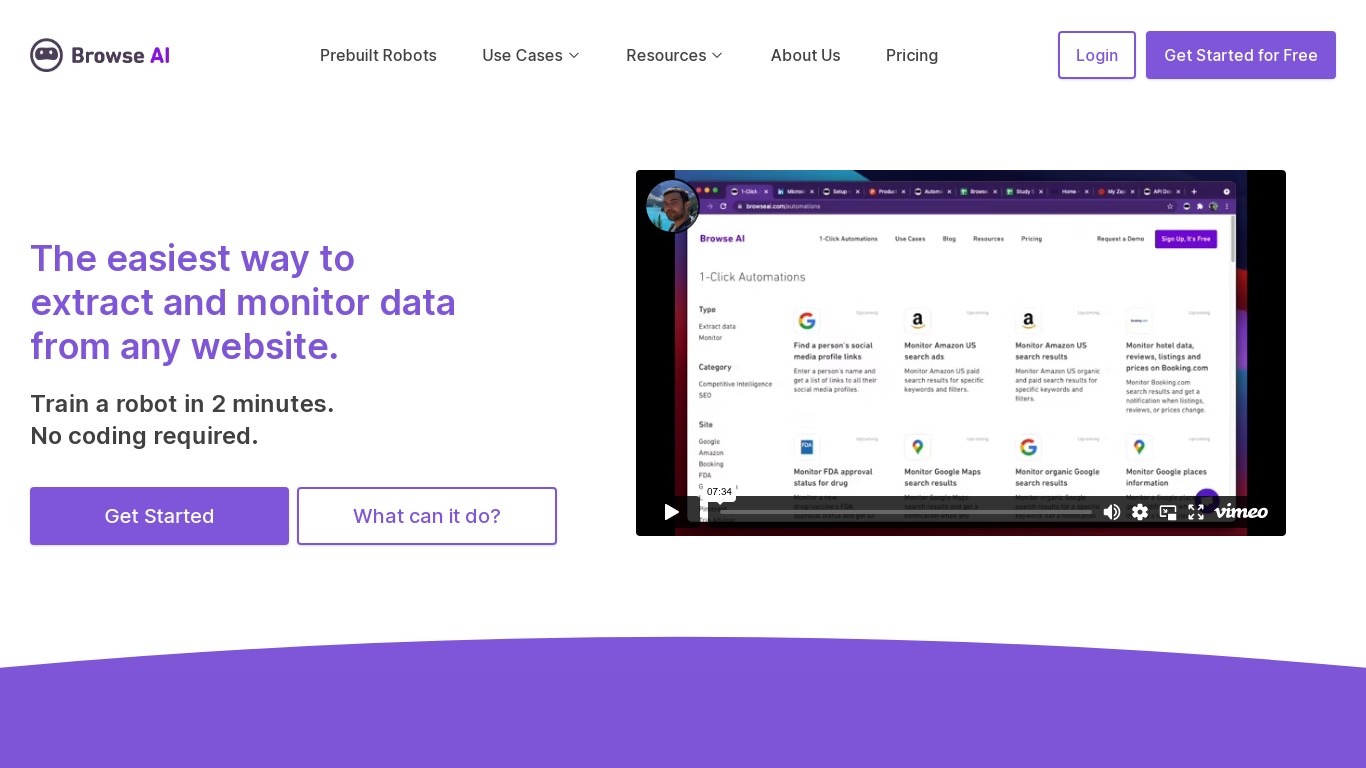
What is Browse AI?
Browse AI is a no-code web scraping and website monitoring platform built for research teams that need structured data from sites they do not control. You train robots with point-and-click actions to extract lists, details, and screenshots, then schedule runs or set change alerts without writing scripts. The platform reports over 770,000 users and has delivered more than 10 billion rows of extracted data.
Where most scrapers break the moment a target site redesigns, Browse AI leans on adaptive change detection that adjusts robot selectors when layouts shift. That trade-off favors operators who monitor competitor pricing or job boards on a schedule and cannot babysit Python scripts every time a CSS class changes. You still get deep scraping workflows, bulk runs across up to 500,000 pages, and exports to Google Sheets, Airtable, Zapier, Make, webhooks, or a REST API.
Browse AI fits ecommerce analysts tracking catalogs, real estate teams pulling listings from Airbnb or Redfin, and growth operators building lead lists from directories. Over 250 prebuilt robots cover Amazon, Indeed, Google Maps, and other high-traffic sites. A Premium tier adds fully managed scraping with custom delivery for high-volume or complex pipelines.
Iris.ai Upvotes
Browse AI Upvotes
Iris.ai Top Features
Axion extracts text, tables, graphs, and images from PDFs in 68+ languages
Professional tier covers about 100k pages with 2 million credits
Enterprise pricing from roughly €0.05 per page with volume discounts
ISO 27001-certified with GDPR compliance and on-premise deployment
Built-in LLM evaluation and monitoring for agentic workflows
Products include Axion, Neuralith, and RSpace for R&D intelligence
Browse AI Top Features
Point-and-click robot builder trains on any page with no code required
Adaptive change detection adjusts robots when target sites redesign layouts
250+ prebuilt robots for Amazon, Indeed, Google Maps, and other popular sites
Bulk extraction runs across up to 500,000 pages in a single operation
Paid plans monitor sites every 5 minutes; free plans allow hourly checks at minimum
Syncs to Google Sheets, Airtable, Zapier, Make, REST API, webhooks, or Amazon S3
Iris.ai Category
- Research
Browse AI Category
- Research
Iris.ai Pricing Type
- Paid
Browse AI Pricing Type
- Freemium