Lazy AI (formerly Lazy apps) vs Opus
In the battle of Lazy AI (formerly Lazy apps) vs Opus, which AI Web Apps tool comes out on top? We compare reviews, pricing, alternatives, upvotes, features, and more.
Which one is better? Lazy AI (formerly Lazy apps) or Opus?
Upon comparing Lazy AI (formerly Lazy apps) with Opus, which are both AI-powered web apps tools, Lazy AI (formerly Lazy apps) stands out as the clear frontrunner in terms of upvotes. Lazy AI (formerly Lazy apps) has received 9 upvotes from aitools.fyi users, while Opus has received 6 upvotes.
Not your cup of tea? Upvote your preferred tool and stir things up!
Lazy AI (formerly Lazy apps)

What is Lazy AI (formerly Lazy apps)?
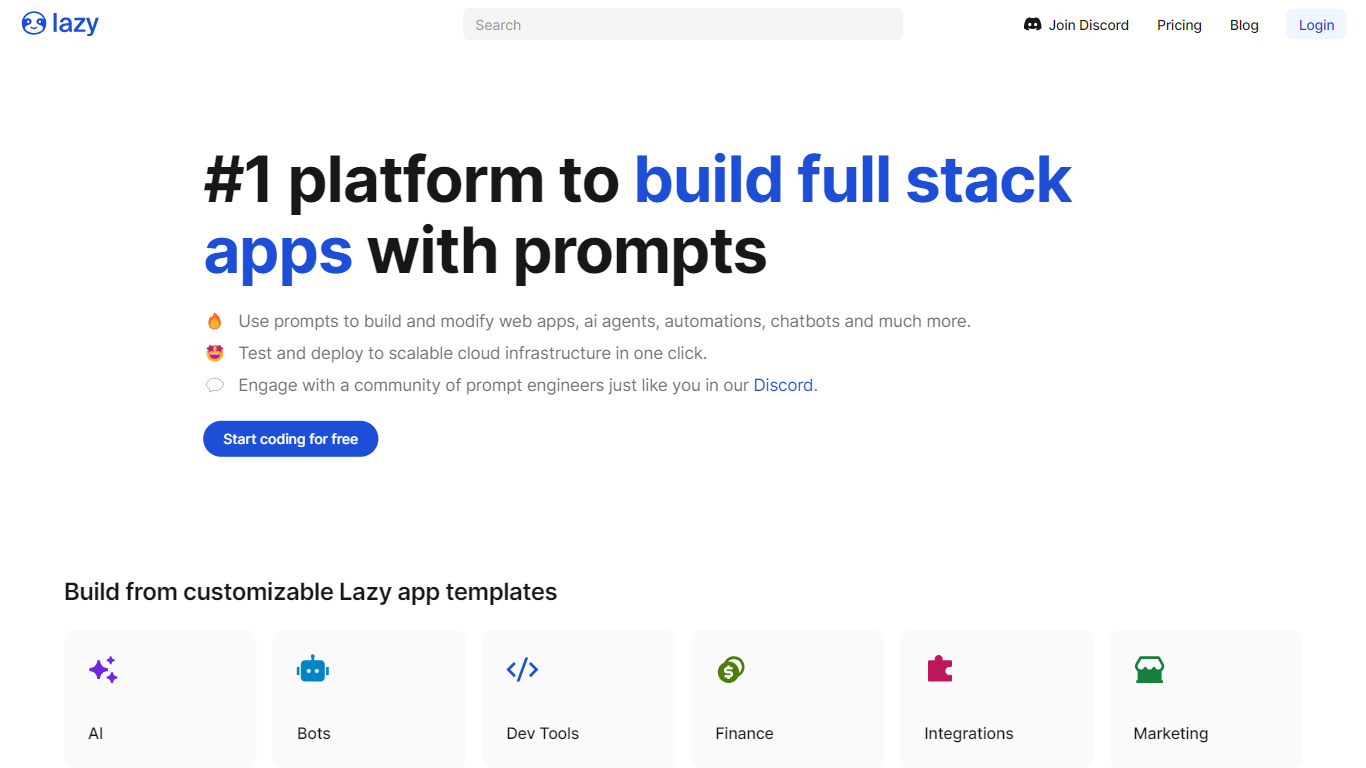
Lazy AI turns plain-language prompts into deployed full-stack software with frontend, backend logic, and a database already wired together. You describe what you want, the platform generates the app structure, and production builds run on Google Cloud. Teams reach for it when they need working internal tools, chatbots, dashboards, or API endpoints without staffing a full engineering sprint.
Where most no-code tools stop at UI mockups or single-purpose automations, Lazy AI ships the whole stack in one workspace. The comparison page positions it against Cursor, Bolt.new, V0, Replit, Lovable, and Zapier by bundling database setup, deployment, and integrations like Google Sheets and CRMs instead of making you wire those pieces together elsewhere.
Marketing and sales teams use it to prototype business apps quickly, while non-technical staff can start from community templates for login flows, scrapers, or chatbots. Published apps stay online through Lazy AI managed hosting, with usage billed per gigabyte of RAM per day on top of the monthly subscription.
Opus

What is Opus?
Opus turns written stories into playable 3D scenes through text-to-video style computational production. You write scenes, characters, and dialogue in plain English, and Opus NLP extracts structure without a special scripting syntax, then builds lighting, terrain, buildings, roads, humanoid characters, and animations from that text.
Compared with traditional CGI pipelines that need separate teams for assets, lighting, and animation, Opus advertises original content at one-tenth the cost with faster turnaround. The platform targets creators who want worlds to render from words instead of manually modeling every shot in desktop production software.
Gamers, artists, musicians, storytellers, and performers use Opus to prototype interactive worlds, digitize performances, and publish immersive experiences. The public site offers early access enrollment and a demo watch flow rather than self-serve subscription pricing.
Lazy AI (formerly Lazy apps) Upvotes
Opus Upvotes
Lazy AI (formerly Lazy apps) Top Features
Describe an app in plain language and Lazy AI generates frontend, backend, and database code together
Deploy production apps to Google Cloud with 99.9% uptime stated on the pricing page
Community template library includes login flows, scrapers, and chatbot starters at getlazy.ai/explore
Pro plan includes 250 million tokens per month plus custom domain deployment
Published app hosting costs $1.56 per GB of RAM allocated per day on top of subscription fees
Integrates with Google Sheets, external APIs, and CRMs from the launch step on the homepage
Opus Top Features
NLP parses literary English with no special syntax required
Text-to-video computational production for scenes, assets, dialogue, and VFX
Lighting, camera control, terrain, flora, buildings, and roads generated from text
Humanoid characters and animations included in the production pipeline
Advertises original content at one-tenth traditional production cost
Supports gamers, storytellers, artists, musicians, and performers on one canvas
Early access program with separate youth and professional governance seats
Lazy AI (formerly Lazy apps) Category
- Web Apps
Opus Category
- Web Apps
Lazy AI (formerly Lazy apps) Pricing Type
- Paid
Opus Pricing Type
- Paid