Lazy AI (formerly Lazy apps) vs Web on Demand
Dive into the comparison of Lazy AI (formerly Lazy apps) vs Web on Demand and discover which AI Web Apps tool stands out. We examine alternatives, upvotes, features, reviews, pricing, and beyond.
When comparing Lazy AI (formerly Lazy apps) and Web on Demand, which one rises above the other?
When we compare Lazy AI (formerly Lazy apps) and Web on Demand, two exceptional web apps tools powered by artificial intelligence, and place them side by side, several key similarities and differences come to light. In the race for upvotes, Lazy AI (formerly Lazy apps) takes the trophy. Lazy AI (formerly Lazy apps) has garnered 9 upvotes, and Web on Demand has garnered 6 upvotes.
Not your cup of tea? Upvote your preferred tool and stir things up!
Lazy AI (formerly Lazy apps)

What is Lazy AI (formerly Lazy apps)?
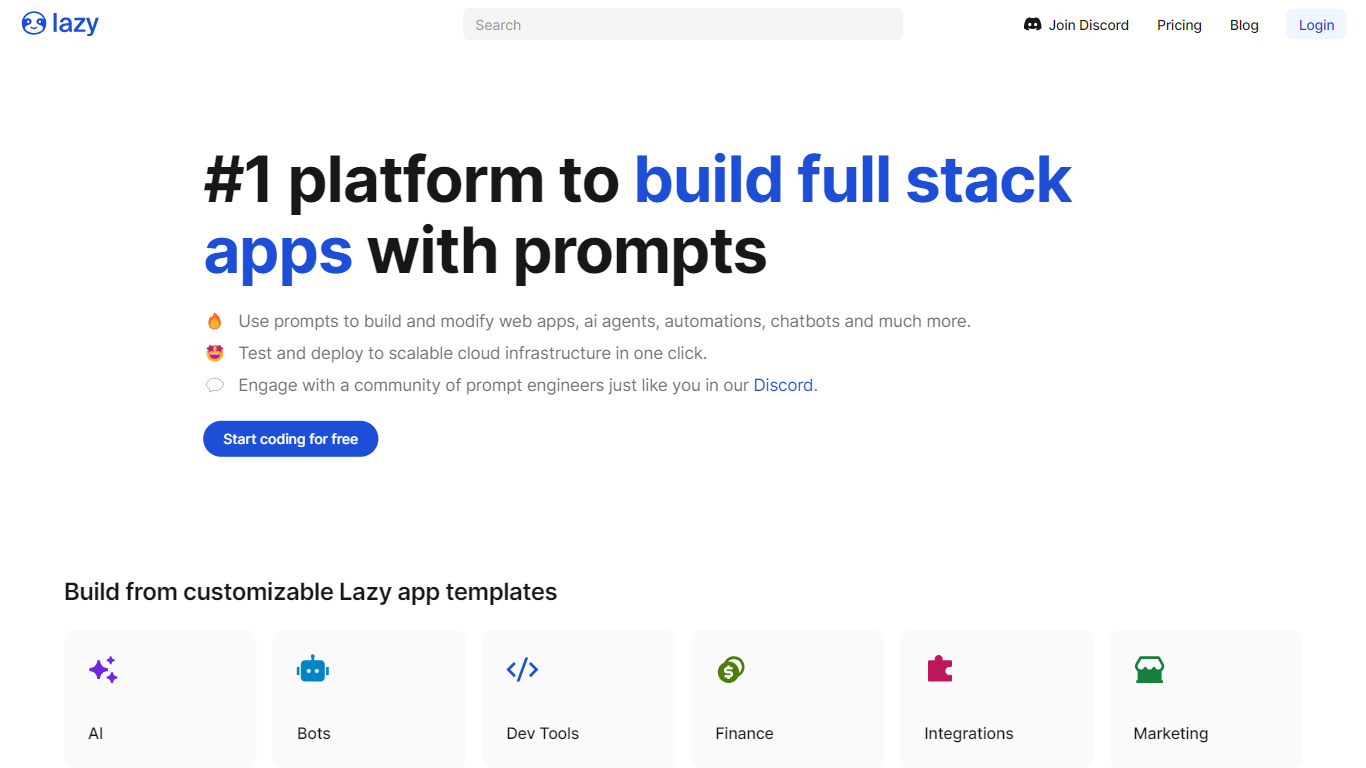
Lazy AI turns plain-language prompts into deployed full-stack software with frontend, backend logic, and a database already wired together. You describe what you want, the platform generates the app structure, and production builds run on Google Cloud. Teams reach for it when they need working internal tools, chatbots, dashboards, or API endpoints without staffing a full engineering sprint.
Where most no-code tools stop at UI mockups or single-purpose automations, Lazy AI ships the whole stack in one workspace. The comparison page positions it against Cursor, Bolt.new, V0, Replit, Lovable, and Zapier by bundling database setup, deployment, and integrations like Google Sheets and CRMs instead of making you wire those pieces together elsewhere.
Marketing and sales teams use it to prototype business apps quickly, while non-technical staff can start from community templates for login flows, scrapers, or chatbots. Published apps stay online through Lazy AI managed hosting, with usage billed per gigabyte of RAM per day on top of the monthly subscription.
Web on Demand

What is Web on Demand?
Web on Demand is a no-code web apps builder for agencies, freelancers, and resellers who need client sites without PHP backends or plugin stacks. It combines drag-and-drop layouts, spreadsheet-style database editing, e-commerce tools, and an AI generator for blogs, product descriptions, and SEO metadata. Sites run on HTML and CSS, and edits happen on the live page through embedded controls instead of a separate admin dashboard.
Where WordPress or Webflow charge monthly subscriptions and hide editing behind a backend, Web on Demand sells one-time licenses starting at $1,000 and lets you click text on the published page to change it. That fits white-label workflows where clients expect to update copy themselves. The trade-off is the upfront license cost and the HTML/CSS skills needed for fully custom layouts.
Freelancers, design studios, and ISP partners use it to ship e-commerce stores, landing pages, and branded website storefronts. The AI generator helps teams draft SEO-friendly blog posts and product copy without hiring a writer for every SKU. Resellers on the Storefront plan can earn a 20% share of client hosting fees sold through their store.
Lazy AI (formerly Lazy apps) Upvotes
Web on Demand Upvotes
Lazy AI (formerly Lazy apps) Top Features
Describe an app in plain language and Lazy AI generates frontend, backend, and database code together
Deploy production apps to Google Cloud with 99.9% uptime stated on the pricing page
Community template library includes login flows, scrapers, and chatbot starters at getlazy.ai/explore
Pro plan includes 250 million tokens per month plus custom domain deployment
Published app hosting costs $1.56 per GB of RAM allocated per day on top of subscription fees
Integrates with Google Sheets, external APIs, and CRMs from the launch step on the homepage
Web on Demand Top Features
Basic license costs $1,000 as a one-time payment with no recurring platform subscription
AI generator drafts full blog posts from a short prompt and suggests keywords plus meta descriptions from a page title
Edit content on the live site with embedded controls instead of logging into a backend admin panel
Import e-commerce inventory from Google Sheets or Microsoft Excel in one click
Supports 64 languages with LTR and RTL layouts on published sites
Hosting runs on AWS with HTTPS encryption included on every business plan
Lazy AI (formerly Lazy apps) Category
- Web Apps
Web on Demand Category
- Web Apps
Lazy AI (formerly Lazy apps) Pricing Type
- Paid
Web on Demand Pricing Type
- Paid