Legasite vs Cerebras
In the face-off between Legasite vs Cerebras, which AI Developer tool takes the crown? We scrutinize features, alternatives, upvotes, reviews, pricing, and more.
In a face-off between Legasite and Cerebras, which one takes the crown?
If we were to analyze Legasite and Cerebras, both of which are AI-powered developer tools, what would we find? There's no clear winner in terms of upvotes, as both tools have received the same number. You can help us determine the winner by casting your vote and tipping the scales in favor of one of the tools.
Think we got it wrong? Cast your vote and show us who's boss!
Legasite

What is Legasite?
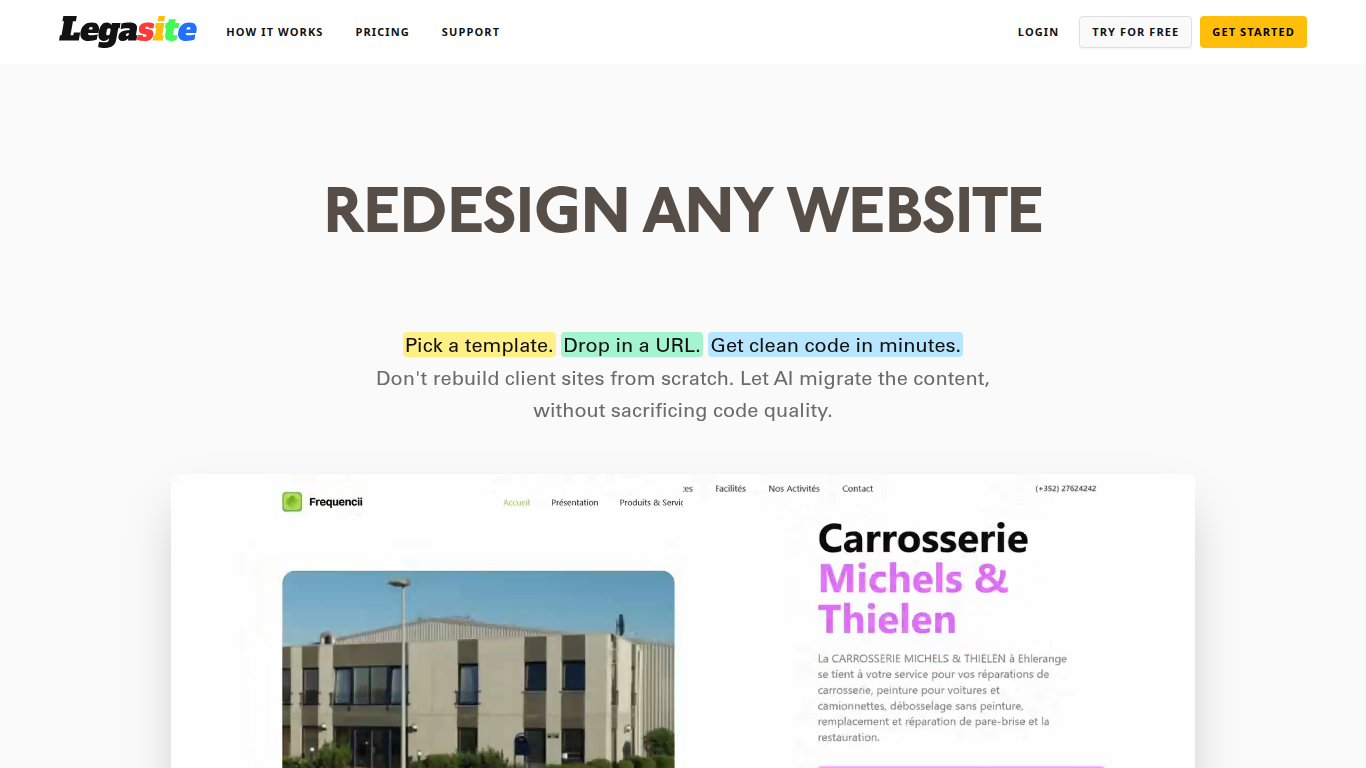
Legasite moves legacy websites into modern React and Next.js templates without rebuilding from scratch. You pick a template, drop in an existing site URL, and the platform extracts content, maps it to the layout, and generates downloadable source code in about 10 to 20 minutes.
The workflow centers on automated content extraction rather than manual copy-paste. Legasite pulls text, structure, and images from the source site, then populates a human-written template so the output follows component-based patterns with Tailwind CSS styling. You get a ZIP of real code you can deploy to Vercel, Netlify, or your own server.
It targets web agencies, freelance developers, and in-house dev teams handling client redesigns or internal UI modernization. The pitch is cutting migration grunt work so you spend time on customization and features instead of transferring content page by page.
Cerebras
What is Cerebras?
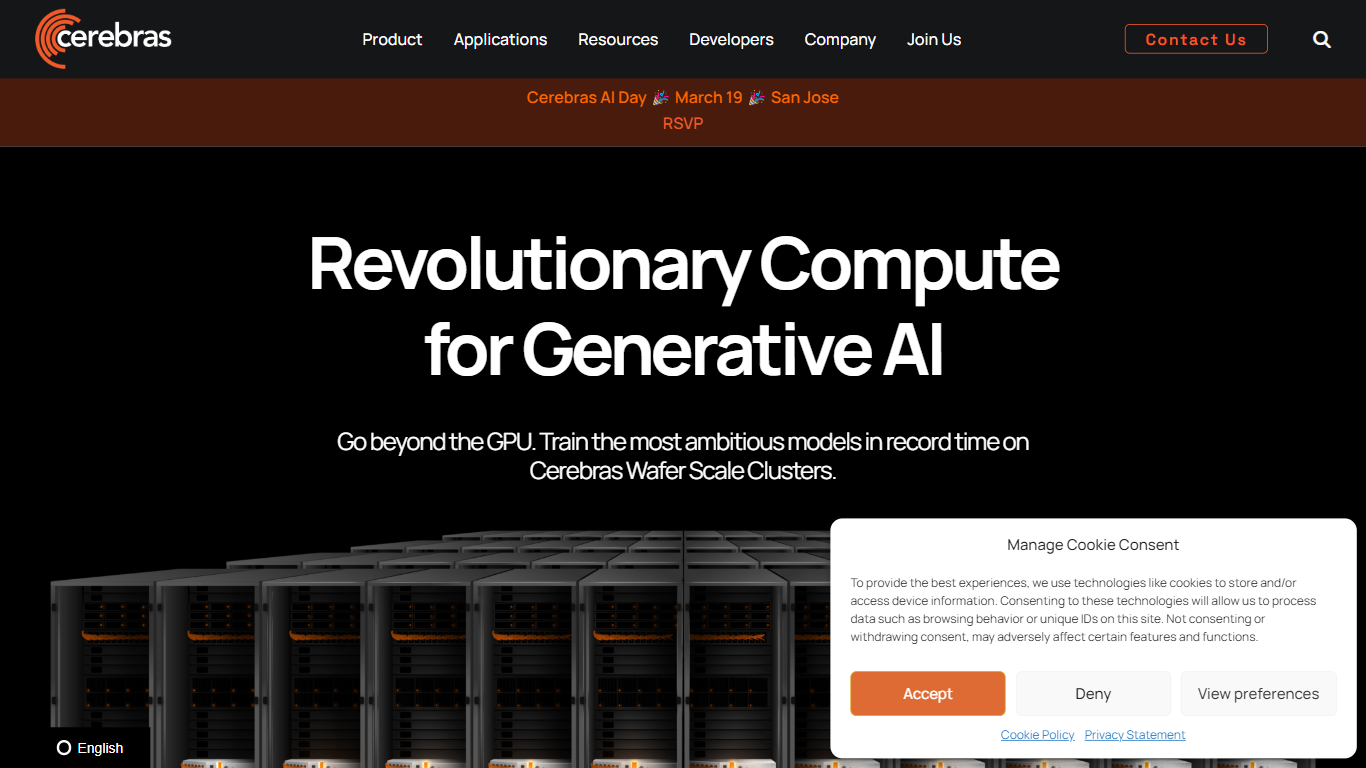
Cerebras builds wafer-scale AI chips and runs one of the fastest LLM inference platforms available today. Its CS-2 and CS-3 systems power cloud APIs, dedicated private endpoints, and on-prem deployments for teams that need low-latency responses at production scale.
The Wafer-Scale Engine is a single chip 58 times larger than typical GPUs, designed specifically for training and inference workloads. On the cloud side, developers call open models like Llama, Qwen, GLM, and GPT OSS through a simple API key, with throughput that routinely hits thousands of tokens per second on supported models.
Cerebras serves AI-native startups, enterprise research teams, and global companies across healthcare, cybersecurity, and drug discovery. Customers include OpenAI, Meta, GSK, Notion, and Mayo Clinic. You can start free on the inference API, scale through pay-as-you-go developer billing, or talk to sales for dedicated capacity and custom model weights.
Legasite Upvotes
Cerebras Upvotes
Legasite Top Features
Drop in a URL and get React or Next.js code in 10 to 20 minutes
Content, structure, and images pulled automatically from the old site
Download a full ZIP you can deploy anywhere with no platform lock-in
Free plan includes 3 demo credits for single-page previews on signup
Basic plan at $20 per month supports about 20 pages with downloadable code
Agency plan at $100 per month supports about 200 pages per month
Tokens reset monthly with roughly 500K tokens consumed per generated page
Cerebras Top Features
Wafer-Scale Engine chip built 58x larger than standard GPUs
Cloud inference API with models like Llama, Qwen, GLM, and GPT OSS
Gemma 4 runs at 1,500+ tokens per second on Cerebras hardware
GPT OSS 120B hits roughly 3,000 tokens per second on the developer tier
Deploy on-prem with CS-2 or CS-3 for full data and model control
Partner integrations through AWS Marketplace, OpenRouter, Hugging Face, and Vercel
Free account includes $5 in credits on the inference API per pricing page
Legasite Category
- Developer
Cerebras Category
- Developer
Legasite Pricing Type
- Freemium
Cerebras Pricing Type
- Freemium