Legasite vs keel
Explore the showdown between Legasite vs keel and find out which AI Developer tool wins. We analyze upvotes, features, reviews, pricing, alternatives, and more.
In a face-off between Legasite and keel, which one takes the crown?
When we contrast Legasite with keel, both of which are exceptional AI-operated developer tools, and place them side by side, we can spot several crucial similarities and divergences. The upvote count is neck and neck for both Legasite and keel. Since other aitools.fyi users could decide the winner, the ball is in your court now to cast your vote and help us determine the winner.
You don't agree with the result? Cast your vote to help us decide!
Legasite

What is Legasite?
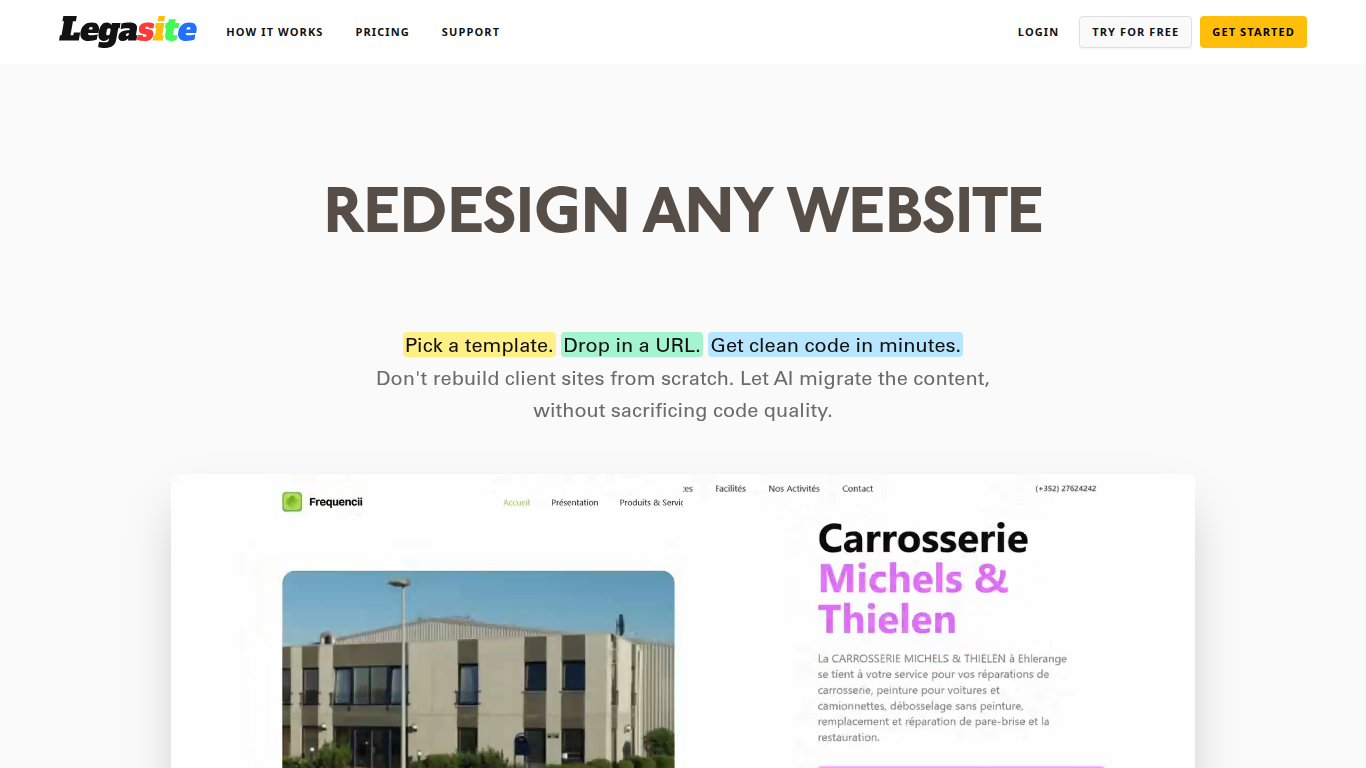
Legasite moves legacy websites into modern React and Next.js templates without rebuilding from scratch. You pick a template, drop in an existing site URL, and the platform extracts content, maps it to the layout, and generates downloadable source code in about 10 to 20 minutes.
The workflow centers on automated content extraction rather than manual copy-paste. Legasite pulls text, structure, and images from the source site, then populates a human-written template so the output follows component-based patterns with Tailwind CSS styling. You get a ZIP of real code you can deploy to Vercel, Netlify, or your own server.
It targets web agencies, freelance developers, and in-house dev teams handling client redesigns or internal UI modernization. The pitch is cutting migration grunt work so you spend time on customization and features instead of transferring content page by page.
keel
What is keel?
Keel is an operations platform that lets teams build custom software to run inventory, orders, warehouse workflows, and production planning without defaulting to a traditional ERP. Operators define their own data models, launch tailored systems in weeks, and connect the tools they already use.
The platform is code-first at its core. Teams describe data, APIs, permissions, and jobs in a Keel schema, then get managed serverless Postgres, auto-generated GraphQL and JSON APIs, TypeScript extensions, and internal admin tools from the same source of truth. Keel is open source and built for version control, multiple environments, and local development with its CLI and VS Code extension.
Keel was founded in 2021 by former Echo executives who scaled pharmacy operations through custom internal tooling when off-the-shelf software fell short. The company raised $6 million in 2024 to bring the platform to more operations teams who have outgrown spreadsheets and no-code stacks but want to avoid lengthy ERP implementations.
It suits logistics companies, e-commerce operators, manufacturers, and other teams that need owned, adaptable ops software their own staff can iterate on without waiting months for engineering priority.
Legasite Upvotes
keel Upvotes
Legasite Top Features
Drop in a URL and get React or Next.js code in 10 to 20 minutes
Content, structure, and images pulled automatically from the old site
Download a full ZIP you can deploy anywhere with no platform lock-in
Free plan includes 3 demo credits for single-page previews on signup
Basic plan at $20 per month supports about 20 pages with downloadable code
Agency plan at $100 per month supports about 200 pages per month
Tokens reset monthly with roughly 500K tokens consumed per generated page
keel Top Features
Define orders, inventory, tasks, and approvals in a custom schema instead of preset ERP modules
Start from modules for inventory, procurement, orders, fulfilment, warehouses, and production planning
Auto-generated admin tools keep support, logistics, and ops teams synced with your live data model
Extend workflows with TypeScript functions, scheduled jobs, event queues, and permission rules
Connect Shopify, QuickBooks, 3PLs, OAuth providers, and IoT devices through APIs you control
Legasite Category
- Developer
keel Category
- Developer
Legasite Pricing Type
- Freemium
keel Pricing Type
- Paid