Lifestack vs Albus
When comparing Lifestack vs Albus, which AI Productivity tool shines brighter? We look at pricing, alternatives, upvotes, features, reviews, and more.
Between Lifestack and Albus, which one is superior?
When we put Lifestack and Albus side by side, both being AI-powered productivity tools, Neither tool takes the lead, as they both have the same upvote count. Join the aitools.fyi users in deciding the winner by casting your vote.
Don't agree with the result? Cast your vote and be a part of the decision-making process!
Lifestack

What is Lifestack?
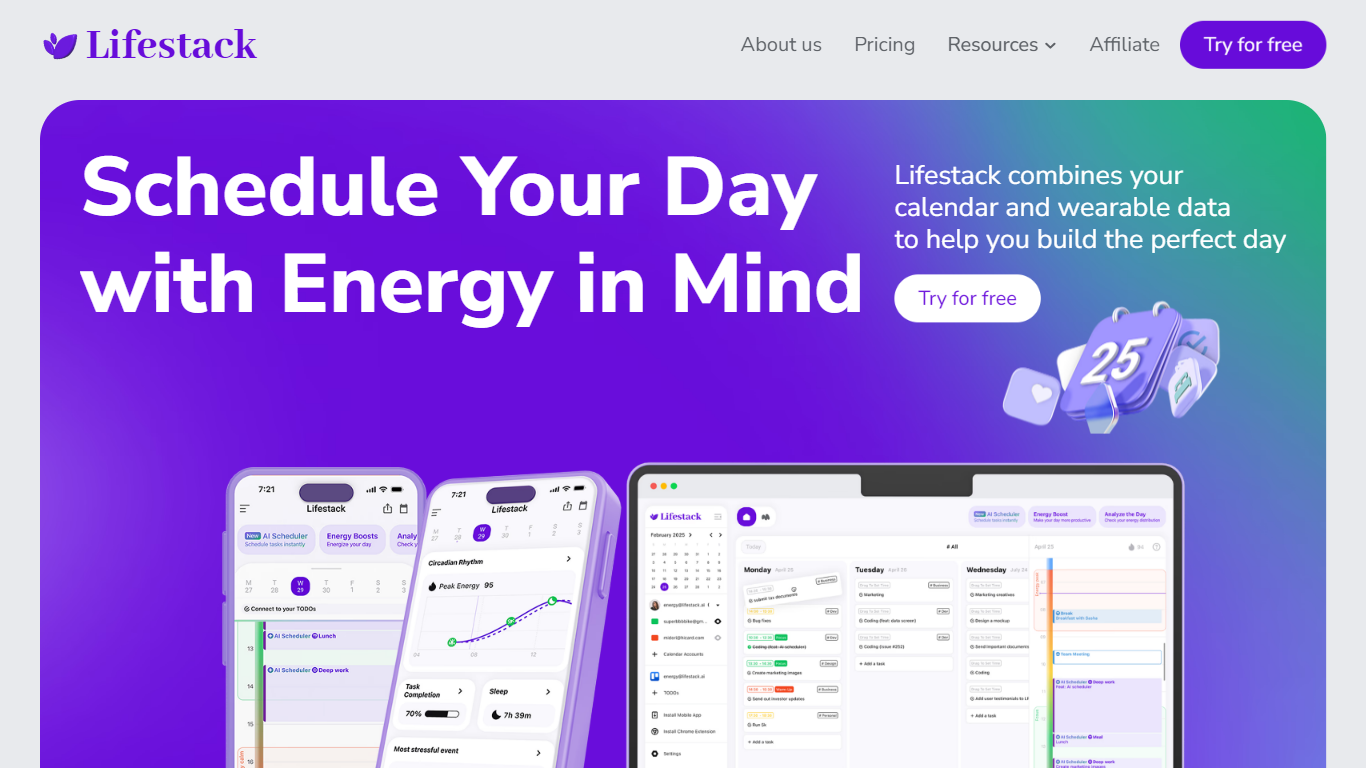
Lifestack is a productivity planner that builds your daily schedule around sleep, recovery, and focus instead of empty calendar blocks. It reads wearable and health signals, maps energy peaks and calm periods across your day, and drafts a schedule that places demanding work when you can actually focus.
Most calendar apps treat you like a task executor with unlimited stamina. Lifestack treats energy, meals, and rest as first-class inputs, overlaying focus and calm zones on your calendar so you see when deep work fits and when lighter tasks make sense. That body-first layer is the trade-off: it is narrower than a general project manager, but it connects health data to scheduling decisions most planners ignore.
The product suits professionals juggling meetings and deep work, ADHD users who need external structure around energy swings, and anyone syncing tasks from tools like Trello while trying to protect sleep and meal timing. Apps run on iPhone, Mac, Android, and Chrome, with a desktop Mac download and browser extension for calendar access.
Albus
What is Albus?
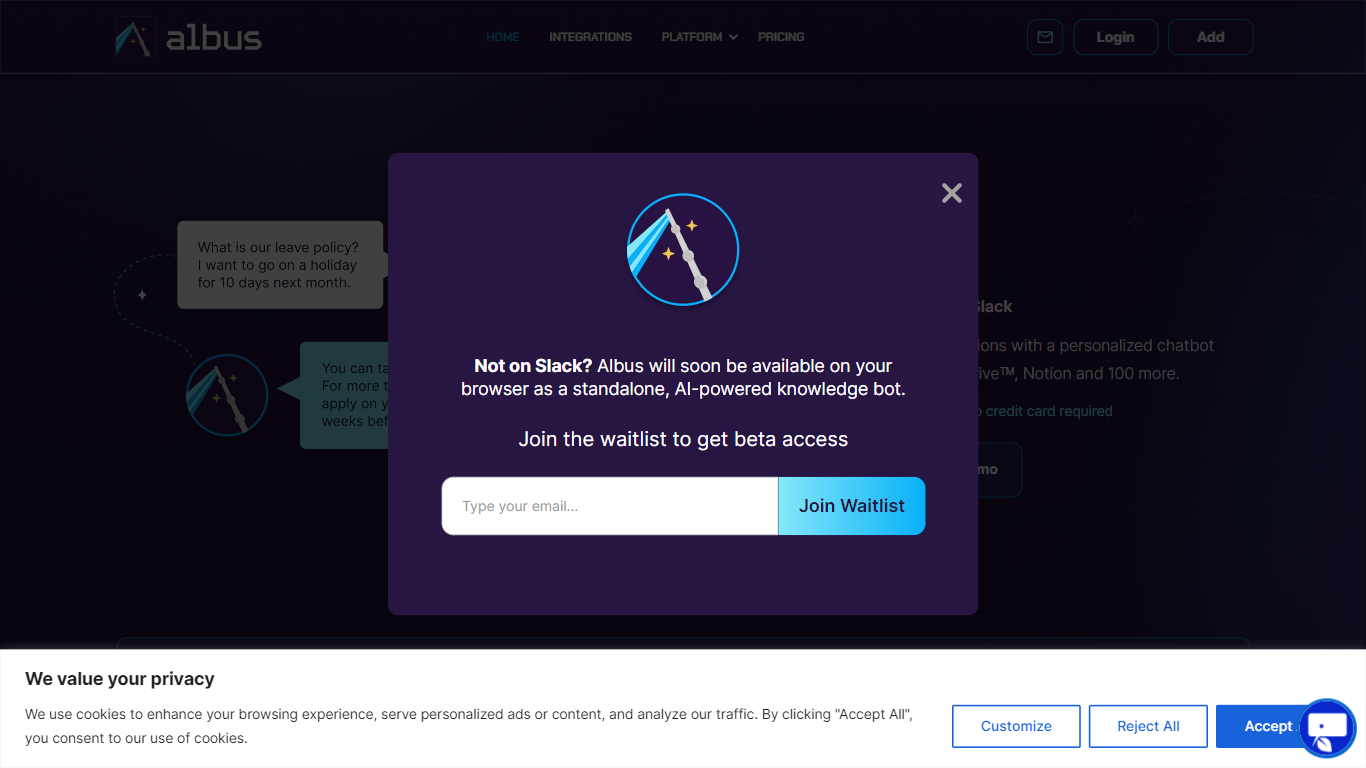
Albus lets your team ask questions in Slack and on the web, then pulls answers from connected knowledge hubs like Notion, Jira, and Google Drive. It targets everyday workplace productivity gaps where employees waste time digging through scattered docs or pinging HR for the same policy answers.
Where a generic chatbot guesses from public training data, Albus only searches sources your organization wires in. Springworks positions it as a single source of truth that resolves queries in seconds rather than routing every question through a human inbox. That narrow focus on connected internal docs is the trade-off: it will not help with tasks outside what your admin has linked.
HR teams use it to field repetitive leave and benefits questions. Product managers can check Jira tickets and PRDs without leaving Slack. Customer success and sales reps can surface collateral buried in shared drives. Springworks reports more than 300 teams already use it across helpdesk, project management, and internal search workflows.
Lifestack Upvotes
Albus Upvotes
Lifestack Top Features
Maps Energy Zones on your calendar so focus work lands during peak energy periods
Pulls wearable and Apple Health data into the same view as your schedule
Syncs tasks from third-party tools such as Trello alongside calendar events
Plans meals and sleep blocks around the day's meetings and task load
Chat copilot answers daily planning questions with your schedule in context
Runs on iPhone, Mac, Android, and Chrome with unlimited calendars and tasks on paid plans
Used by 30,000+ users per the Lifestack homepage
Albus Top Features
One-click integration with 50+ knowledge hubs including Notion, Jira, and Google Drive
Used by 300+ teams according to Springworks
Works inside Slack and on the web without switching between apps
Answers questions in a ChatGPT-style conversational interface
Connects Notion, Slack channels, Jira, Intercom, and HubSpot per Springworks docs
Admins choose which sources Albus searches before employees start asking questions
Lifestack Category
- Productivity
Albus Category
- Productivity
Lifestack Pricing Type
- Paid
Albus Pricing Type
- Freemium