Lifestack vs Nexus
In the clash of Lifestack vs Nexus, which AI Productivity tool emerges victorious? We assess reviews, pricing, alternatives, features, upvotes, and more.
When we put Lifestack and Nexus head to head, which one emerges as the victor?
Let's take a closer look at Lifestack and Nexus, both of which are AI-driven productivity tools, and see what sets them apart. The community has spoken, Nexus leads with more upvotes. The number of upvotes for Nexus stands at 10, and for Lifestack it's 6.
Not your cup of tea? Upvote your preferred tool and stir things up!
Lifestack
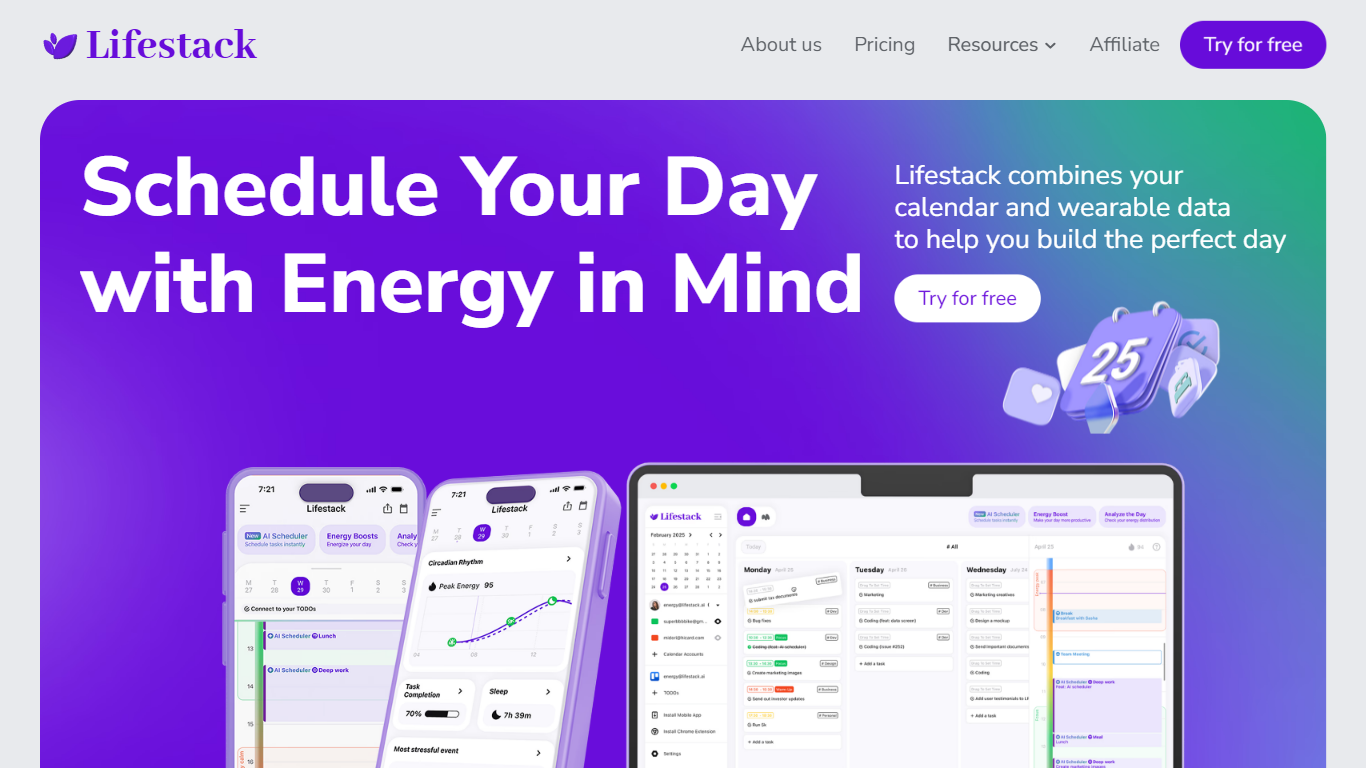

What is Lifestack?
Lifestack is a productivity planner that builds your daily schedule around sleep, recovery, and focus instead of empty calendar blocks. It reads wearable and health signals, maps energy peaks and calm periods across your day, and drafts a schedule that places demanding work when you can actually focus.
Most calendar apps treat you like a task executor with unlimited stamina. Lifestack treats energy, meals, and rest as first-class inputs, overlaying focus and calm zones on your calendar so you see when deep work fits and when lighter tasks make sense. That body-first layer is the trade-off: it is narrower than a general project manager, but it connects health data to scheduling decisions most planners ignore.
The product suits professionals juggling meetings and deep work, ADHD users who need external structure around energy swings, and anyone syncing tasks from tools like Trello while trying to protect sleep and meal timing. Apps run on iPhone, Mac, Android, and Chrome, with a desktop Mac download and browser extension for calendar access.
Nexus
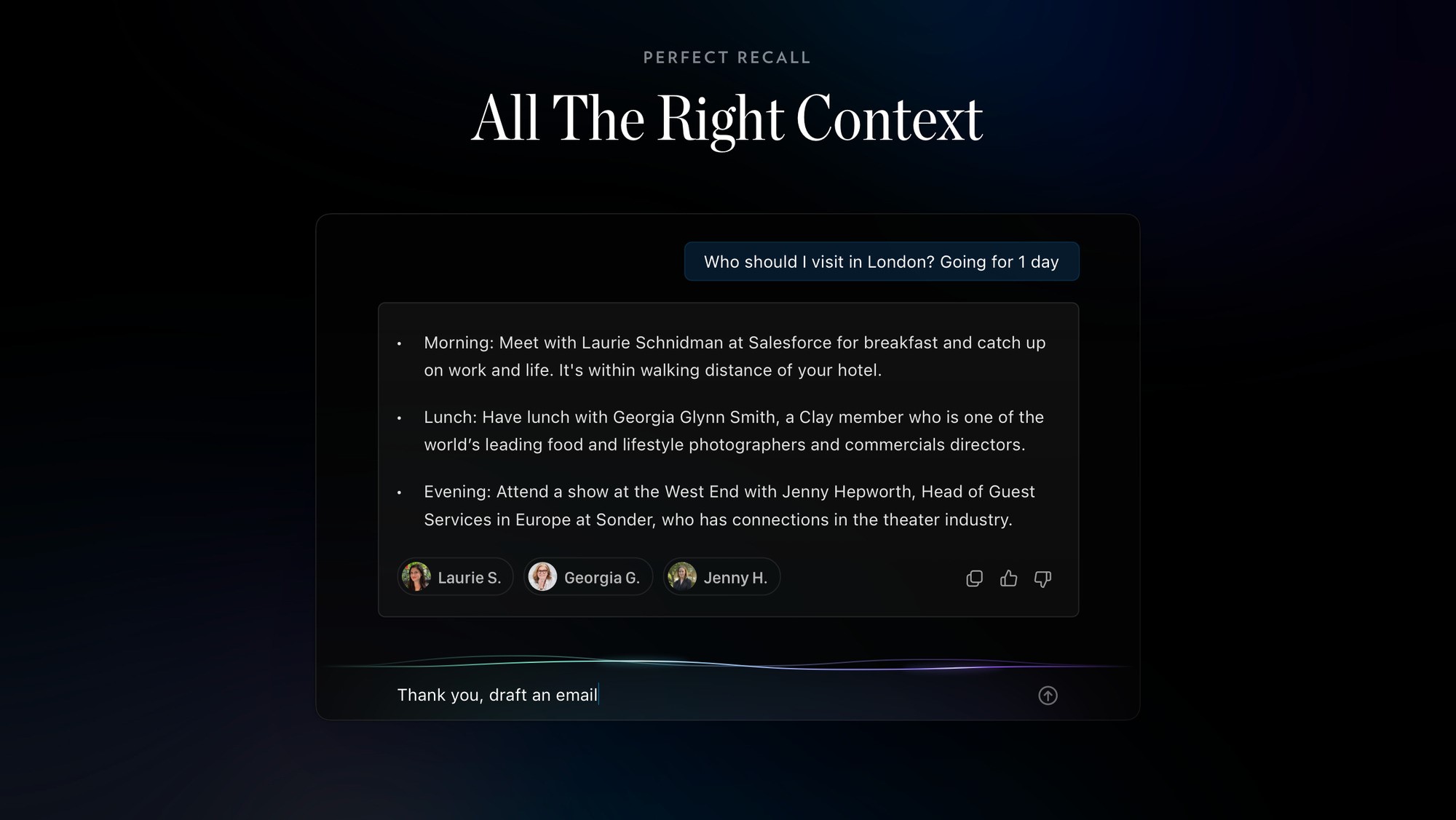
What is Nexus?
Nexus adds an AI navigator on top of Mesh, the personal CRM that organizes contacts from email, calendar, and social accounts. You ask questions about your network and Nexus pulls relationship context to suggest who to reach out to, what to say, and when to follow up. It is built for people who manage dozens of professional relationships and need faster answers than scrolling through notes.
Generic chatbots do not know who you met last quarter or which client changed jobs. Nexus reads the contact history Mesh already stores, so prompts like gift ideas or reconnection reasons come back tied to real people in your roster. That network memory is the gap most AI assistants skip, and it is why Nexus sits inside Mesh rather than working as a standalone chat window.
Sales professionals, freelancers, and small business owners use Nexus to find the right contact, draft outreach, and plan introductions or events without rebuilding context from scratch. If you already track relationships in Mesh, Nexus turns that database into a queryable guide for day-to-day productivity.
Lifestack Upvotes
Nexus Upvotes
Lifestack Top Features
Maps Energy Zones on your calendar so focus work lands during peak energy periods
Pulls wearable and Apple Health data into the same view as your schedule
Syncs tasks from third-party tools such as Trello alongside calendar events
Plans meals and sleep blocks around the day's meetings and task load
Chat copilot answers daily planning questions with your schedule in context
Runs on iPhone, Mac, Android, and Chrome with unlimited calendars and tasks on paid plans
Used by 30,000+ users per the Lifestack homepage
Nexus Top Features
Reads full relationship context from Mesh contacts across email, calendar, and social imports
Suggests reconnection reasons, outreach email drafts, and gift ideas per contact
Helps find the right person for introductions, opportunities, and event guest lists
Mesh Personal tier supports up to 1000 contacts free with a credit card on file
Mesh Pro at $10 per month unlocks unlimited contacts and priority data refreshes
Imports contacts from Email, Calendar, Twitter, LinkedIn, Facebook, and iMessage
Lifestack Category
- Productivity
Nexus Category
- Productivity
Lifestack Pricing Type
- Paid
Nexus Pricing Type
- Freemium