Me.bot (formerly Mebot) vs Personal AI
Dive into the comparison of Me.bot (formerly Mebot) vs Personal AI and discover which AI Companion tool stands out. We examine alternatives, upvotes, features, reviews, pricing, and beyond.
In a comparison between Me.bot (formerly Mebot) and Personal AI, which one comes out on top?
When we compare Me.bot (formerly Mebot) and Personal AI, two exceptional companion tools powered by artificial intelligence, and place them side by side, several key similarities and differences come to light. Personal AI stands out as the clear frontrunner in terms of upvotes. Personal AI has been upvoted 7 times by aitools.fyi users, and Me.bot (formerly Mebot) has been upvoted 6 times.
Want to flip the script? Upvote your favorite tool and change the game!
Me.bot (formerly Mebot)
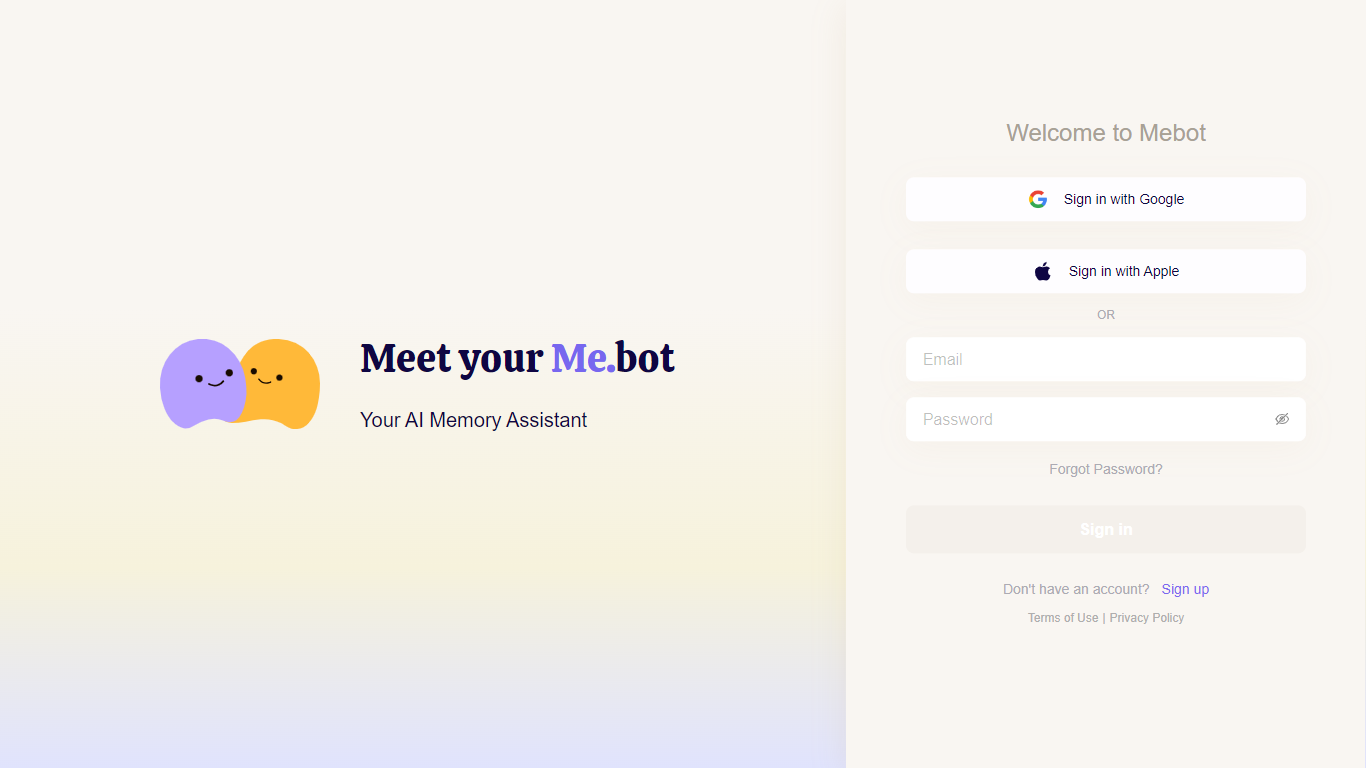

What is Me.bot (formerly Mebot)?
Me.bot is a personal AI from Mindverse that builds a Second Me from your notes, voice recordings, and imported files. You add everyday thoughts, meeting notes, PDFs, website links, and voice memos, and the system learns your preferences so it can speak and present ideas in your voice.
The product turns saved material into interactive talks with voice and visuals tailored to different audiences. You choose who you are speaking to and what you want to cover, and Me.bot shapes a shareable presentation from your records. Shared talks can be published so others engage with your ideas while you see how they respond.
Mindverse positions Me.bot as a consumer app powered by its Second Me framework, which also includes open-source training tools and research into lifelong personal models. The service is available on iOS and Android, with web sign-in through second.me.
Personal AI
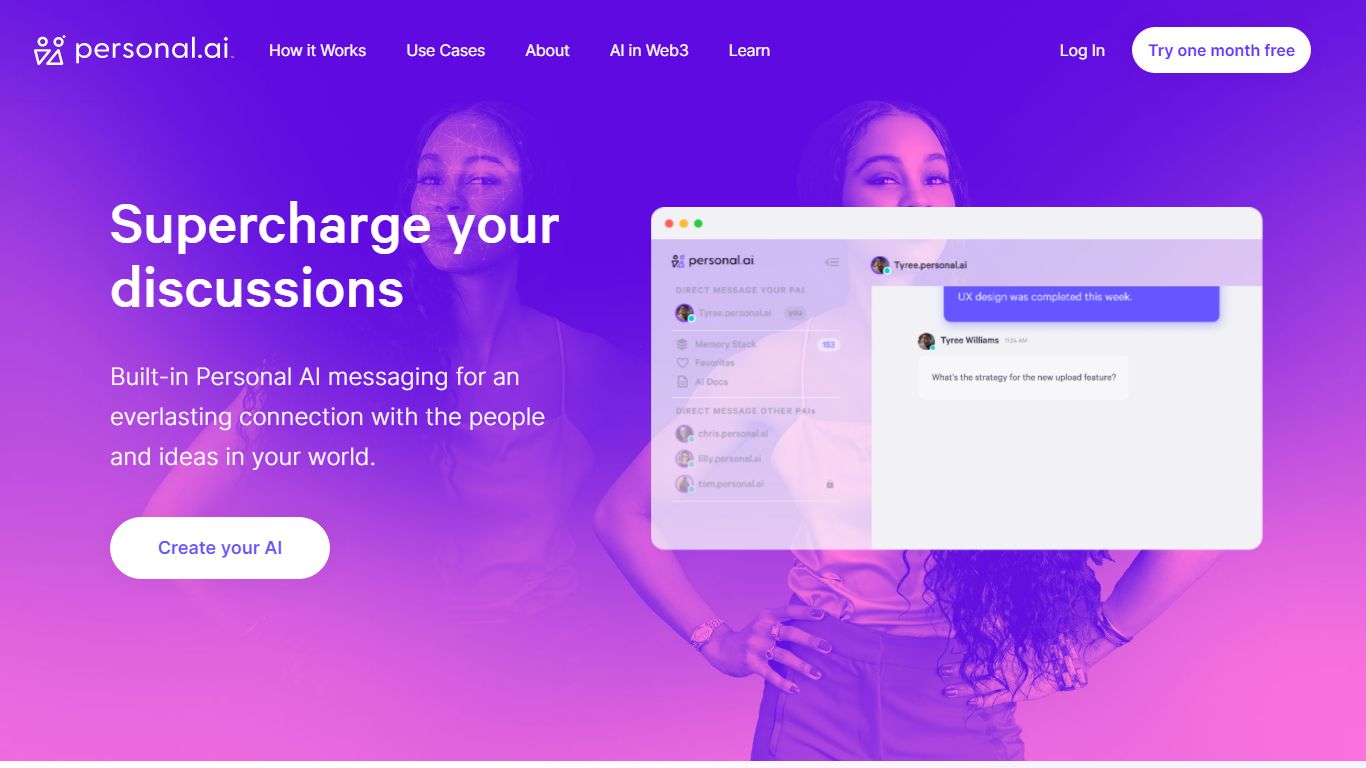
What is Personal AI?
Personal AI builds memory infrastructure that gives AI a persistent identity instead of resetting every session. Its Memory Core encodes, stabilizes, stores, retrieves, and updates experiences so an assistant remembers what it has lived, not just documents you upload. The stack spans My AI for end users, Persona Studio for builders, and carrier-grade Memory Core deployments on operator networks.
Most AI assistants treat context as static files you attach before each chat. Personal AI separates memory (accumulated experiences with temporal structure) from context (static uploads) and lets identity emerge over time. Carrier benchmarks on Comcast's network cite 15ms time to first token, $0.02 per million tokens, and sub-500ms end-to-end voice versus cloud LLM baselines.
Telecom carriers, enterprise AI teams, and individual users who want a long-running assistant use Personal AI. Carriers deploy MODEL-4 on their own networks under custom agreements. Builders use Persona Studio to configure personas without code. Consumers get My AI, an assistant that remembers conversations and learns preferences over time.
Me.bot (formerly Mebot) Upvotes
Personal AI Upvotes
Me.bot (formerly Mebot) Top Features
Import notes, audio, and files so Second Me learns your tone and interests
Capture quick thoughts or voice memos that shape how your AI communicates
Generate interactive voice and visual talks from your saved records
Tailor each talk for a specific listener, from investors to family
Share talks publicly and track how people engage with your ideas
Personal AI Top Features
Memory Core with five primitives: encoding, stabilizing, storing, retrieving, and updating
15ms time to first token in carrier benchmarks versus 1,000ms cloud LLM baseline
$0.02 per million tokens cited versus $0.80 on Gemma-27B in published benchmarks
Persona Studio lets builders define personality, knowledge, and memory without code
AI Training Studio with batch uploads, Gmail, Google Drive, Outlook, and OneDrive sync
Sub-500ms end-to-end voice pipeline versus 1,500ms OpenAI Realtime benchmark
Me.bot (formerly Mebot) Category
- Companion
Personal AI Category
- Companion
Me.bot (formerly Mebot) Pricing Type
- Freemium
Personal AI Pricing Type
- Paid