Monster API vs Stellaris AI
When comparing Monster API vs Stellaris AI, which AI Large Language Model (LLM) tool shines brighter? We look at pricing, alternatives, upvotes, features, reviews, and more.
In a comparison between Monster API and Stellaris AI, which one comes out on top?
When we put Monster API and Stellaris AI side by side, both being AI-powered large language model (llm) tools, The upvote count reveals a draw, with both tools earning the same number of upvotes. Join the aitools.fyi users in deciding the winner by casting your vote.
Disagree with the result? Upvote your favorite tool and help it win!
Monster API
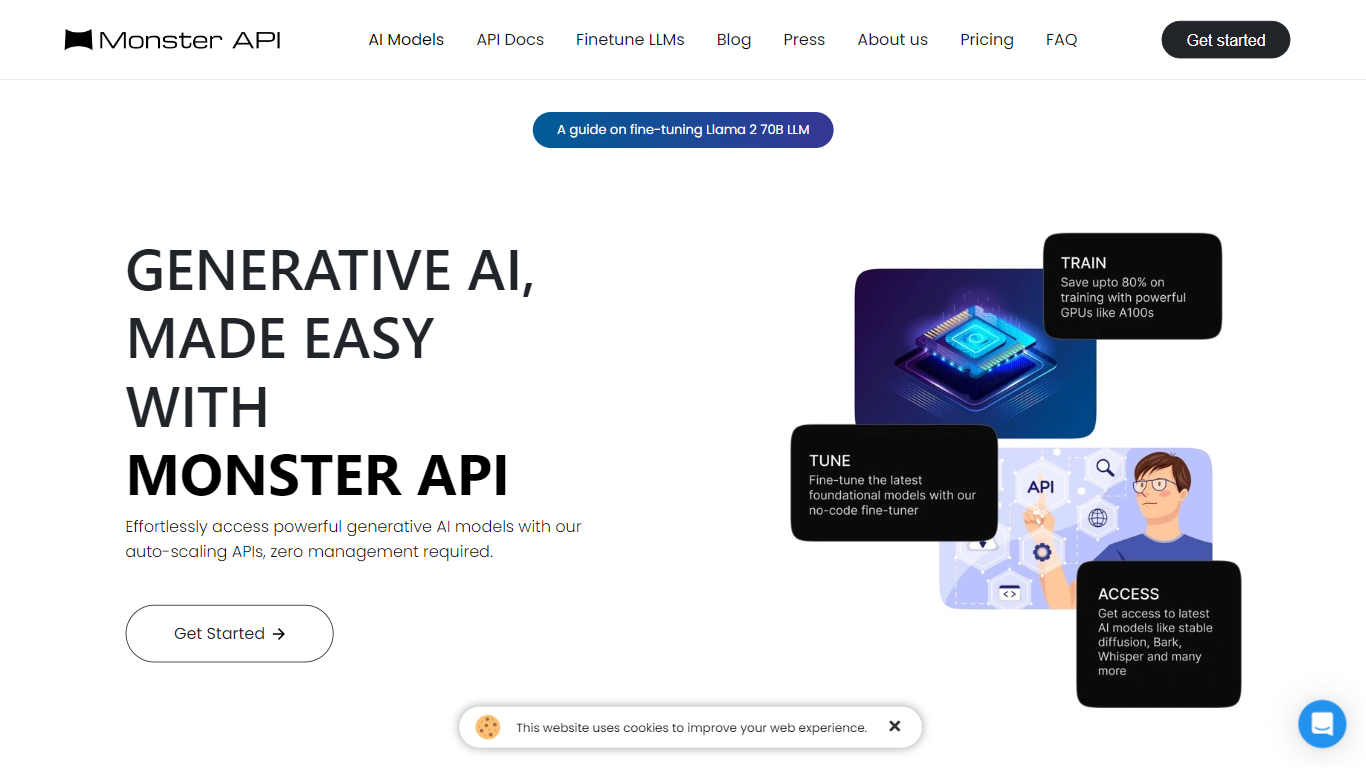

What is Monster API?
The Monster API is a robust, multi-functional interface that empowers developers and businesses to streamline their processes and integrate with the Monster job platform. Designed for ease of use and efficiency, the Monster API serves as a conduit for automating job postings, searching for resumes, and accessing a wide range of employment-related data. With its SEO-friendly features, the API helps to enhance the visibility of job listings, ensuring that they reach the most suitable candidates. The detailed documentation and responsive support make integration a breeze, allowing businesses to focus on their core operations while optimizing their recruitment strategy.
Stellaris AI
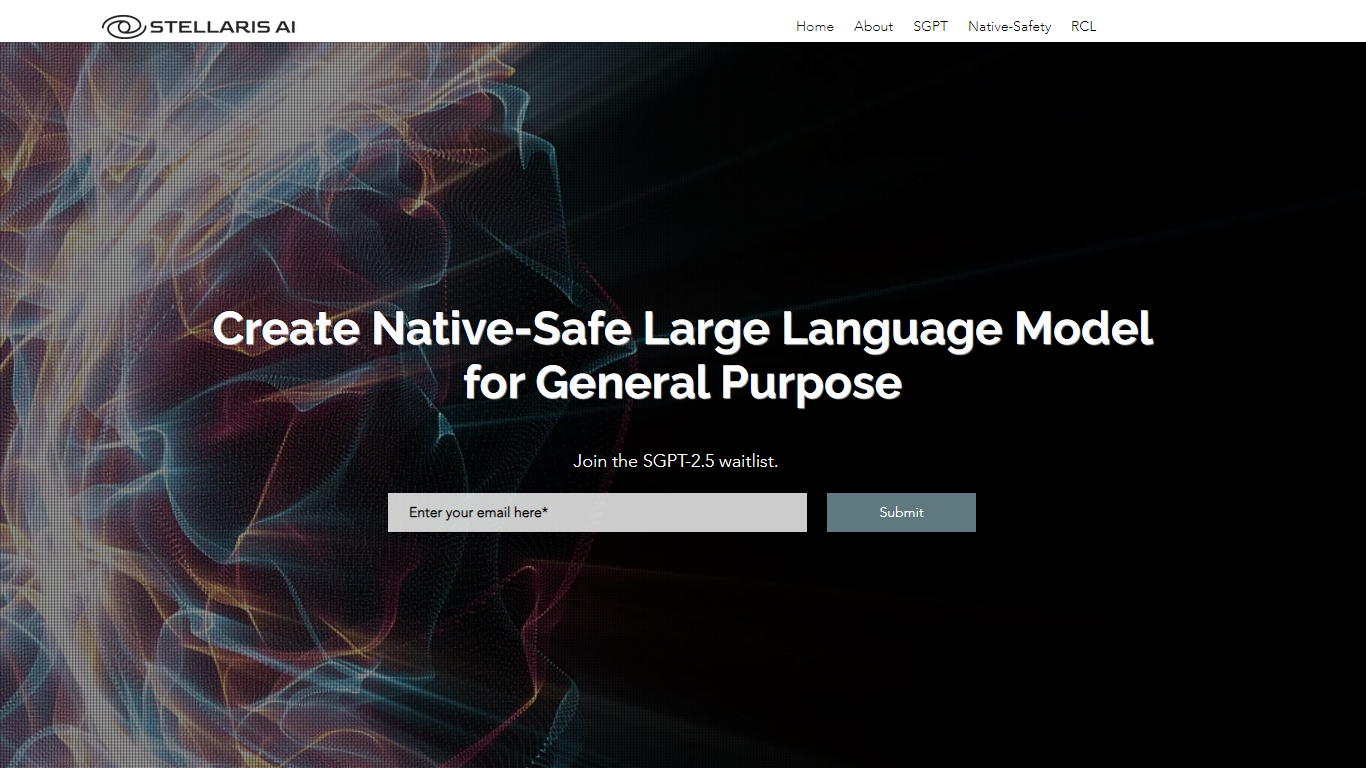
What is Stellaris AI?
Stellaris AI builds large language models marketed around native safety and human-like reasoning for real-world tasks. Its flagship SGPT line targets text and code generation, knowledge Q&A, logical reasoning, and analytics at a scale the company describes as hundreds of billions of parameters. The public site centers on a waitlist for SGPT-4.5 rather than a self-serve chat product you can open today.
Where many LLM labs bolt safety filters on after training, Stellaris AI frames safety as part of the model stack through strict source referencing and harm minimization in the architecture. It also highlights Real-time Context Learning (RCL) for adapting answers with live knowledge, a combination aimed at teams that want cited outputs instead of unchecked generation.
Researchers, enterprise AI teams, and early adopters join the SGPT-4.5 waitlist for first access. The company cites 10+ years of research and three core product pillars: Stellaris GPT, Native Safety, and RCL.
Monster API Upvotes
Stellaris AI Upvotes
Monster API Top Features
Automated Job Postings: Enables automated posting of job listings to streamline recruitment.
Resume Search Capability: Provides advanced search features to access a vast database of resumes.
Employment-Related Data Access: Offers comprehensive access to a wide range of employment data.
SEO-Friendly: Designed to enhance the visibility of job listings on search engines.
Efficient Integration: User-friendly API with detailed documentation for easy integration.
Stellaris AI Top Features
SGPT models described at 100B+ parameters for text, code, and reasoning tasks
Native Safety framework with strict source referencing and harm minimization
Real-time Context Learning (RCL) for live knowledge integration
Three product pillars: Stellaris GPT, Native Safety, and RCL
SGPT-4.5 waitlist open for early access signups on the homepage
Monster API Category
- Large Language Model (LLM)
Stellaris AI Category
- Large Language Model (LLM)
Monster API Pricing Type
- Paid
Stellaris AI Pricing Type
- Freemium