Moodmap vs GPTfy
In the contest of Moodmap vs GPTfy, which AI Education tool is the champion? We evaluate pricing, alternatives, upvotes, features, reviews, and more.
If you had to choose between Moodmap and GPTfy, which one would you go for?
When we examine Moodmap and GPTfy, both of which are AI-enabled education tools, what unique characteristics do we discover? GPTfy stands out as the clear frontrunner in terms of upvotes. The number of upvotes for GPTfy stands at 10, and for Moodmap it's 6.
Want to flip the script? Upvote your favorite tool and change the game!
Moodmap
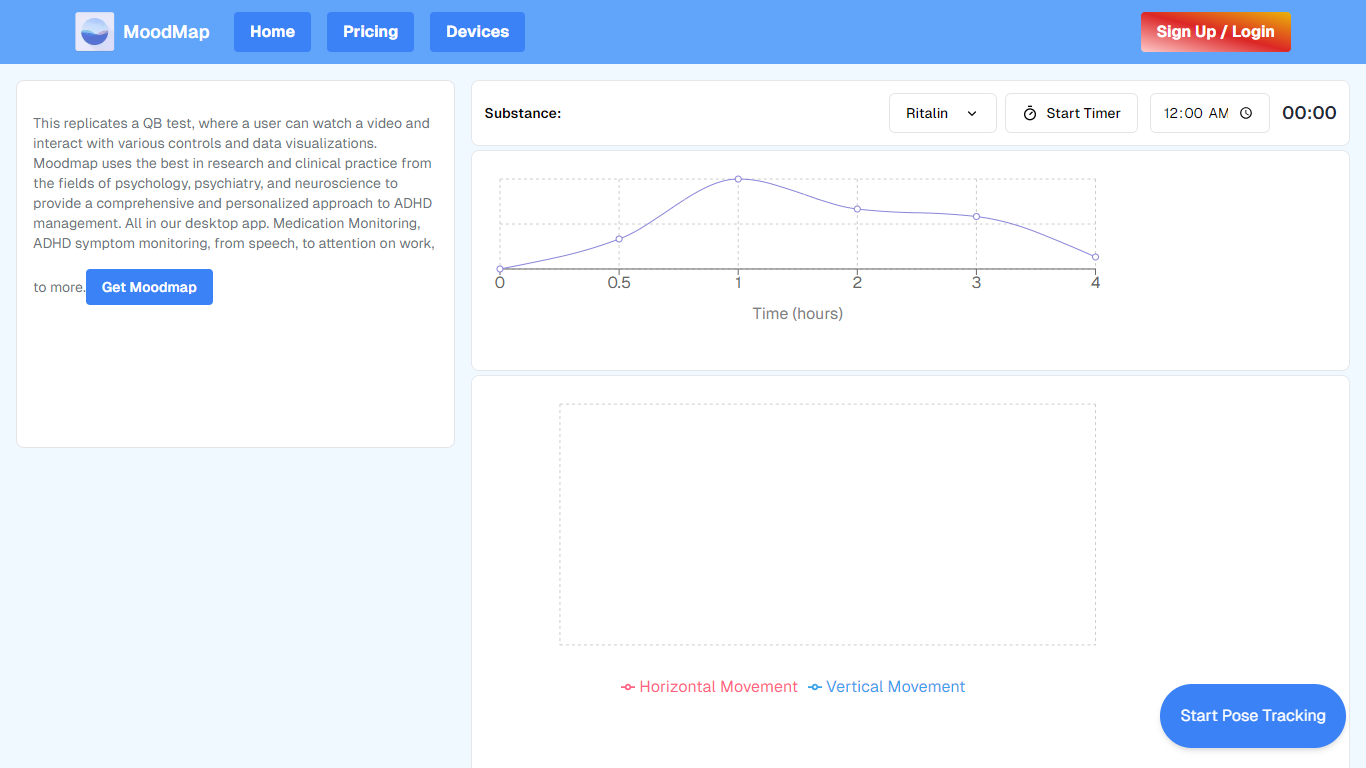

What is Moodmap?
Moodmap is a mental health tracking platform focused on ADHD symptom monitoring and medication efficacy. It combines facial recognition with analysis of how you use your devices to show how attention, mood, and symptoms shift over time.
The product describes itself as a facial recognition software layer for mental health treatment and management. A Chrome extension studies computer usage patterns, then pairs that signal with desktop and mobile apps so you can see how habits, substances, and medications may line up with symptom changes.
Moodmap is in alpha testing with a waitlist on moodmap.app. MoodMap Inc., based in South Yarra, Victoria, Australia, built the tool from firsthand ADHD management experience and positions it as a less manual way to track meds, nootropics, and symptoms.
The site also offers demos such as pupil detection, an example Moodcompass page, and researcher collaboration details. A desktop app called MoodVault is listed as coming soon.
GPTfy
What is GPTfy?
GPTfy brings generative AI into Salesforce for education, financial services, healthcare, and other CRM teams without sending raw student or customer data to external servers. The AppExchange package connects OpenAI, Claude, Gemini, and other models through Named Credentials, masks PII before prompts run, and powers Einstein chatbot answers from your knowledge base. Admins deploy prebuilt prompts for admissions, student services, and case summarization inside the org they already manage.
Agentforce and standalone AI clouds charge per conversation and often require Data Cloud. GPTfy runs as a managed Salesforce package with fixed per-user pricing, unlimited prompts, and a bring-your-own-model setup so token costs go to your existing cloud contract. That trade-off matters for universities that need FERPA-aware masking and audit trails without bolting on another vendor datastore.
Higher-ed teams use GPTfy to automate admissions follow-ups and 24/7 Einstein chatbot responses. Enterprise service orgs apply it to case deflection and email drafting with Outlook and Gmail plugins. Pro starts at $20 per user per month with a 100-user minimum.
Moodmap Upvotes
GPTfy Upvotes
Moodmap Top Features
Charts attention and mood trends from how you use your computer
Chrome extension builds an attention model from daily browsing and work patterns
Facial recognition layer built for mental health symptom tracking
Relates exercise, meditation, medications, and nootropics to symptom shifts
Desktop MoodVault app and a mobile app add inputs beyond the browser extension
Habit reminders and reward prompts for self-care routines
GPTfy Top Features
Installs as a Salesforce AppExchange managed package with security review approval
Connect 15+ models including OpenAI, Claude, and Gemini via Named Credentials
Pro plan is $20 per user per month with unlimited prompts and a 100-user minimum
Security layer masks PII before data reaches your AI provider
Prebuilt prompts for admissions, student services, and case summarization
Einstein Bot integration pulls answers from institutional knowledge bases with RAG
Moodmap Category
- Education
GPTfy Category
- Education
Moodmap Pricing Type
- Freemium
GPTfy Pricing Type
- Paid