Morse Code Translator vs CloneDub
Compare Morse Code Translator vs CloneDub and see which AI Translation tool is better when we compare features, reviews, pricing, alternatives, upvotes, etc.
Which one is better? Morse Code Translator or CloneDub?
When we compare Morse Code Translator with CloneDub, which are both AI-powered translation tools, The upvote count is neck and neck for both Morse Code Translator and CloneDub. Your vote matters! Help us decide the winner among aitools.fyi users by casting your vote.
Think we got it wrong? Cast your vote and show us who's boss!
Morse Code Translator

What is Morse Code Translator?
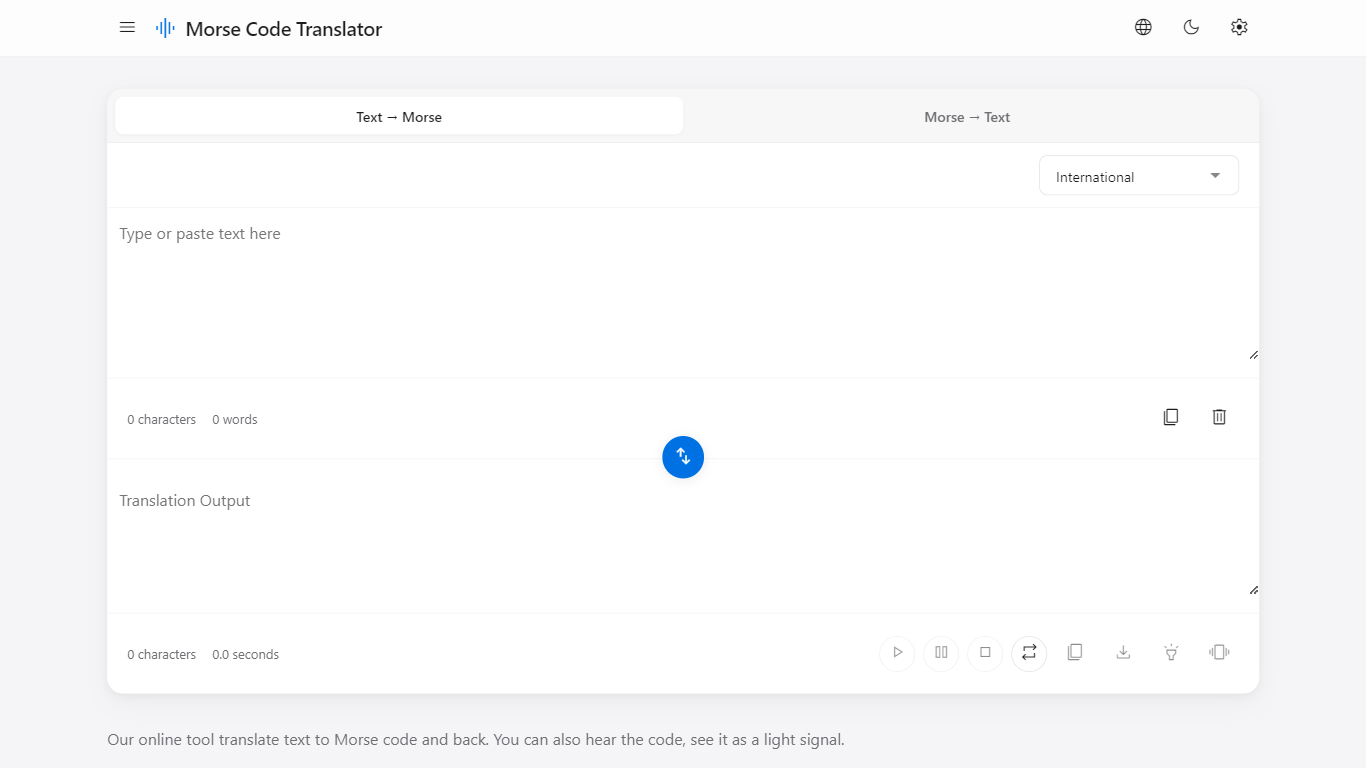
Morse Code Translator turns plain text into Morse dots and dashes, and decodes pasted Morse back to readable letters on the same page. Type or paste on either side, pick an alphabet in Settings, and the translation updates instantly in the opposite box.
Unlike basic Morse charts that only show letter tables, this translator adds audio playback, a flashing light signal popup, device vibration for the pattern, and WAV file export. It also covers nine Morse systems beyond International, including American, Greek, Cyrillic, Hebrew, Arabic, Japanese Wabun, Korean SKATS, and Thai.
It works for hobbyists learning Morse, scouts and students practicing SOS and HELLO patterns, radio operators checking encodings, and anyone decoding a message without installing desktop software. No account is required and the interface runs entirely in the browser.
CloneDub
What is CloneDub?
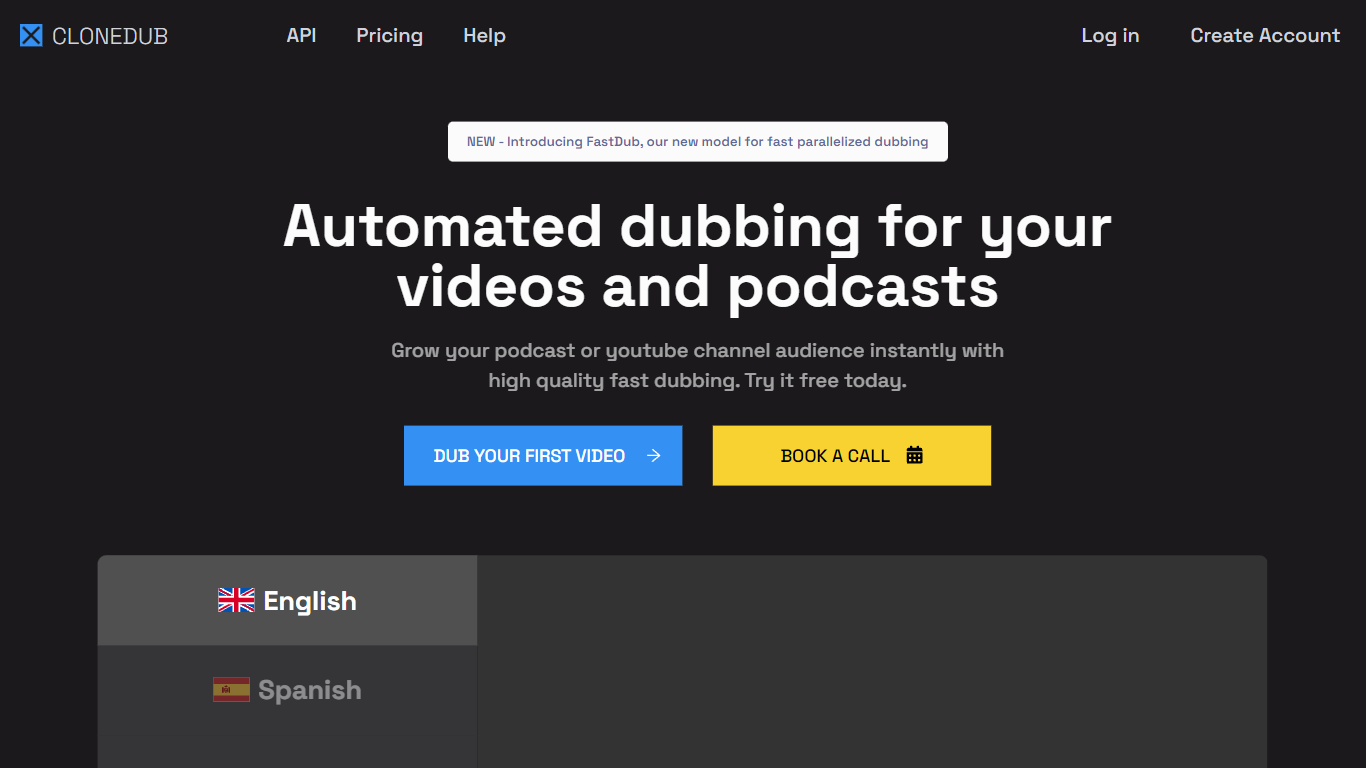
CloneDub turns podcasts and YouTube videos into localized versions in other languages while trying to keep the original speaker voice, background music, and sound effects. You upload audio or video, pick a target language, and download dubbed files plus optional SRT subtitles from the dashboard.
Most dubbing tools swap in a generic narrator and strip the mix down to dialogue. CloneDub focuses on voice cloning plus translation, and it recently added FastDub for faster parallel processing. Pricing is minute-based rather than per-seat, which fits creators dubbing a handful of long episodes each month instead of enterprise localization teams running thousands of clips.
The product targets podcasters, YouTube channel owners, and small media teams who want multilingual reach without hiring voice actors for every language. Plans cap uploads at 2 hours per file and support 27 languages on the published pricing table.
Morse Code Translator Upvotes
CloneDub Upvotes
Morse Code Translator Top Features
Bidirectional translation between plain text and Morse code in real time
Nine Morse alphabet systems: International, American, Greek, Cyrillic, Hebrew, Arabic, Japanese Wabun, Korean SKATS, and Thai
Play, pause, stop, and repeat audio playback of the Morse pattern
Download Morse code sound as a WAV audio file
Flashing light signal popup shows dots and dashes visually
Device vibration mode reproduces the Morse pattern on supported phones
Swap button flips translation direction between text-to-Morse and Morse-to-text
CloneDub Top Features
Dubs into 27 languages including English, Spanish, Hindi, French, German, Japanese, and Arabic
Accepts MP3, OGG, WAV, FLAC, AVI, MP4, MKV, AIFF, and AAC uploads up to 2 hours per file
Without voice cloning, dubbing typically finishes in about 50 to 60 percent of the source runtime
Basic plan includes 12 dubbing minutes per month for $10, with overage at $1 per minute
Exports dubbed video, audio, and SRT subtitle files from a single workflow
FastDub model supports parallelized dubbing for faster turnaround on longer content
Pro and Premium tiers add custom voice cloning; Basic does not
Morse Code Translator Category
- Translation
CloneDub Category
- Translation
Morse Code Translator Pricing Type
- Free
CloneDub Pricing Type
- Paid