MosaicML vs Stellaris AI
Dive into the comparison of MosaicML vs Stellaris AI and discover which AI Large Language Model (LLM) tool stands out. We examine alternatives, upvotes, features, reviews, pricing, and beyond.
When comparing MosaicML and Stellaris AI, which one rises above the other?
When we compare MosaicML and Stellaris AI, two exceptional large language model (llm) tools powered by artificial intelligence, and place them side by side, several key similarities and differences come to light. The upvote count shows a clear preference for MosaicML. MosaicML has attracted 7 upvotes from aitools.fyi users, and Stellaris AI has attracted 6 upvotes.
You don't agree with the result? Cast your vote to help us decide!
MosaicML
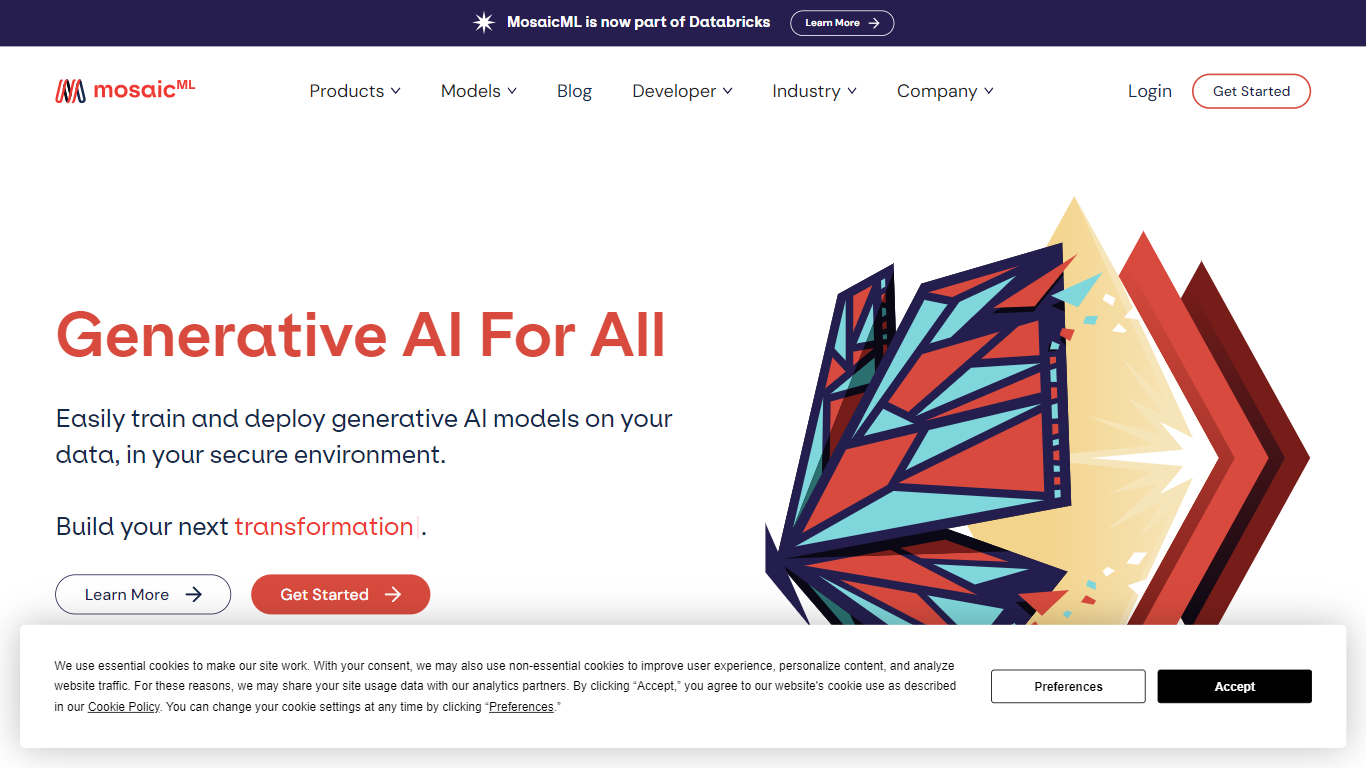

What is MosaicML?
MosaicML provides a robust platform designed to train and deploy large language models and other generative AI models effortlessly and securely within your own environment. Catering to industries from startups to life sciences and federal services, MosaicML brings cutting-edge AI within reach. Users can easily train AI models at scale utilizing a single command and deploy them in a private cloud while retaining full ownership of the model, including its weights. MosaicML stands out for its commitment to data privacy, enterprise-grade security, and complete model ownership. Moreover, with optimizations for efficiency and compatibility with various tools and cloud environments, MosaicML democratizes access to transformative AI capabilities while minimizing the technical challenges associated with large-scale AI model management.
Stellaris AI
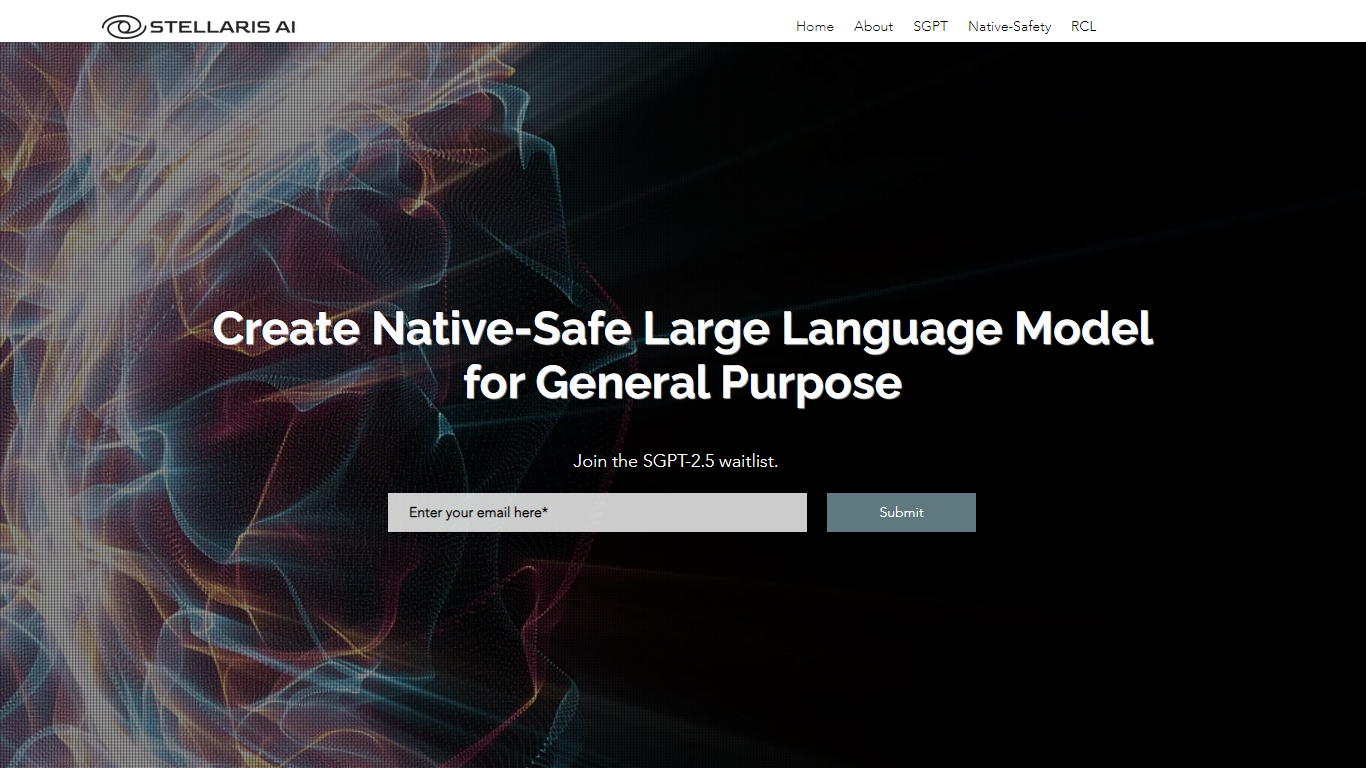
What is Stellaris AI?
Stellaris AI builds large language models marketed around native safety and human-like reasoning for real-world tasks. Its flagship SGPT line targets text and code generation, knowledge Q&A, logical reasoning, and analytics at a scale the company describes as hundreds of billions of parameters. The public site centers on a waitlist for SGPT-4.5 rather than a self-serve chat product you can open today.
Where many LLM labs bolt safety filters on after training, Stellaris AI frames safety as part of the model stack through strict source referencing and harm minimization in the architecture. It also highlights Real-time Context Learning (RCL) for adapting answers with live knowledge, a combination aimed at teams that want cited outputs instead of unchecked generation.
Researchers, enterprise AI teams, and early adopters join the SGPT-4.5 waitlist for first access. The company cites 10+ years of research and three core product pillars: Stellaris GPT, Native Safety, and RCL.
MosaicML Upvotes
Stellaris AI Upvotes
MosaicML Top Features
Train Large AI Models Easily: Train large AI models at scale with a simple command.
Deploy in Private Clouds: Deploy AI models securely within your private cloud.
Full Model Ownership: Retain complete control over your model including the weights.
Cross-Cloud Capability: Train and deploy AI models across different cloud environments.
Optimized for Efficiency: Leverage the platform's efficiency optimizations for better performance.
Stellaris AI Top Features
SGPT models described at 100B+ parameters for text, code, and reasoning tasks
Native Safety framework with strict source referencing and harm minimization
Real-time Context Learning (RCL) for live knowledge integration
Three product pillars: Stellaris GPT, Native Safety, and RCL
SGPT-4.5 waitlist open for early access signups on the homepage
MosaicML Category
- Large Language Model (LLM)
Stellaris AI Category
- Large Language Model (LLM)
MosaicML Pricing Type
- Freemium
Stellaris AI Pricing Type
- Freemium