Moshi AI vs AI-Coustics
Explore the showdown between Moshi AI vs AI-Coustics and find out which AI Audio Generation tool wins. We analyze upvotes, features, reviews, pricing, alternatives, and more.
In a face-off between Moshi AI and AI-Coustics, which one takes the crown?
When we contrast Moshi AI with AI-Coustics, both of which are exceptional AI-operated audio generation tools, and place them side by side, we can spot several crucial similarities and divergences. The upvote count reveals a draw, with both tools earning the same number of upvotes. Be a part of the decision-making process. Your vote could determine the winner.
Not your cup of tea? Upvote your preferred tool and stir things up!
Moshi AI
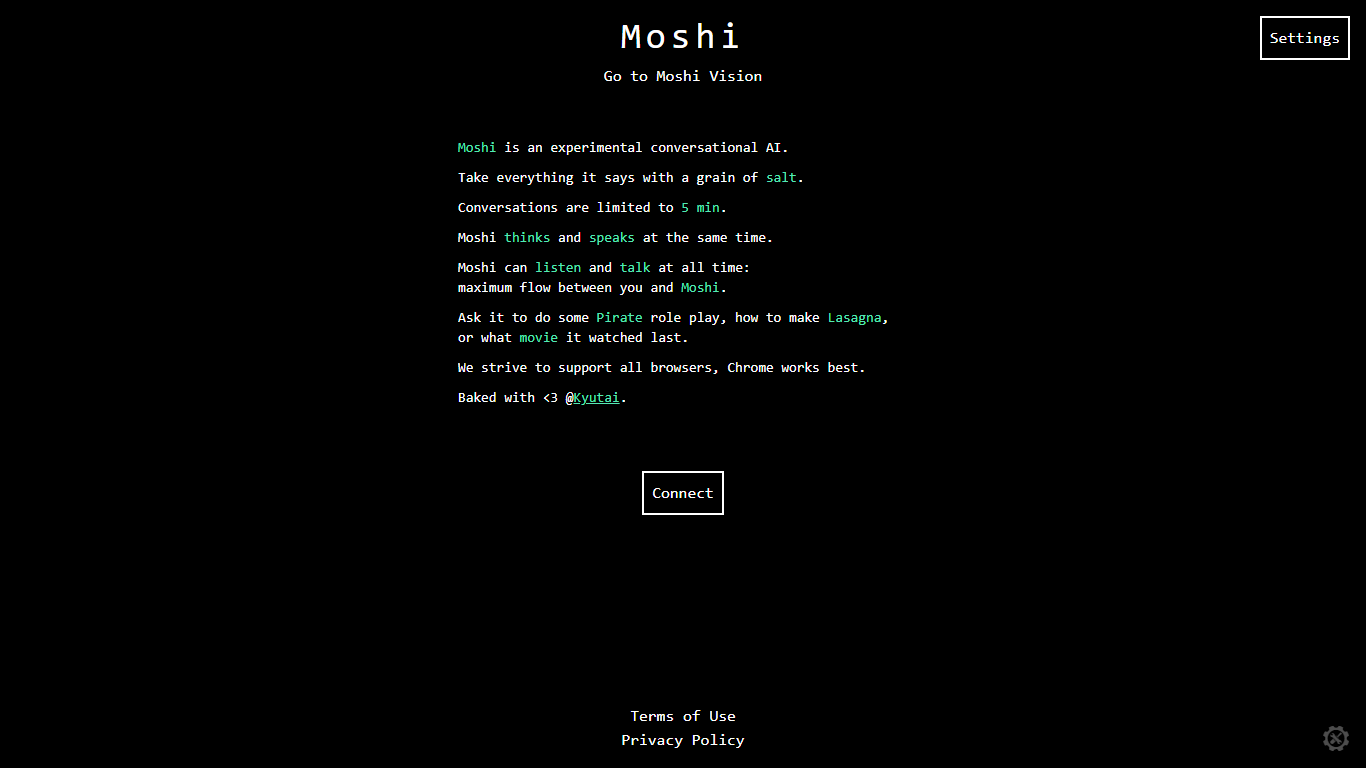

What is Moshi AI?
Moshi AI is a speech-native conversational model from Kyutai, a Paris-based open-science research lab. Instead of chaining speech recognition, text generation, and text-to-speech, Moshi processes audio directly and holds full-duplex voice conversations with minimal latency.
Its multi-stream design runs separate channels for the user, Moshi's spoken output, and an Inner Monologue text stream that improves coherence. That setup lets Moshi listen and talk at the same time, handle overlaps, interruptions, and backchanneling like a real conversation rather than rigid speaker turns.
Moshi is built on Helium, a 7B language model, and Mimi, Kyutai's neural audio codec. Weights and inference code ship for PyTorch, Rust, and MLX, and you can try it in the browser at moshi-chat.kyutai.org. Researchers, voice AI developers, and anyone building real-time spoken interfaces will find the most value here.
AI-Coustics
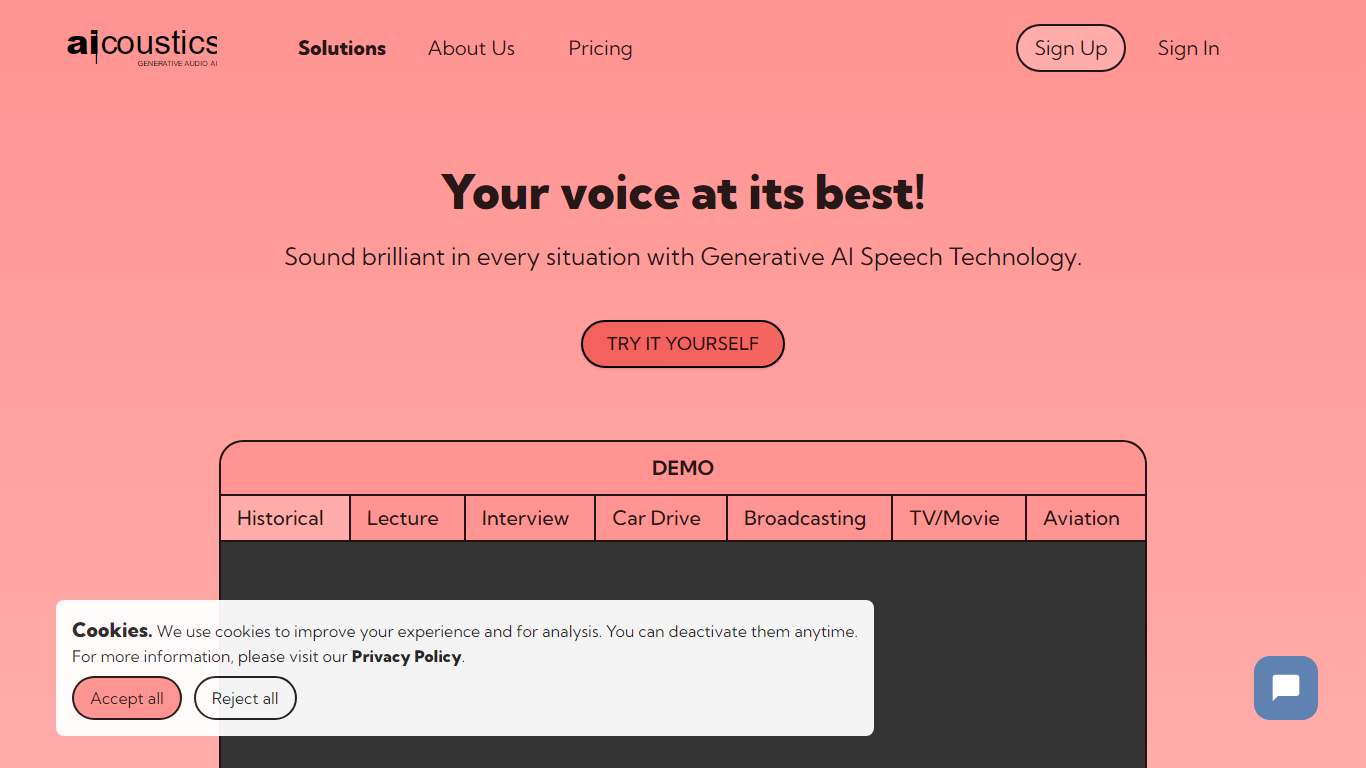
What is AI-Coustics?
AI-Coustics ships real-time audio SDKs and APIs that clean noisy speech before it reaches your voice AI stack. Quail removes background noise and competing voices, Tyto scores call audio to predict STT and turn-taking failures, and VAD models flag when someone is actually speaking. Processing runs on-device with under 40 ms latency, which keeps audio generation pipelines stable in production calls rather than lab demos.
Most speech APIs assume clean microphone input, so teams bolt on generic noise suppression and still lose calls to packet loss, reverb, or crosstalk. AI-Coustics targets that gap with models trained for real environments and a Tyto Risk Score that flags six degradation types before your STT or agent stack mishears. On-prem SDK deployment and 100+ language support make it a fit for telephony and enterprise voice agents that cannot send raw audio to a third-party cloud.
Voice AI developers, transcription vendors, and telephony teams use AI-Coustics when a single misheard utterance kills user trust. Startup plans include 100,000 minutes per month with 100 concurrent streams, and customers like AssemblyAI, Telnyx, and Synthesia appear on the homepage as reference logos.
Moshi AI Upvotes
AI-Coustics Upvotes
Moshi AI Top Features
Processes speech directly without a text pipeline in the middle
Listens and talks simultaneously with overlap and interruption support
Inner Monologue text stream improves speech quality and reasoning
Runs real-time on an L4 GPU or M3 MacBook Pro via the Mimi codec
Open weights on Hugging Face with PyTorch, Rust, and MLX inference code
AI-Coustics Top Features
Quail Voice Focus strips background noise and other speakers with under 30 ms real-time processing
Tyto Risk Score predicts STT, VAD, and turn-taking failures across six audio quality dimensions
On-device SDK deployment keeps audio on your infrastructure with sub-40 ms latency
Startup plan includes 100,000 minutes per month and 100 concurrent streams
Supports 100+ languages with on-prem and air-gapped license options on Enterprise tiers
Developer platform offers free SDK keys and trial access before subscribing
Moshi AI Category
- Audio Generation
AI-Coustics Category
- Audio Generation
Moshi AI Pricing Type
- Free
AI-Coustics Pricing Type
- Freemium