Moshi AI vs Amadeus Code
Dive into the comparison of Moshi AI vs Amadeus Code and discover which AI Audio Generation tool stands out. We examine alternatives, upvotes, features, reviews, pricing, and beyond.
When comparing Moshi AI and Amadeus Code, which one rises above the other?
When we compare Moshi AI and Amadeus Code, two exceptional audio generation tools powered by artificial intelligence, and place them side by side, several key similarities and differences come to light. The upvote count reveals a draw, with both tools earning the same number of upvotes. Your vote matters! Help us decide the winner among aitools.fyi users by casting your vote.
Want to flip the script? Upvote your favorite tool and change the game!
Moshi AI
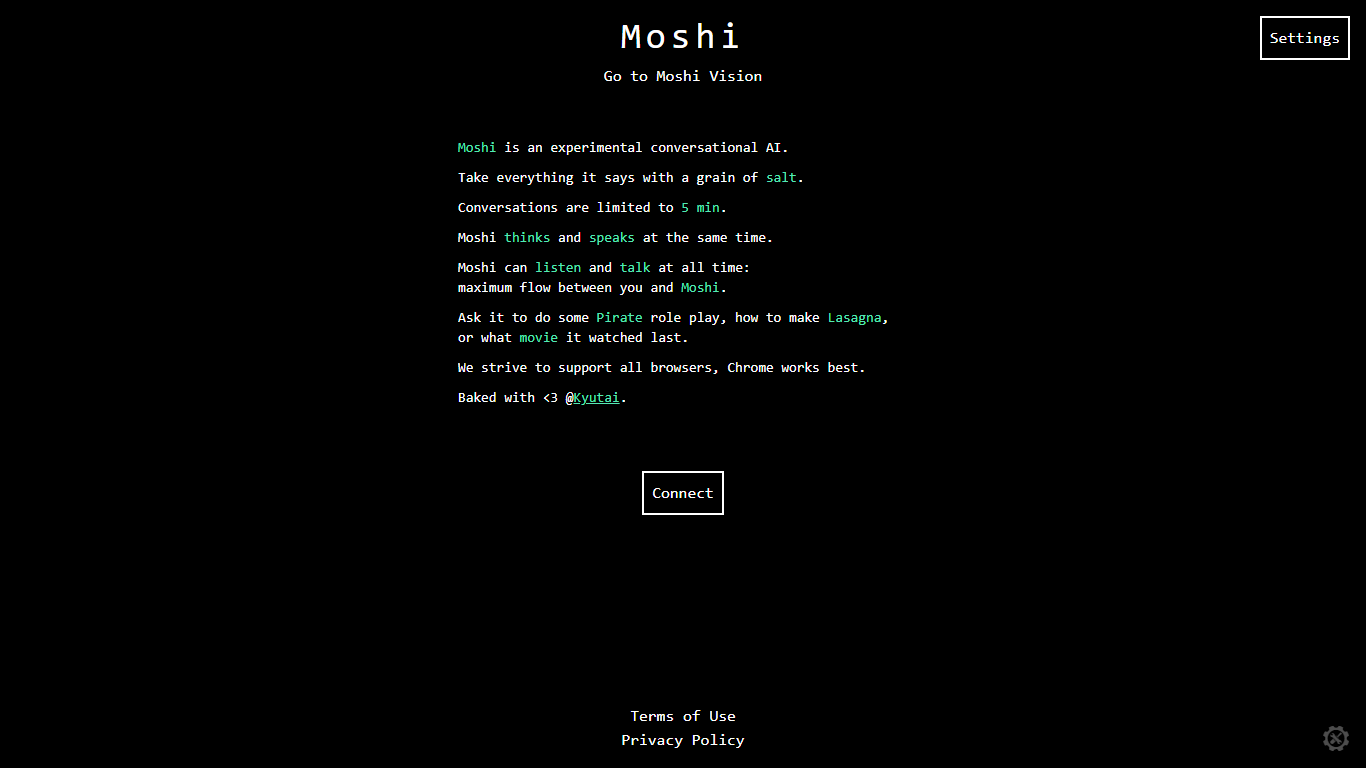

What is Moshi AI?
Moshi AI is a speech-native conversational model from Kyutai, a Paris-based open-science research lab. Instead of chaining speech recognition, text generation, and text-to-speech, Moshi processes audio directly and holds full-duplex voice conversations with minimal latency.
Its multi-stream design runs separate channels for the user, Moshi's spoken output, and an Inner Monologue text stream that improves coherence. That setup lets Moshi listen and talk at the same time, handle overlaps, interruptions, and backchanneling like a real conversation rather than rigid speaker turns.
Moshi is built on Helium, a 7B language model, and Mimi, Kyutai's neural audio codec. Weights and inference code ship for PyTorch, Rust, and MLX, and you can try it in the browser at moshi-chat.kyutai.org. Researchers, voice AI developers, and anyone building real-time spoken interfaces will find the most value here.
Amadeus Code
What is Amadeus Code?
Amadeus Code is an audio generation company that builds music AI on in-house training data the team owns. Its homepage groups products for creating MIDI songwriting ideas, generating royalty-free tracks, browsing rights-cleared libraries, and supplying API datasets to developers who need cleared audio for commercial builds.
The portfolio leans on rights safety rather than open-web scraping. FUJIYAMA AI SOUND and Evoke Music both stress training without unauthorized third-party works, and MusicTGA-HR ships 24-bit/48 kHz WAV stems, multitrack MIDI, and NeuroSync-generated datasets through an API. That focus on cleared data is the main split from generic music generators that cannot document training provenance.
Creators, YouTube producers, retailers, and enterprise teams are the stated audiences. MusicTGA targets DAW workflows, Evoke Music covers YouTube and in-store playback, and OTOKAI pushes music into wellbeing experiences. The company is headquartered in Japan and offers API tokens from the main site.
Moshi AI Upvotes
Amadeus Code Upvotes
Moshi AI Top Features
Processes speech directly without a text pipeline in the middle
Listens and talks simultaneously with overlap and interruption support
Inner Monologue text stream improves speech quality and reasoning
Runs real-time on an L4 GPU or M3 MacBook Pro via the Mimi codec
Open weights on Hugging Face with PyTorch, Rust, and MLX inference code
Amadeus Code Top Features
MusicTGA exports MIDI chord, melody, and rhythm ideas you can finish inside a DAW
FUJIYAMA AI SOUND generates royalty-free tracks with a rights guarantee certificate at download
MusicTGA-HR API delivers 24-bit/48 kHz WAV stems across 6 stem groups for developers
Evoke Music library covers YouTube, Shorts, retail spaces, and spatial audio use cases
10,000+ music classification categories designed by human curators on the HR platform
CONNECT platform manages composer copyrights and master rights for licensing workflows
Moshi AI Category
- Audio Generation
Amadeus Code Category
- Audio Generation
Moshi AI Pricing Type
- Free
Amadeus Code Pricing Type
- Freemium