Moshi AI vs AppTek
In the face-off between Moshi AI vs AppTek, which AI Audio Generation tool takes the crown? We scrutinize features, alternatives, upvotes, reviews, pricing, and more.
In a face-off between Moshi AI and AppTek, which one takes the crown?
If we were to analyze Moshi AI and AppTek, both of which are AI-powered audio generation tools, what would we find? Interestingly, both tools have managed to secure the same number of upvotes. You can help us determine the winner by casting your vote and tipping the scales in favor of one of the tools.
Don't agree with the result? Cast your vote and be a part of the decision-making process!
Moshi AI
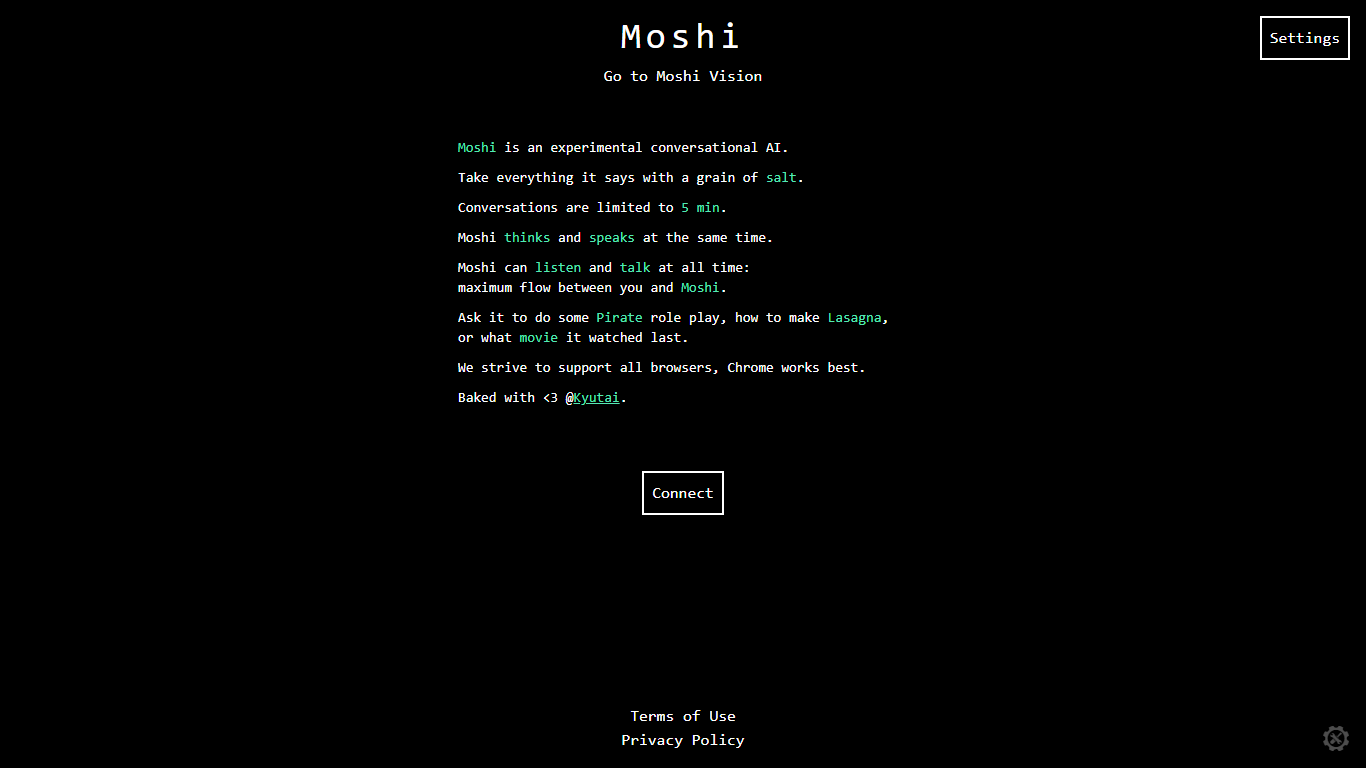

What is Moshi AI?
Moshi AI is a speech-native conversational model from Kyutai, a Paris-based open-science research lab. Instead of chaining speech recognition, text generation, and text-to-speech, Moshi processes audio directly and holds full-duplex voice conversations with minimal latency.
Its multi-stream design runs separate channels for the user, Moshi's spoken output, and an Inner Monologue text stream that improves coherence. That setup lets Moshi listen and talk at the same time, handle overlaps, interruptions, and backchanneling like a real conversation rather than rigid speaker turns.
Moshi is built on Helium, a 7B language model, and Mimi, Kyutai's neural audio codec. Weights and inference code ship for PyTorch, Rust, and MLX, and you can try it in the browser at moshi-chat.kyutai.org. Researchers, voice AI developers, and anyone building real-time spoken interfaces will find the most value here.
AppTek
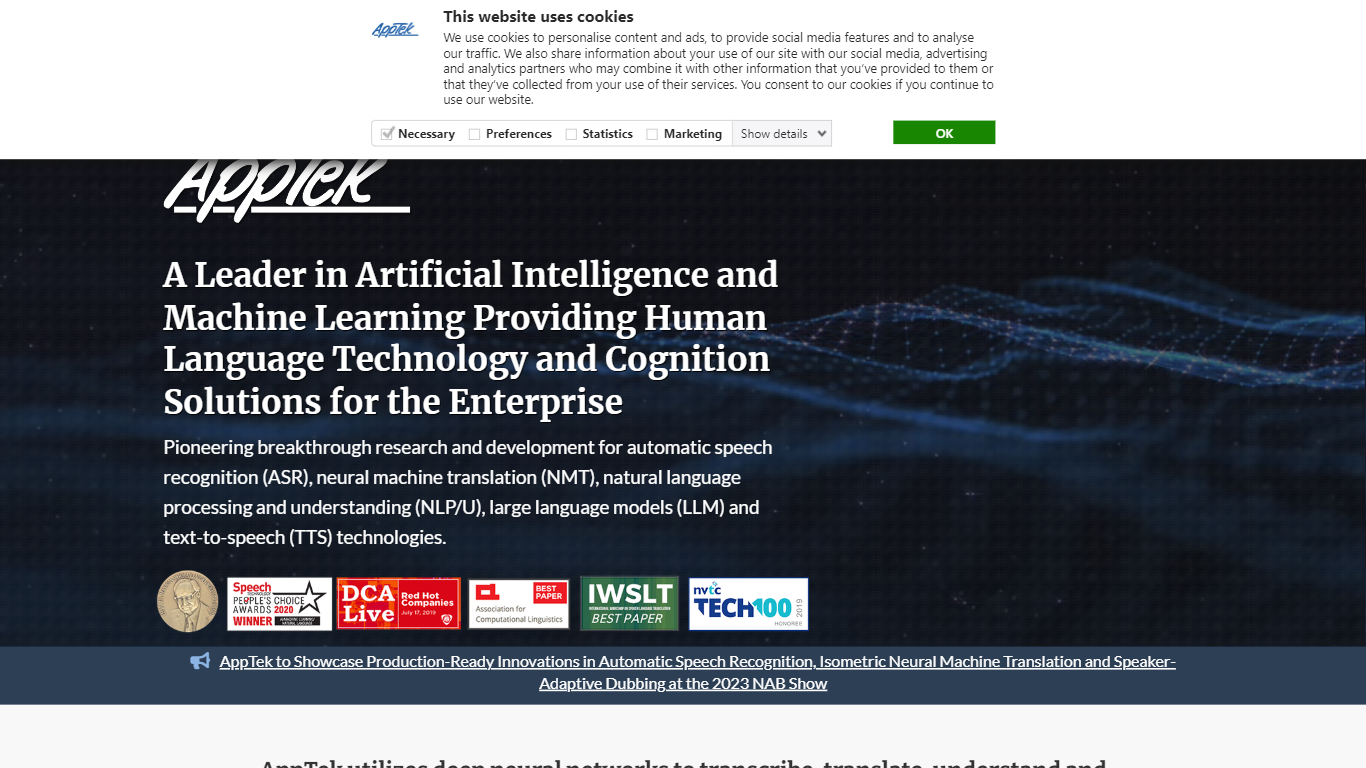
What is AppTek?
AppTek delivers enterprise speech and language APIs for automatic speech recognition, neural machine translation, large language models, and neural text-to-speech. Broadcasters, call centers, and government teams use it to transcribe audio, localize content, generate captions, and synthesize custom brand voices across dozens of languages and dialects.
Unlike lightweight transcription SaaS, AppTek pairs research-grade neural models with APIs, portals, and mobile apps built for regulated and media workflows. Expressive TTS targets AI dubbing quality, ASR covers narrowband telephony and wideband broadcast feeds, and NMT supports hundreds of language pairs with enterprise customization.
Media localization vendors, accessibility teams, and enterprise IT groups buy through custom contracts rather than self-serve checkout. The marketing site redirects apptek.com to apptek.ai while keeping the legacy domain live.
Moshi AI Upvotes
AppTek Upvotes
Moshi AI Top Features
Processes speech directly without a text pipeline in the middle
Listens and talks simultaneously with overlap and interruption support
Inner Monologue text stream improves speech quality and reasoning
Runs real-time on an L4 GPU or M3 MacBook Pro via the Mimi codec
Open weights on Hugging Face with PyTorch, Rust, and MLX inference code
AppTek Top Features
Automatic speech recognition for telephony and broadcast audio across dozens of languages
Neural machine translation across hundreds of language pairs with enterprise customization
Large language model APIs for generative text and retrieval-augmented workflows
Neural text-to-speech with custom voices trained from your own recordings
Expressive TTS positioned for industry-leading AI dubbing quality
Speech Translate mobile app and multilingual streaming accessibility demos
API and portal access with account login and published API documentation
Moshi AI Category
- Audio Generation
AppTek Category
- Audio Generation
Moshi AI Pricing Type
- Free
AppTek Pricing Type
- Paid