Moshi AI vs Audioread
Explore the showdown between Moshi AI vs Audioread and find out which AI Audio Generation tool wins. We analyze upvotes, features, reviews, pricing, alternatives, and more.
When comparing Moshi AI and Audioread, which one rises above the other?
When we contrast Moshi AI with Audioread, both of which are exceptional AI-operated audio generation tools, and place them side by side, we can spot several crucial similarities and divergences. Neither tool takes the lead, as they both have the same upvote count. Since other aitools.fyi users could decide the winner, the ball is in your court now to cast your vote and help us determine the winner.
Want to flip the script? Upvote your favorite tool and change the game!
Moshi AI
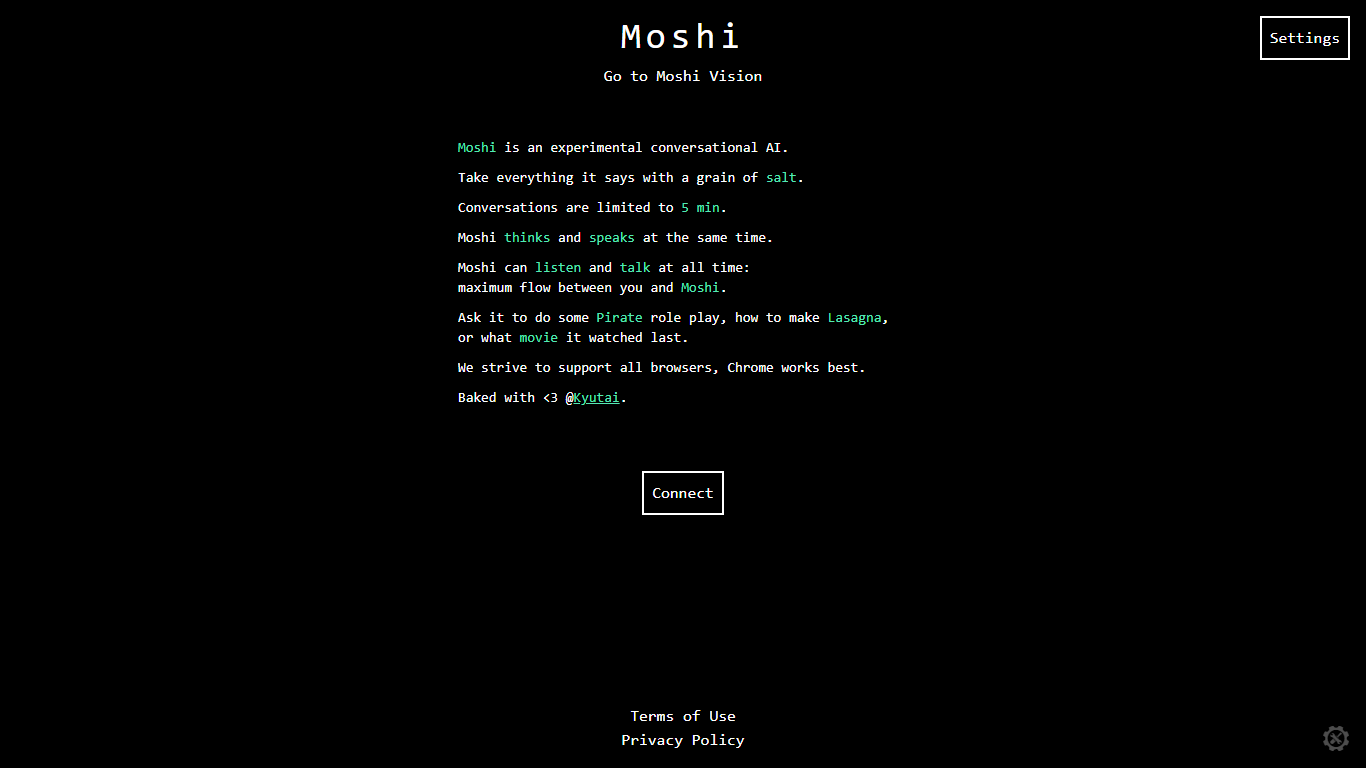

What is Moshi AI?
Moshi AI is a speech-native conversational model from Kyutai, a Paris-based open-science research lab. Instead of chaining speech recognition, text generation, and text-to-speech, Moshi processes audio directly and holds full-duplex voice conversations with minimal latency.
Its multi-stream design runs separate channels for the user, Moshi's spoken output, and an Inner Monologue text stream that improves coherence. That setup lets Moshi listen and talk at the same time, handle overlaps, interruptions, and backchanneling like a real conversation rather than rigid speaker turns.
Moshi is built on Helium, a 7B language model, and Mimi, Kyutai's neural audio codec. Weights and inference code ship for PyTorch, Rust, and MLX, and you can try it in the browser at moshi-chat.kyutai.org. Researchers, voice AI developers, and anyone building real-time spoken interfaces will find the most value here.
Audioread
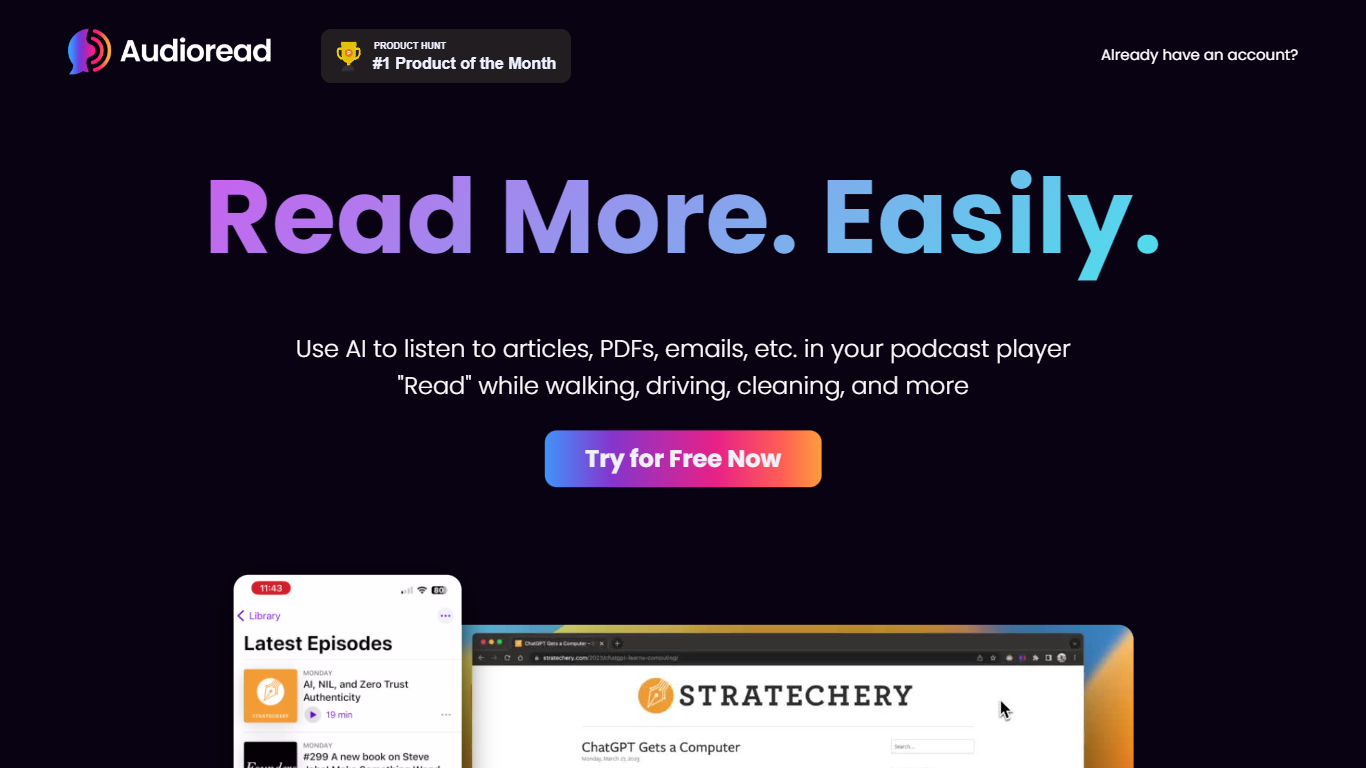
What is Audioread?
Audioread converts articles, PDFs, emails, and RSS feeds into spoken audio you can stream in a browser or sync to any podcast player. Paste a link, upload a document, forward a newsletter, or subscribe to a feed, and the platform builds a private playlist plus podcast feed for offline listening.
Where most read-aloud tools keep audio inside one browser tab, Audioread publishes each conversion to a private RSS feed. That lets you finish long articles in Apple Podcasts, Spotify, or Pocket Casts with downloads and playback speed controls, instead of leaving a tab open on your phone.
The service targets commuters, graduate students, researchers, and anyone with a reading backlog they want to clear while walking, cooking, or exercising. Browser extensions for Chrome, Edge, and Brave, native iOS and Android apps, email forwarding, and Slack digests cover most input workflows without extra setup.
Moshi AI Upvotes
Audioread Upvotes
Moshi AI Top Features
Processes speech directly without a text pipeline in the middle
Listens and talks simultaneously with overlap and interruption support
Inner Monologue text stream improves speech quality and reasoning
Runs real-time on an L4 GPU or M3 MacBook Pro via the Mimi codec
Open weights on Hugging Face with PyTorch, Rust, and MLX inference code
Audioread Top Features
Nearly 1,000 AI voices across 150+ languages with region-specific options
Private podcast feed syncs to Apple Podcasts, Spotify, and Pocket Casts
Free tier includes 3 articles per month with 1,000 characters per conversion
Pro plan includes 1 million characters per month for $9.99
Chrome, Edge, and Brave extensions for one-click article conversion
Native iOS and Android apps plus Safari Shortcuts and an Android PWA
Privacy Mode auto-deletes uploads after 30 days with no content sharing
Moshi AI Category
- Audio Generation
Audioread Category
- Audio Generation
Moshi AI Pricing Type
- Free
Audioread Pricing Type
- Freemium