Moshi AI vs AudioStack
In the contest of Moshi AI vs AudioStack, which AI Audio Generation tool is the champion? We evaluate pricing, alternatives, upvotes, features, reviews, and more.
If you had to choose between Moshi AI and AudioStack, which one would you go for?
When we examine Moshi AI and AudioStack, both of which are AI-enabled audio generation tools, what unique characteristics do we discover? Both tools have received the same number of upvotes from aitools.fyi users. Join the aitools.fyi users in deciding the winner by casting your vote.
Think we got it wrong? Cast your vote and show us who's boss!
Moshi AI

What is Moshi AI?
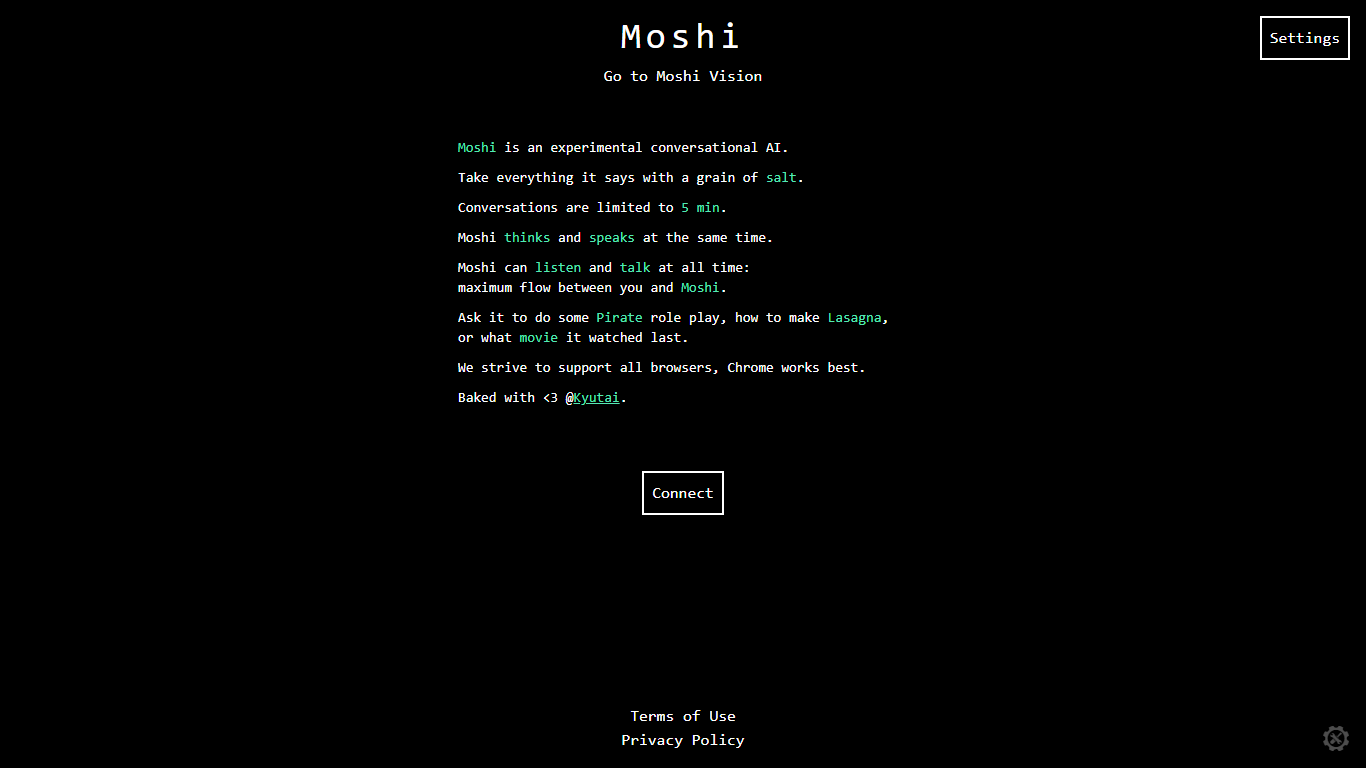
Moshi AI is a speech-native conversational model from Kyutai, a Paris-based open-science research lab. Instead of chaining speech recognition, text generation, and text-to-speech, Moshi processes audio directly and holds full-duplex voice conversations with minimal latency.
Its multi-stream design runs separate channels for the user, Moshi's spoken output, and an Inner Monologue text stream that improves coherence. That setup lets Moshi listen and talk at the same time, handle overlaps, interruptions, and backchanneling like a real conversation rather than rigid speaker turns.
Moshi is built on Helium, a 7B language model, and Mimi, Kyutai's neural audio codec. Weights and inference code ship for PyTorch, Rust, and MLX, and you can try it in the browser at moshi-chat.kyutai.org. Researchers, voice AI developers, and anyone building real-time spoken interfaces will find the most value here.
AudioStack
What is AudioStack?
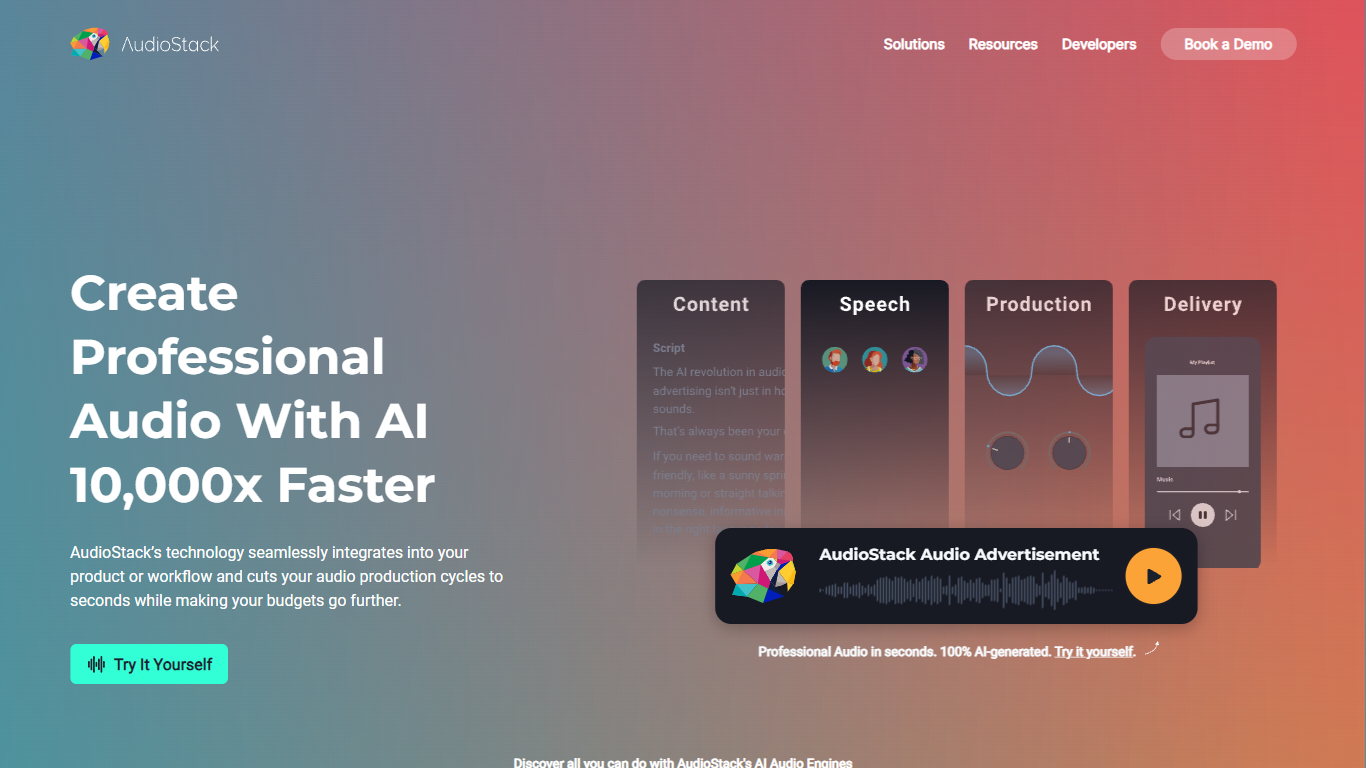
AudioStack turns a creative brief or block of raw text into finished radio spots, ads, and long-form audio without booking a studio. The company rebranded from Aflorithmic; the old domain still redirects to audiostack.ai. You can work in a self-serve console or embed the production engine through an API that returns white-labeled, broadcast-ready files.
Where most text-to-speech tools hand you a voice clip, AudioStack runs the full chain: script generation, voice casting across providers like ElevenLabs and OpenAI, music and SFX mixing, duration targeting for 6-second or 30-minute specs, mastering, and automated QA for loudness and brand rules. A case study on the site cites 1,500 hyperlocal ads produced in three days and a catalog of 2,600+ voices across 17 providers.
Agencies, ad-tech platforms, radio publishers, and audiobook producers are the core buyers. Products split between InstantCreative and DynamicCreative for self-serve campaign work and CreativeEngine and StoryEngine for API embedding inside other platforms.
Moshi AI Upvotes
AudioStack Upvotes
Moshi AI Top Features
Processes speech directly without a text pipeline in the middle
Listens and talks simultaneously with overlap and interruption support
Inner Monologue text stream improves speech quality and reasoning
Runs real-time on an L4 GPU or M3 MacBook Pro via the Mimi codec
Open weights on Hugging Face with PyTorch, Rust, and MLX inference code
AudioStack Top Features
Catalog of 2,600+ voices and 1,000+ sonic assets across 17 voice and music providers
Produces assets from 6-second spots to 30-minute long-form audio from the same brief
Orchestrates ElevenLabs, OpenAI, Google, Azure, Amazon Polly, and other TTS models in one pipeline
DynamicCreative outputs thousands of ad variants from one master asset with a single VAST tag
Automated QA checks loudness, duration, language, and brand rules before delivery
Self-serve console at app.audiostack.ai or embedded API via POST /v2/render
Moshi AI Category
- Audio Generation
AudioStack Category
- Audio Generation
Moshi AI Pricing Type
- Free
AudioStack Pricing Type
- Paid