Moshi AI vs audyo.ai
In the face-off between Moshi AI vs audyo.ai, which AI Audio Generation tool takes the crown? We scrutinize features, alternatives, upvotes, reviews, pricing, and more.
When we put Moshi AI and audyo.ai head to head, which one emerges as the victor?
If we were to analyze Moshi AI and audyo.ai, both of which are AI-powered audio generation tools, what would we find? The upvote count is neck and neck for both Moshi AI and audyo.ai. The power is in your hands! Cast your vote and have a say in deciding the winner.
Does the result make you go "hmm"? Cast your vote and turn that frown upside down!
Moshi AI

What is Moshi AI?
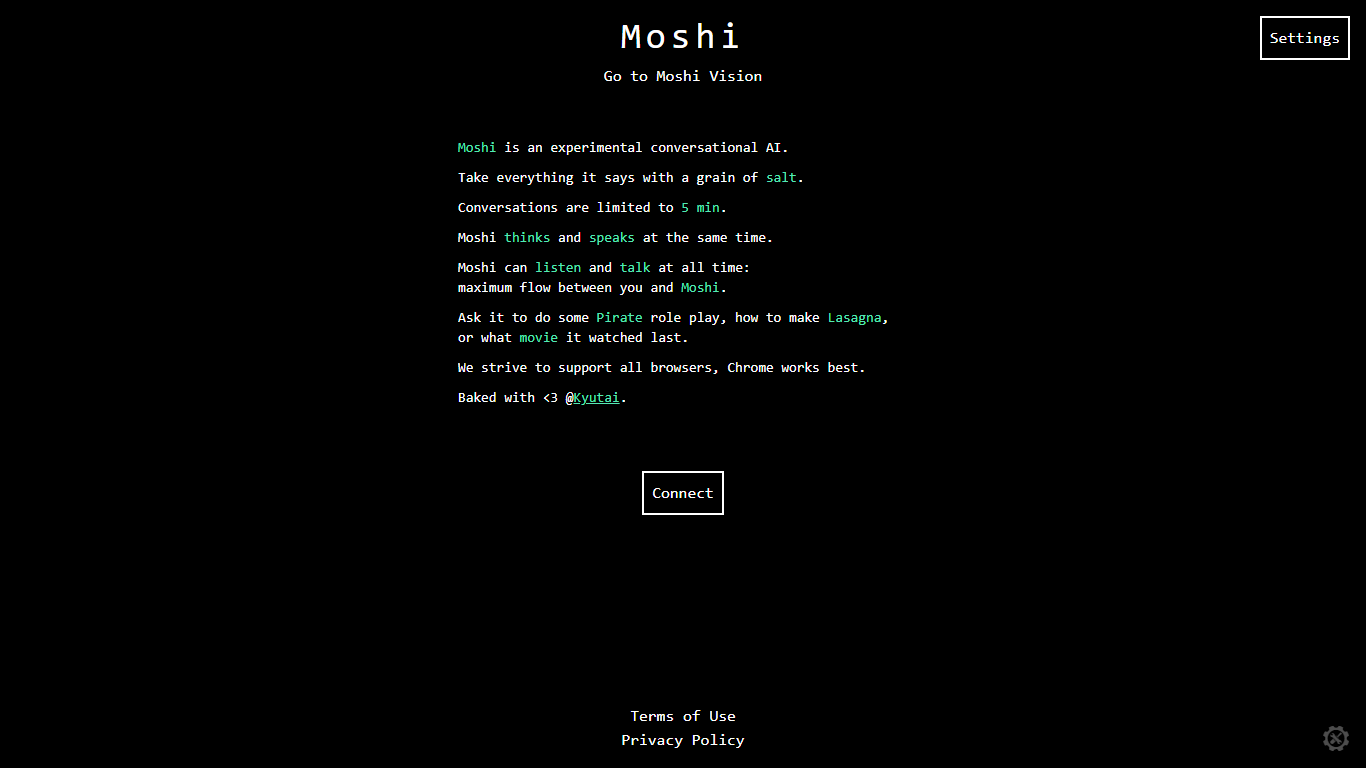
Moshi AI is a speech-native conversational model from Kyutai, a Paris-based open-science research lab. Instead of chaining speech recognition, text generation, and text-to-speech, Moshi processes audio directly and holds full-duplex voice conversations with minimal latency.
Its multi-stream design runs separate channels for the user, Moshi's spoken output, and an Inner Monologue text stream that improves coherence. That setup lets Moshi listen and talk at the same time, handle overlaps, interruptions, and backchanneling like a real conversation rather than rigid speaker turns.
Moshi is built on Helium, a 7B language model, and Mimi, Kyutai's neural audio codec. Weights and inference code ship for PyTorch, Rust, and MLX, and you can try it in the browser at moshi-chat.kyutai.org. Researchers, voice AI developers, and anyone building real-time spoken interfaces will find the most value here.
audyo.ai
What is audyo.ai?
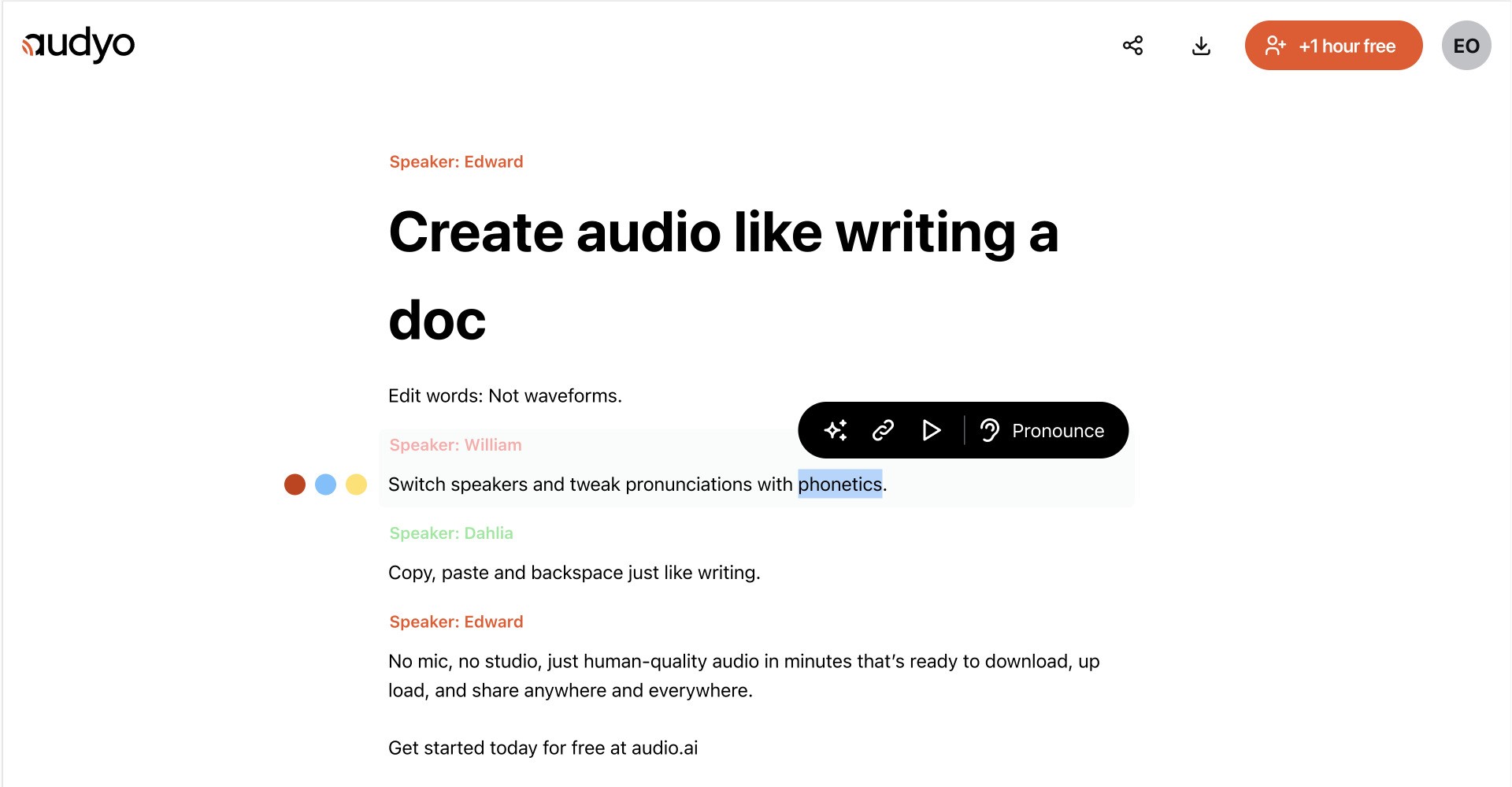
Audyo converts typed text into downloadable speech through a document-style editor. You write or paste a script, choose from 100+ voices across languages and accents, and export audio for videos, podcasts, presentations, and other projects without recording in a studio.
Most audio tools make you trim waveforms and re-record when a line changes. Audyo keeps the script as the source of truth, so you revise text, swap speakers, and regenerate audio without touching a timeline. That text-first workflow fits creators who treat narration like a draft, not a one-take studio session.
You can build multi-voice conversations, mix languages in one project, set custom pronunciations with phonetics, format scripts with Markdown, and use the built-in assistant to refine copy before generating audio. Audyo lists support for English, French, Spanish, German, Italian, Brazilian Portuguese, Japanese, Korean, Chinese, Hindi, Arabic, Turkish, and Russian, with use cases such as voice-overs, podcasts, audiobooks, and video narration.
Moshi AI Upvotes
audyo.ai Upvotes
Moshi AI Top Features
Processes speech directly without a text pipeline in the middle
Listens and talks simultaneously with overlap and interruption support
Inner Monologue text stream improves speech quality and reasoning
Runs real-time on an L4 GPU or M3 MacBook Pro via the Mimi codec
Open weights on Hugging Face with PyTorch, Rust, and MLX inference code
audyo.ai Top Features
Choose from 100+ voices across 13 supported languages and regional accents
Edit scripts like a document instead of trimming audio waveforms
Generate up to 15 minutes of audio on the free plan before upgrading
Swap speakers quickly to build multi-voice conversations
Buy one-time audio hour packs from $3 with no subscription required
Export finished MP3 audio for videos, podcasts, and presentations
Moshi AI Category
- Audio Generation
audyo.ai Category
- Audio Generation
Moshi AI Pricing Type
- Free
audyo.ai Pricing Type
- Freemium