Moshi AI vs Chord ai
In the contest of Moshi AI vs Chord ai, which AI Audio Generation tool is the champion? We evaluate pricing, alternatives, upvotes, features, reviews, and more.
If you had to choose between Moshi AI and Chord ai, which one would you go for?
When we examine Moshi AI and Chord ai, both of which are AI-enabled audio generation tools, what unique characteristics do we discover? The upvote count reveals a draw, with both tools earning the same number of upvotes. You can help us determine the winner by casting your vote and tipping the scales in favor of one of the tools.
Does the result make you go "hmm"? Cast your vote and turn that frown upside down!
Moshi AI

What is Moshi AI?
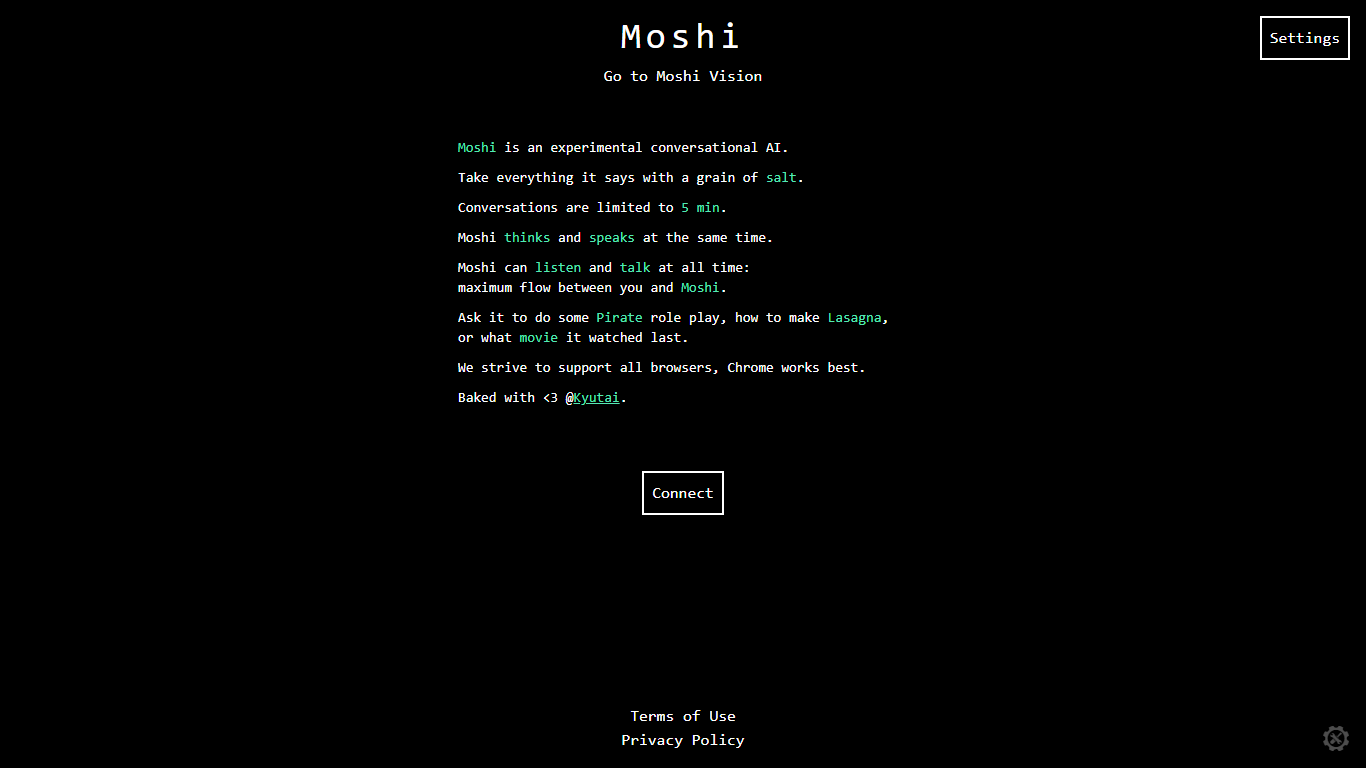
Moshi AI is a speech-native conversational model from Kyutai, a Paris-based open-science research lab. Instead of chaining speech recognition, text generation, and text-to-speech, Moshi processes audio directly and holds full-duplex voice conversations with minimal latency.
Its multi-stream design runs separate channels for the user, Moshi's spoken output, and an Inner Monologue text stream that improves coherence. That setup lets Moshi listen and talk at the same time, handle overlaps, interruptions, and backchanneling like a real conversation rather than rigid speaker turns.
Moshi is built on Helium, a 7B language model, and Mimi, Kyutai's neural audio codec. Weights and inference code ship for PyTorch, Rust, and MLX, and you can try it in the browser at moshi-chat.kyutai.org. Researchers, voice AI developers, and anyone building real-time spoken interfaces will find the most value here.
Chord ai
What is Chord ai?
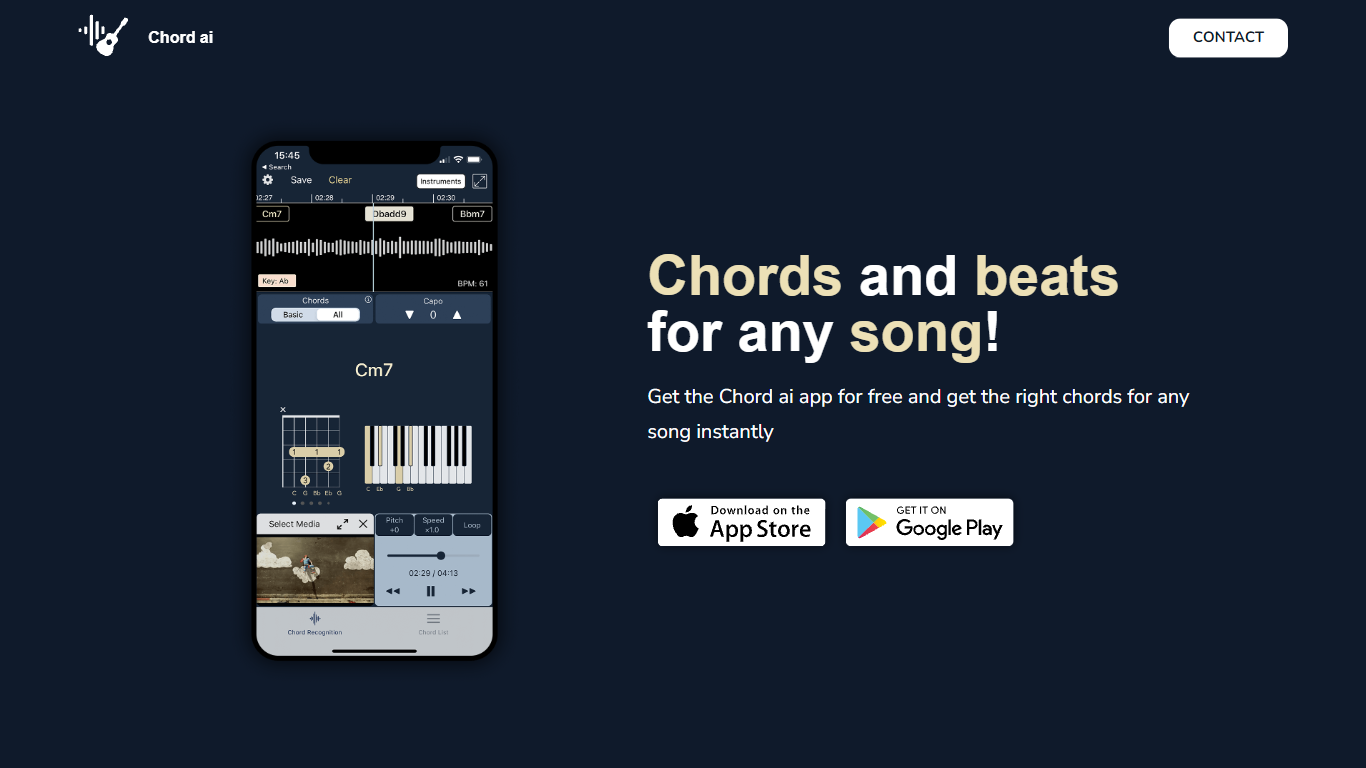
Chord ai detects chords, beats, and song keys from audio using deep learning on your phone. Load a track from YouTube, SoundCloud, local files, or your microphone and get chord charts with guitar, piano, or ukulele diagrams, plus tempo and bar segmentation from beat tracking.
Static chord websites give you crowd-sourced guesses that miss jazz extensions and altered dominants. Chord ai runs models on-device for seventh chords, diminished, and augmented shapes, and Pro adds 4-stem separation (bass, vocals, drums, other), audio-to-MIDI via Basic Pitch, and lyrics transcription through Whisper.
Musicians, cover artists, and students use it to learn songs by ear without hunting tabs online. The base app is free on iOS and Android with over 500,000 users; Chord ai Pro costs about $9 per month or $69 per year in the US via app store subscriptions.
Moshi AI Upvotes
Chord ai Upvotes
Moshi AI Top Features
Processes speech directly without a text pipeline in the middle
Listens and talks simultaneously with overlap and interruption support
Inner Monologue text stream improves speech quality and reasoning
Runs real-time on an L4 GPU or M3 MacBook Pro via the Mimi codec
Open weights on Hugging Face with PyTorch, Rust, and MLX inference code
Chord ai Top Features
Detects chords including sevenths, diminished, and altered dominants from YouTube, SoundCloud, files, or microphone input
Beat and downbeat tracking segments songs into bars with tempo detection
Pro separates audio into 4 stems (bass, vocals, drums, other) exportable as WAV files
Audio-to-MIDI conversion powered by Spotify Basic Pitch research
Lyrics transcription uses OpenAI Whisper for speech and lyrics recognition
Free on iOS and Android with 500,000+ users and 4.7+ average app store rating cited on the site
Moshi AI Category
- Audio Generation
Chord ai Category
- Audio Generation
Moshi AI Pricing Type
- Free
Chord ai Pricing Type
- Freemium