Moshi AI vs FineShare FineVoice
In the clash of Moshi AI vs FineShare FineVoice, which AI Audio Generation tool emerges victorious? We assess reviews, pricing, alternatives, features, upvotes, and more.
When we put Moshi AI and FineShare FineVoice head to head, which one emerges as the victor?
Let's take a closer look at Moshi AI and FineShare FineVoice, both of which are AI-driven audio generation tools, and see what sets them apart. Both tools have received the same number of upvotes from aitools.fyi users. Join the aitools.fyi users in deciding the winner by casting your vote.
Disagree with the result? Upvote your favorite tool and help it win!
Moshi AI

What is Moshi AI?
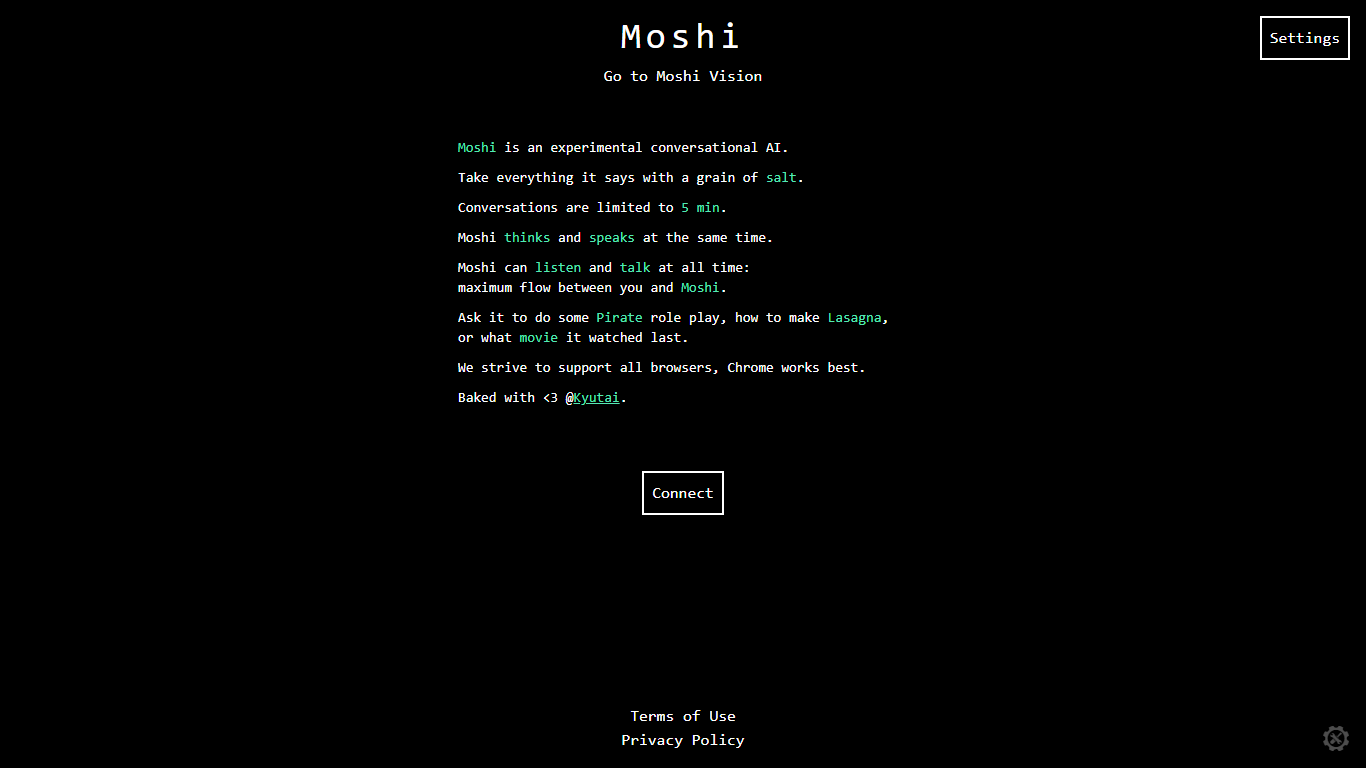
Moshi AI is a speech-native conversational model from Kyutai, a Paris-based open-science research lab. Instead of chaining speech recognition, text generation, and text-to-speech, Moshi processes audio directly and holds full-duplex voice conversations with minimal latency.
Its multi-stream design runs separate channels for the user, Moshi's spoken output, and an Inner Monologue text stream that improves coherence. That setup lets Moshi listen and talk at the same time, handle overlaps, interruptions, and backchanneling like a real conversation rather than rigid speaker turns.
Moshi is built on Helium, a 7B language model, and Mimi, Kyutai's neural audio codec. Weights and inference code ship for PyTorch, Rust, and MLX, and you can try it in the browser at moshi-chat.kyutai.org. Researchers, voice AI developers, and anyone building real-time spoken interfaces will find the most value here.
FineShare FineVoice
What is FineShare FineVoice?
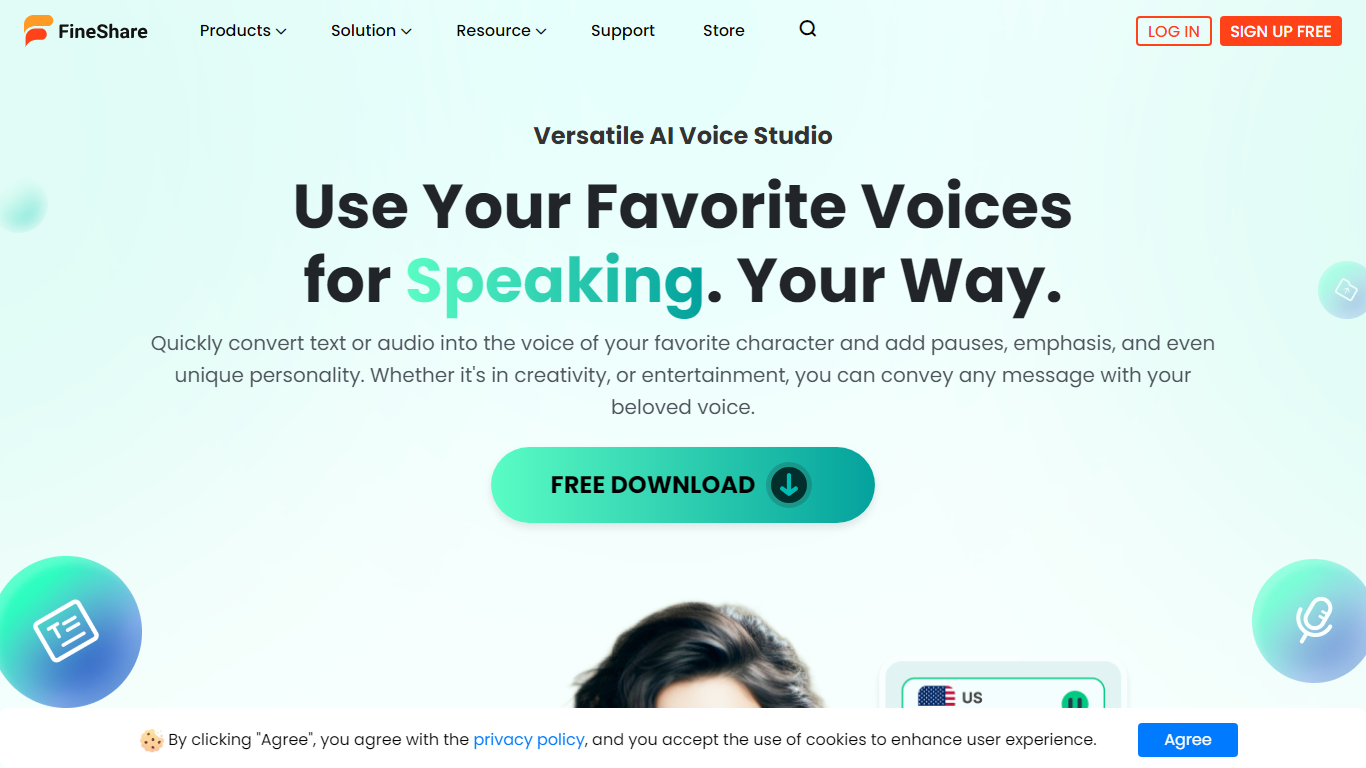
FineShare FineVoice is a browser-based AI audio studio for text-to-speech, voice changing, cloning, and sound design. You can generate narration from scripts, swap voices in recordings, design custom voices from text prompts, and create royalty-free sound effects or background music without opening separate apps.
Most voice generators focus on narration alone. FineVoice bundles speech-to-text, voice enhancement, lip sync, talking photos, and podcast generation in one workspace, plus a linked VoiceTrans desktop app with 1,000+ real-time voice models for games and chat. Video voiceover export and full video localization are still marked Coming Soon, so it fits audio-first creators more than teams that need finished video exports today.
YouTube creators, podcasters, educators, marketers, and developers use FineVoice for multilingual voiceovers, character acting, and API-driven apps. The marketing site advertises no sign-up for core online trials, with paid tiers that raise monthly character quotas, clone slots, and speech-to-text minutes.
Moshi AI Upvotes
FineShare FineVoice Upvotes
Moshi AI Top Features
Processes speech directly without a text pipeline in the middle
Listens and talks simultaneously with overlap and interruption support
Inner Monologue text stream improves speech quality and reasoning
Runs real-time on an L4 GPU or M3 MacBook Pro via the Mimi codec
Open weights on Hugging Face with PyTorch, Rust, and MLX inference code
FineShare FineVoice Top Features
1,500+ text-to-speech voices across 154 languages and accents
Voice cloning in 30 seconds with uploadable RVC models for custom workflows
AI voice changer with emotion tags like angry, happy, and sad for expressive speech
Speech-to-text exports in TXT, JSON, SRT, and VTT with automatic punctuation
Royalty-free AI sound effects and background music generated from text prompts
Developer API advertised with 99.9% uptime and JSON, SRT, and VTT output formats
Moshi AI Category
- Audio Generation
FineShare FineVoice Category
- Audio Generation
Moshi AI Pricing Type
- Free
FineShare FineVoice Pricing Type
- Freemium