Moshi AI vs Listen411
In the clash of Moshi AI vs Listen411, which AI Audio Generation tool emerges victorious? We assess reviews, pricing, alternatives, features, upvotes, and more.
When we put Moshi AI and Listen411 head to head, which one emerges as the victor?
Let's take a closer look at Moshi AI and Listen411, both of which are AI-driven audio generation tools, and see what sets them apart. Neither tool takes the lead, as they both have the same upvote count. Join the aitools.fyi users in deciding the winner by casting your vote.
Want to flip the script? Upvote your favorite tool and change the game!
Moshi AI

What is Moshi AI?
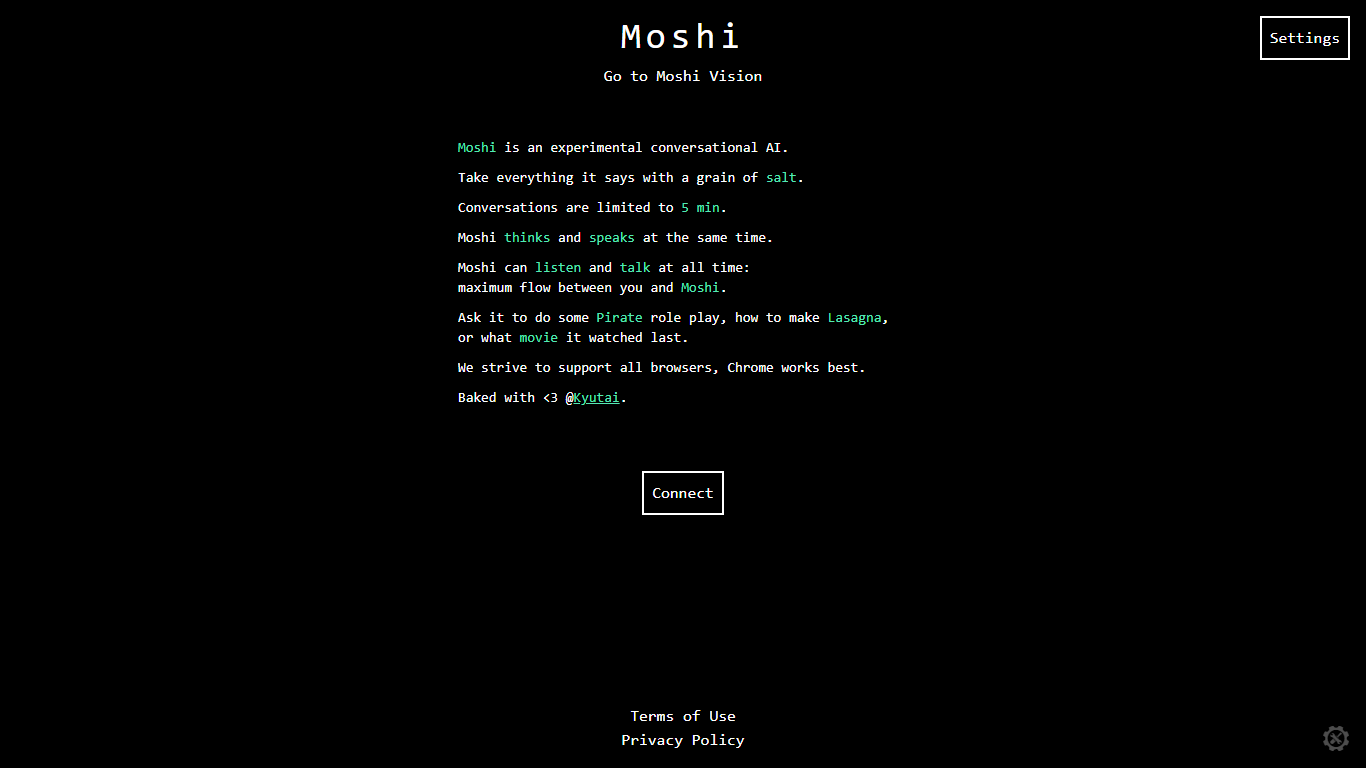
Moshi AI is a speech-native conversational model from Kyutai, a Paris-based open-science research lab. Instead of chaining speech recognition, text generation, and text-to-speech, Moshi processes audio directly and holds full-duplex voice conversations with minimal latency.
Its multi-stream design runs separate channels for the user, Moshi's spoken output, and an Inner Monologue text stream that improves coherence. That setup lets Moshi listen and talk at the same time, handle overlaps, interruptions, and backchanneling like a real conversation rather than rigid speaker turns.
Moshi is built on Helium, a 7B language model, and Mimi, Kyutai's neural audio codec. Weights and inference code ship for PyTorch, Rust, and MLX, and you can try it in the browser at moshi-chat.kyutai.org. Researchers, voice AI developers, and anyone building real-time spoken interfaces will find the most value here.
Listen411
What is Listen411?
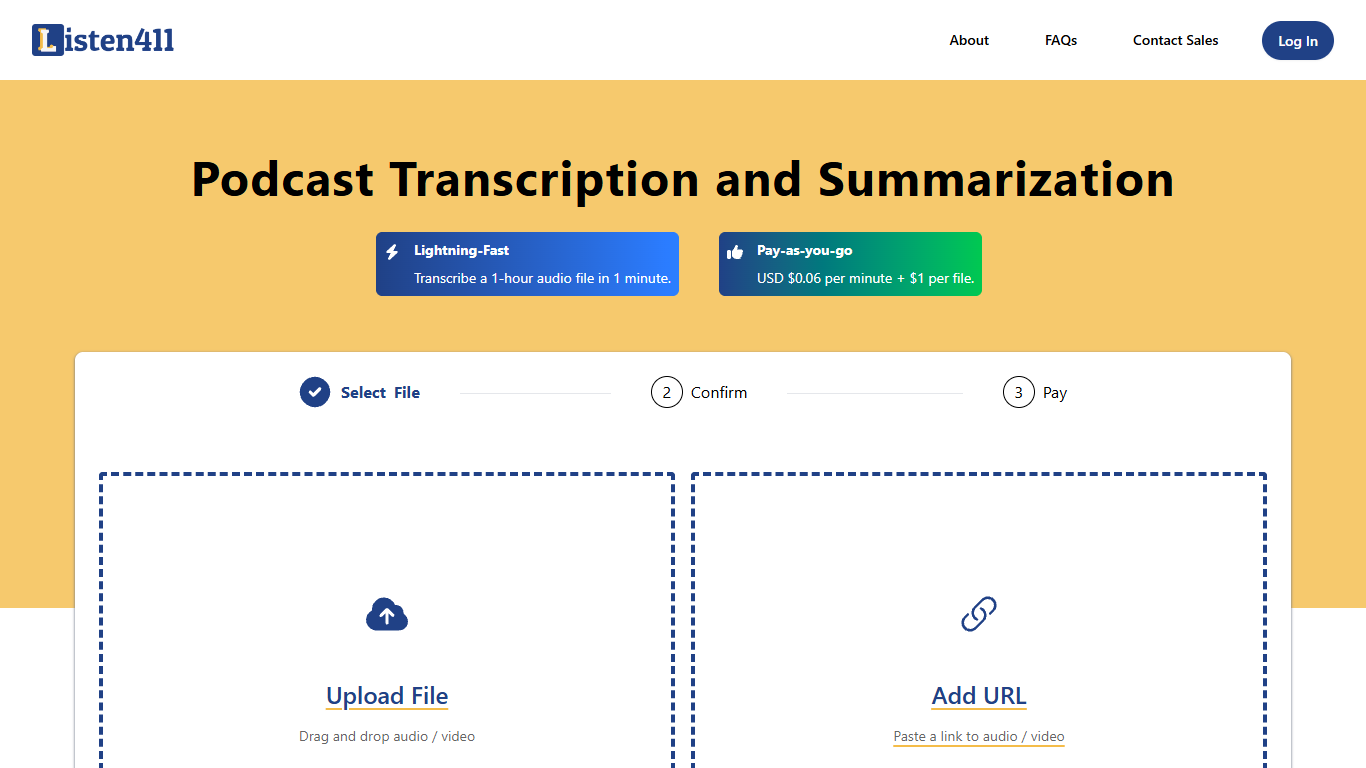
Listen411 transcribes and summarizes podcasts, audio files, and videos. Upload a file or paste a URL, and the service returns full transcripts plus summaries. The same product is also reachable at Transcript.New, a shortcut alias. It is built by Listen Notes, Inc., the team behind the Listen Notes podcast search engine.
Speed is the main draw. Listen411 says a 60-minute file typically finishes in under a minute. You get an email when the job is done, or you can check status from the dashboard after logging in.
Automatic language detection covers 20 languages, including English, Spanish, French, German, Italian, Portuguese, Dutch, Chinese, Greek, Japanese, Korean, Malay, Swedish, Turkish, Polish, Russian, Thai, Vietnamese, Indonesian, Hindi, and Ukrainian. Output ships as plain text, SRT, VTT, or JSON, with a separate summary file alongside the transcript.
Podcasters, journalists, and researchers who need fast turnaround on spoken content without committing to a subscription tend to be the core audience.
Moshi AI Upvotes
Listen411 Upvotes
Moshi AI Top Features
Processes speech directly without a text pipeline in the middle
Listens and talks simultaneously with overlap and interruption support
Inner Monologue text stream improves speech quality and reasoning
Runs real-time on an L4 GPU or M3 MacBook Pro via the Mimi codec
Open weights on Hugging Face with PyTorch, Rust, and MLX inference code
Listen411 Top Features
Upload a file or paste an audio or video URL to start a job
A 60-minute file typically finishes in under a minute
Automatic language detection across 20 supported languages
Transcripts arrive as plain text, SRT, VTT, or JSON
Summaries are included alongside the full transcript
Moshi AI Category
- Audio Generation
Listen411 Category
- Audio Generation
Moshi AI Pricing Type
- Free
Listen411 Pricing Type
- Paid