Moshi AI vs LMNT
In the battle of Moshi AI vs LMNT, which AI Audio Generation tool comes out on top? We compare reviews, pricing, alternatives, upvotes, features, and more.
Between Moshi AI and LMNT, which one is superior?
Upon comparing Moshi AI with LMNT, which are both AI-powered audio generation tools, Both tools are equally favored, as indicated by the identical upvote count. Every vote counts! Cast yours and contribute to the decision of the winner.
You don't agree with the result? Cast your vote to help us decide!
Moshi AI

What is Moshi AI?
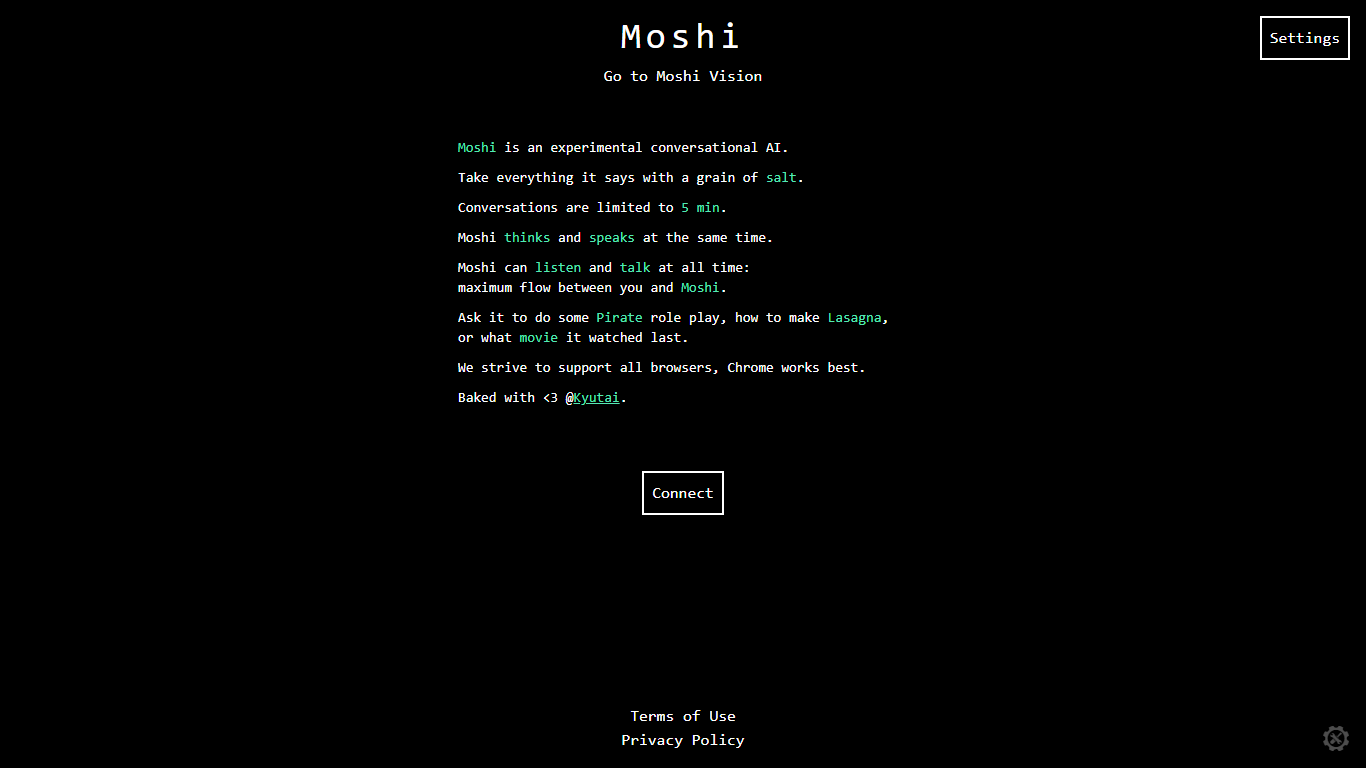
Moshi AI is a speech-native conversational model from Kyutai, a Paris-based open-science research lab. Instead of chaining speech recognition, text generation, and text-to-speech, Moshi processes audio directly and holds full-duplex voice conversations with minimal latency.
Its multi-stream design runs separate channels for the user, Moshi's spoken output, and an Inner Monologue text stream that improves coherence. That setup lets Moshi listen and talk at the same time, handle overlaps, interruptions, and backchanneling like a real conversation rather than rigid speaker turns.
Moshi is built on Helium, a 7B language model, and Mimi, Kyutai's neural audio codec. Weights and inference code ship for PyTorch, Rust, and MLX, and you can try it in the browser at moshi-chat.kyutai.org. Researchers, voice AI developers, and anyone building real-time spoken interfaces will find the most value here.
LMNT
What is LMNT?
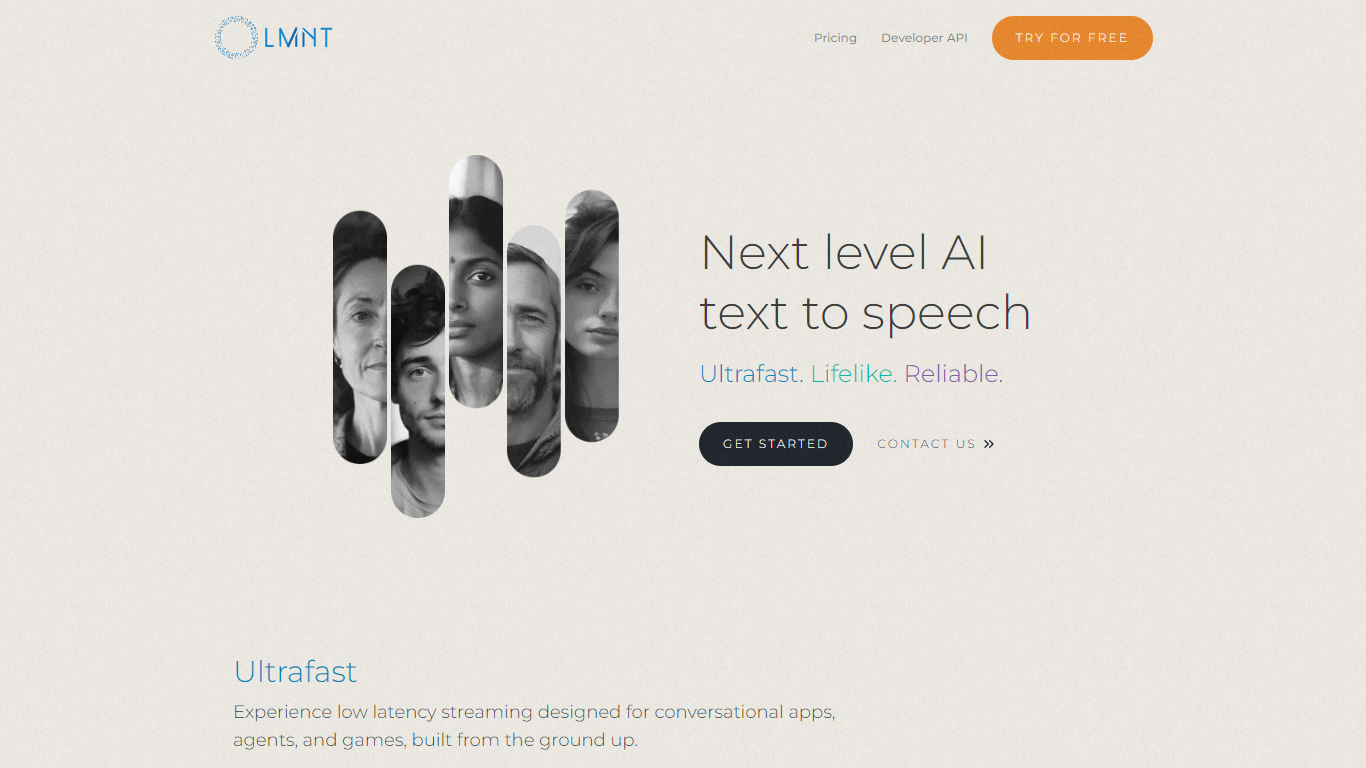
LMNT is an audio generation API for turning text into lifelike speech in live products. It targets conversational apps, voice agents, games, and other experiences where latency and voice quality both matter.
Most text-to-speech APIs cap voice clones or throttle concurrent streams. LMNT includes unlimited voice clones on every API plan, advertises no concurrency or rate limits, and streams audio in roughly 150 to 200 milliseconds. That trade-off favors builders shipping real-time voice rather than batch narration.
The product pairs a free web playground with a developer API. You can preview voices in the browser, then wire the same models into your app through streaming endpoints built for real-time use.
LMNT is built by a small team in Palo Alto with backgrounds at Google[x], Meta, Microsoft, and other startups. The company is backed by investors including Elad Gil and Conviction, and lists SOC-2 Type II compliance on its site. Customers shown on the homepage include Khan Academy, HeyGen, Vapi, Vercel, Unity, and Replit.
Moshi AI Upvotes
LMNT Upvotes
Moshi AI Top Features
Processes speech directly without a text pipeline in the middle
Listens and talks simultaneously with overlap and interruption support
Inner Monologue text stream improves speech quality and reasoning
Runs real-time on an L4 GPU or M3 MacBook Pro via the Mimi codec
Open weights on Hugging Face with PyTorch, Rust, and MLX inference code
LMNT Top Features
Clone a studio-quality voice from a 5-second recording
Generate speech in 31 languages, including mid-sentence language switches
Stream audio with roughly 150-200ms latency for live conversations
Use unlimited voice clones on API plans with no concurrency caps
Try voices free in the web playground before integrating the API
Moshi AI Category
- Audio Generation
LMNT Category
- Audio Generation
Moshi AI Pricing Type
- Free
LMNT Pricing Type
- Freemium