Moshi AI vs Melobytes AI music
Compare Moshi AI vs Melobytes AI music and see which AI Audio Generation tool is better when we compare features, reviews, pricing, alternatives, upvotes, etc.
Which one is better? Moshi AI or Melobytes AI music?
When we compare Moshi AI with Melobytes AI music, which are both AI-powered audio generation tools, The upvote count reveals a draw, with both tools earning the same number of upvotes. Be a part of the decision-making process. Your vote could determine the winner.
Not your cup of tea? Upvote your preferred tool and stir things up!
Moshi AI
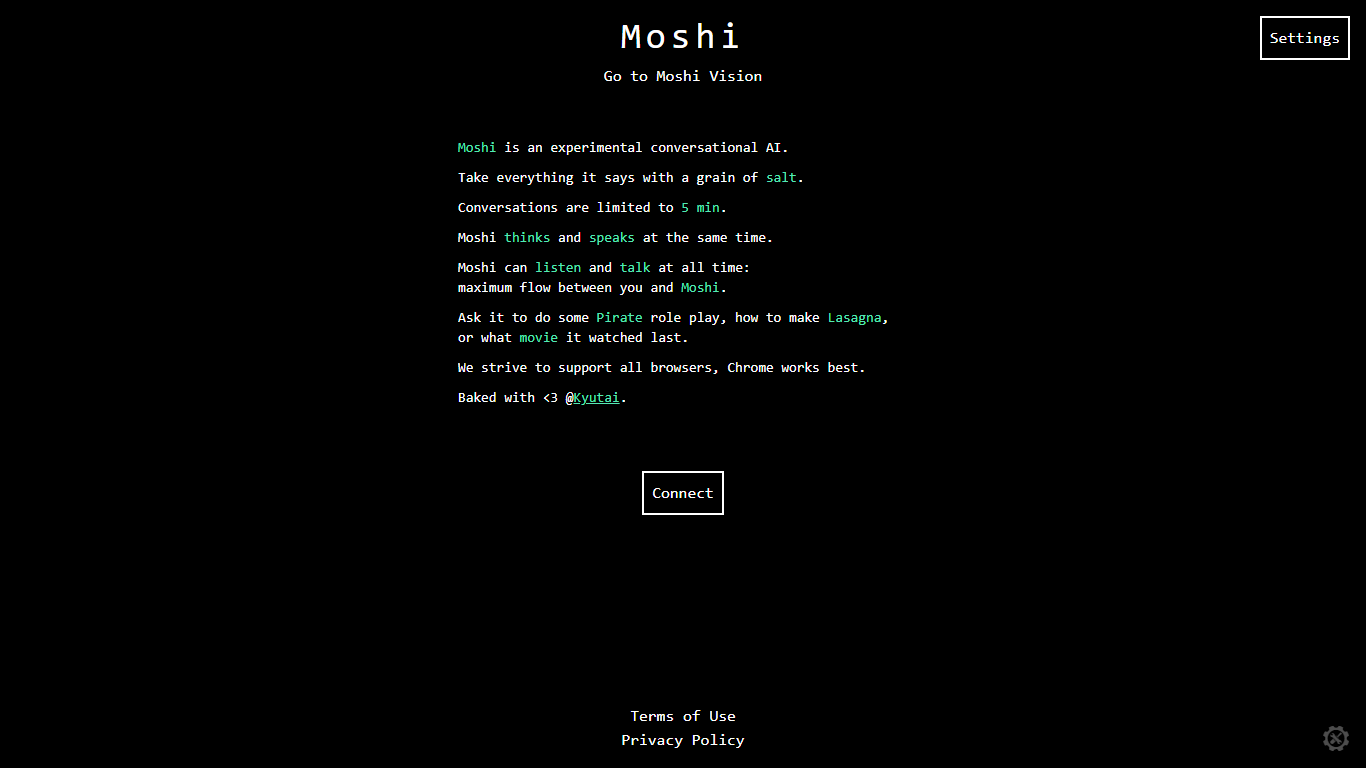

What is Moshi AI?
Moshi AI is a speech-native conversational model from Kyutai, a Paris-based open-science research lab. Instead of chaining speech recognition, text generation, and text-to-speech, Moshi processes audio directly and holds full-duplex voice conversations with minimal latency.
Its multi-stream design runs separate channels for the user, Moshi's spoken output, and an Inner Monologue text stream that improves coherence. That setup lets Moshi listen and talk at the same time, handle overlaps, interruptions, and backchanneling like a real conversation rather than rigid speaker turns.
Moshi is built on Helium, a 7B language model, and Mimi, Kyutai's neural audio codec. Weights and inference code ship for PyTorch, Rust, and MLX, and you can try it in the browser at moshi-chat.kyutai.org. Researchers, voice AI developers, and anyone building real-time spoken interfaces will find the most value here.
Melobytes AI music
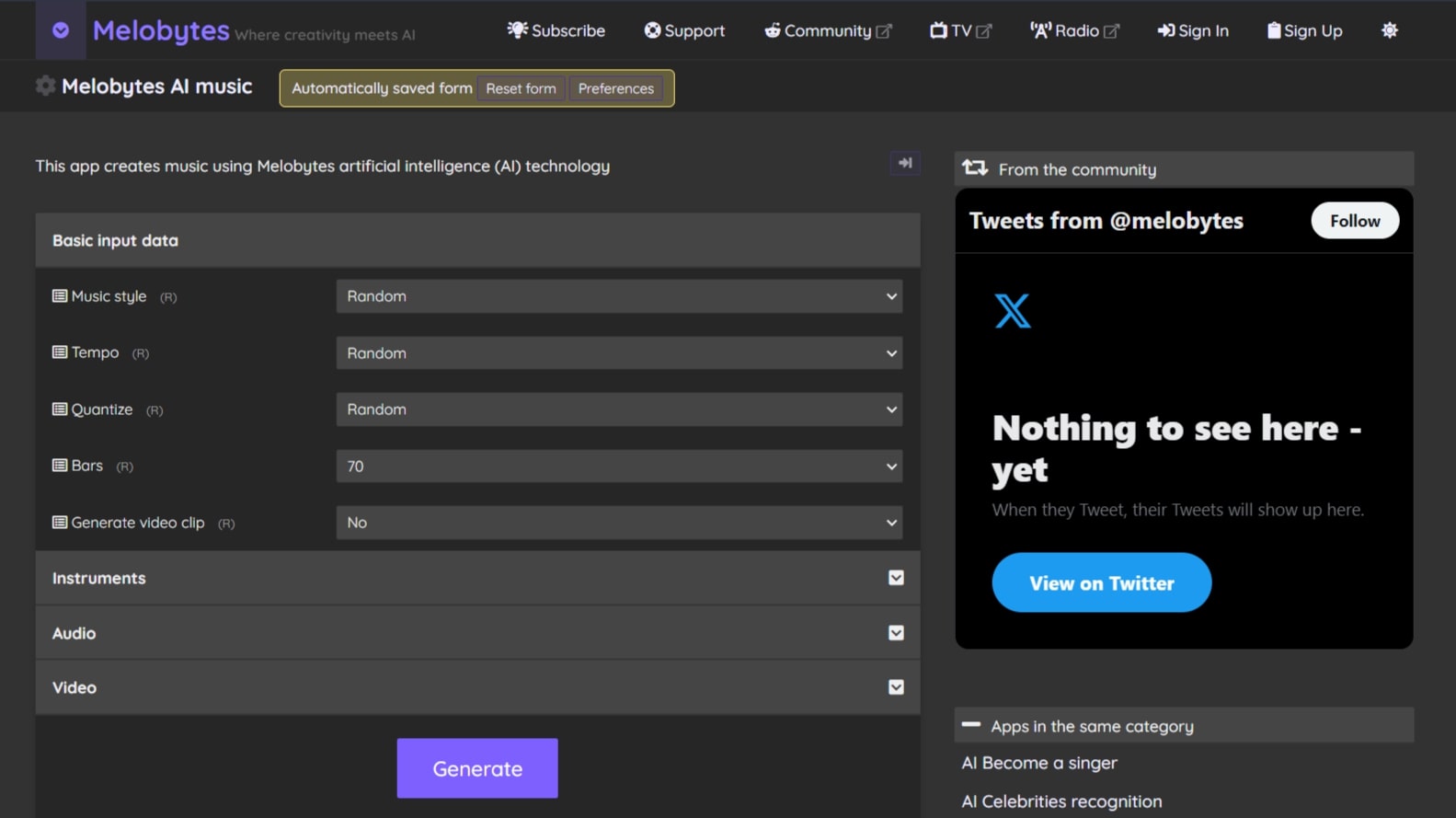
What is Melobytes AI music?
Melobytes AI music is a browser-based audio generator inside the Melobytes creative hub. You open the Random music app, run it, and it returns a procedurally unique track without you writing lyrics or arranging MIDI by hand. It sits alongside more than 100 other Melobytes apps for text-to-song, image-to-music, and video experiments.
Most AI music tools ask for a prompt or a style preset first. Melobytes AI music leans the other way: you trigger generation and get whatever the algorithm produces, which makes it better for quick inspiration than for drafting a finished release. Outputs can carry a Melobytes watermark on the free tier, and the site itself warns the apps are built for play rather than polished commercial masters.
Hobby musicians, meme creators, and YouTubers who want odd background loops without opening a DAW are the natural audience. Free accounts get up to 5 app runs per day across the whole Melobytes site, while a paid subscription removes the watermark, lifts queue limits, and unlocks unlimited runs.
Moshi AI Upvotes
Melobytes AI music Upvotes
Moshi AI Top Features
Processes speech directly without a text pipeline in the middle
Listens and talks simultaneously with overlap and interruption support
Inner Monologue text stream improves speech quality and reasoning
Runs real-time on an L4 GPU or M3 MacBook Pro via the Mimi codec
Open weights on Hugging Face with PyTorch, Rust, and MLX inference code
Melobytes AI music Top Features
Random music app returns procedurally unique audio on each run
Free Melobytes accounts include up to 5 app executions per day
Paid plans remove the Melobytes watermark and raise queue priority
Shares one login with 100+ Melobytes music, voice, and video apps
Midi file downloads are restricted on the free tier
Yearly subscription advertises 2 months free versus monthly billing
Moshi AI Category
- Audio Generation
Melobytes AI music Category
- Audio Generation
Moshi AI Pricing Type
- Free
Melobytes AI music Pricing Type
- Freemium