Moshi AI vs Musicfy
In the contest of Moshi AI vs Musicfy, which AI Audio Generation tool is the champion? We evaluate pricing, alternatives, upvotes, features, reviews, and more.
If you had to choose between Moshi AI and Musicfy, which one would you go for?
When we examine Moshi AI and Musicfy, both of which are AI-enabled audio generation tools, what unique characteristics do we discover? In the race for upvotes, Musicfy takes the trophy. The number of upvotes for Musicfy stands at 73, and for Moshi AI it's 6.
Disagree with the result? Upvote your favorite tool and help it win!
Moshi AI
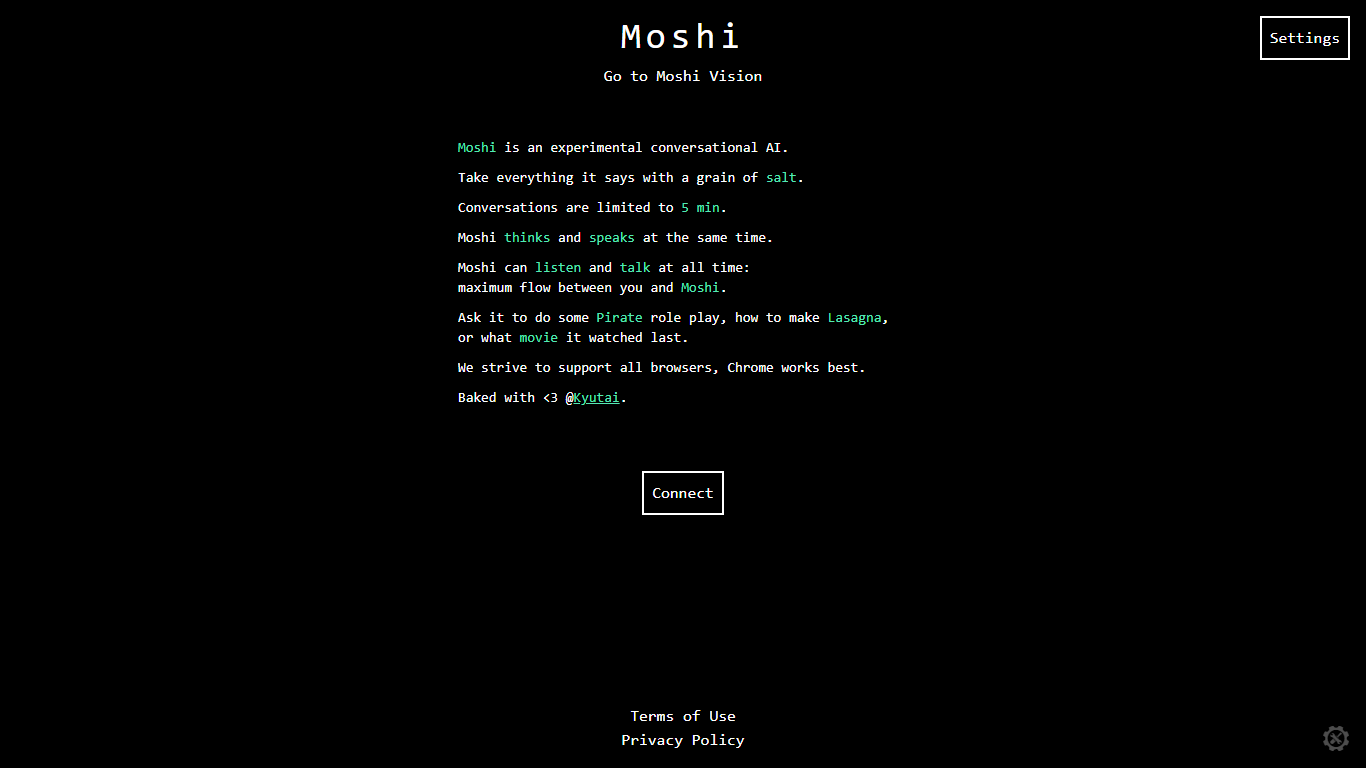

What is Moshi AI?
Moshi AI is a speech-native conversational model from Kyutai, a Paris-based open-science research lab. Instead of chaining speech recognition, text generation, and text-to-speech, Moshi processes audio directly and holds full-duplex voice conversations with minimal latency.
Its multi-stream design runs separate channels for the user, Moshi's spoken output, and an Inner Monologue text stream that improves coherence. That setup lets Moshi listen and talk at the same time, handle overlaps, interruptions, and backchanneling like a real conversation rather than rigid speaker turns.
Moshi is built on Helium, a 7B language model, and Mimi, Kyutai's neural audio codec. Weights and inference code ship for PyTorch, Rust, and MLX, and you can try it in the browser at moshi-chat.kyutai.org. Researchers, voice AI developers, and anyone building real-time spoken interfaces will find the most value here.
Musicfy
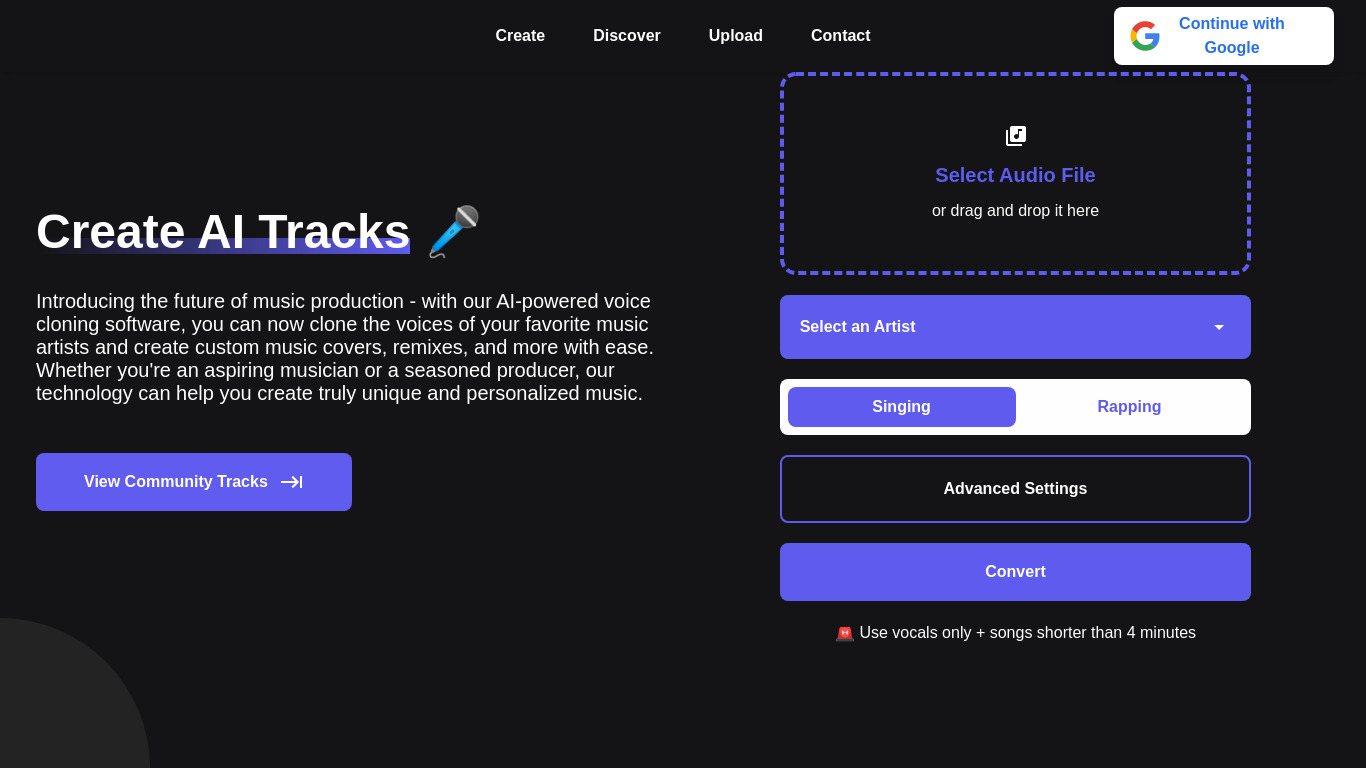
What is Musicfy?
Musicfy turns text, your voice, or a library voice into full songs and vocal tracks. You pick from 100,000-plus community voices or upload your own vocals to train a custom model that sounds like you. The web app at create.musicfy.lol handles text-to-music, voice conversion, parody voices, and original song creation without a traditional DAW setup.
Most AI music tools focus on instrumental beds or short clips. Musicfy centers on replaceable vocals: copyright-free voice packs you can drop into your tracks, voice targeting on paid tiers, and plans that scale from 150 to 1,000 songs per month. Stem splitting is listed as coming soon, which would put it closer to a vocal-first workstation than a one-shot generator.
It fits bedroom producers, DJs who need quick vocal takes, indie artists skipping studio vocalist fees, and game developers who want character voices without hiring actors. The free tier needs no credit card, and paid plans add commercial licensing, faster generation, and larger upload limits up to 150 MB on Studio.
Moshi AI Upvotes
Musicfy Upvotes
Moshi AI Top Features
Processes speech directly without a text pipeline in the middle
Listens and talks simultaneously with overlap and interruption support
Inner Monologue text stream improves speech quality and reasoning
Runs real-time on an L4 GPU or M3 MacBook Pro via the Mimi codec
Open weights on Hugging Face with PyTorch, Rust, and MLX inference code
Musicfy Top Features
Choose from 100,000-plus community voices or upload vocals to train a custom AI model
Text-to-music turns written prompts into full songs without a separate DAW
Starter plan includes 150 songs per month with 2 custom voices and 25 MB uploads
Professional tier adds a commercial license, 400 songs per month, and 100 MB uploads
Copyright-free vocal library usable in tracks uploaded to streaming platforms
Parody voice remastering and voice-to-instrument conversion built into the studio
Moshi AI Category
- Audio Generation
Musicfy Category
- Audio Generation
Moshi AI Pricing Type
- Free
Musicfy Pricing Type
- Freemium