Moshi AI vs MusicLM
When comparing Moshi AI vs MusicLM, which AI Audio Generation tool shines brighter? We look at pricing, alternatives, upvotes, features, reviews, and more.
In a comparison between Moshi AI and MusicLM, which one comes out on top?
When we put Moshi AI and MusicLM side by side, both being AI-powered audio generation tools, The upvote count is neck and neck for both Moshi AI and MusicLM. Every vote counts! Cast yours and contribute to the decision of the winner.
Disagree with the result? Upvote your favorite tool and help it win!
Moshi AI

What is Moshi AI?
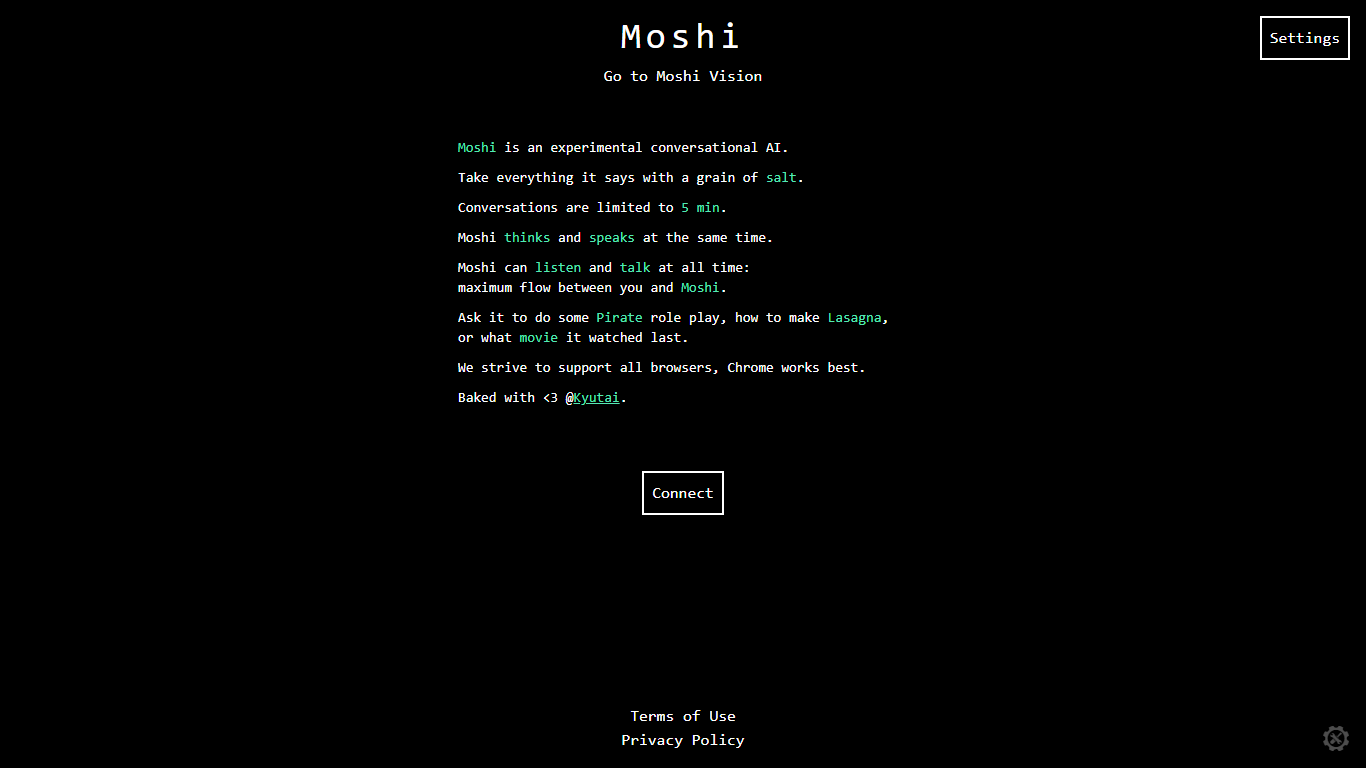
Moshi AI is a speech-native conversational model from Kyutai, a Paris-based open-science research lab. Instead of chaining speech recognition, text generation, and text-to-speech, Moshi processes audio directly and holds full-duplex voice conversations with minimal latency.
Its multi-stream design runs separate channels for the user, Moshi's spoken output, and an Inner Monologue text stream that improves coherence. That setup lets Moshi listen and talk at the same time, handle overlaps, interruptions, and backchanneling like a real conversation rather than rigid speaker turns.
Moshi is built on Helium, a 7B language model, and Mimi, Kyutai's neural audio codec. Weights and inference code ship for PyTorch, Rust, and MLX, and you can try it in the browser at moshi-chat.kyutai.org. Researchers, voice AI developers, and anyone building real-time spoken interfaces will find the most value here.
MusicLM
What is MusicLM?
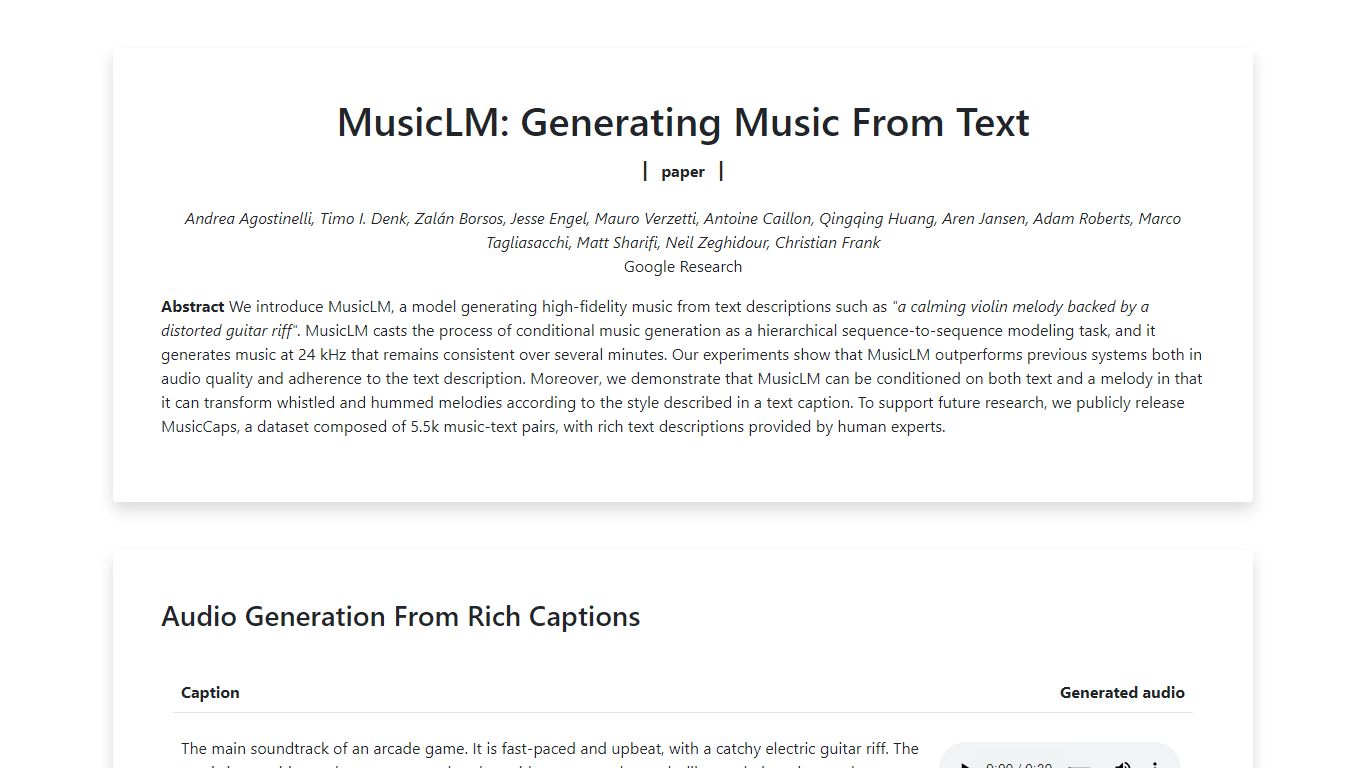
MusicLM is a Google Research audio generation model that creates music from text captions at 24 kHz. The public examples page hosts sample clips for prompts like arcade soundtracks, reggaeton-EDM fusions, and relaxing jazz, plus longer story-mode generations that shift styles across timed segments. Google released the MusicCaps dataset of 5,500 music-text pairs alongside the paper.
Unlike consumer apps that ship one prompt box, MusicLM was published as a research demo with pre-generated samples rather than a login product. Its headline trick is joint text-and-melody conditioning: you can hum or whistle a tune and have the model re-render it in a new genre described in text. Story mode chains multiple captions so the music evolves across sections.
MusicLM matters as the research foundation behind Google's later Lyria music models, but this page is for listening to published examples, not creating new tracks interactively. Researchers and musicians study it for long-form consistency, painting-to-music conditioning, and melody transfer results documented in the 2023 paper.
Moshi AI Upvotes
MusicLM Upvotes
Moshi AI Top Features
Processes speech directly without a text pipeline in the middle
Listens and talks simultaneously with overlap and interruption support
Inner Monologue text stream improves speech quality and reasoning
Runs real-time on an L4 GPU or M3 MacBook Pro via the Mimi codec
Open weights on Hugging Face with PyTorch, Rust, and MLX inference code
MusicLM Top Features
Generates music at 24 kHz from rich text captions
Story mode chains multiple text prompts across timed segments
Text-and-melody conditioning transforms hummed or whistled tunes into new styles
Painting caption conditioning pairs artwork descriptions with generated audio
Long-generation examples cover melodic techno, swing, and relaxing jazz
MusicCaps dataset includes 5,500 expert-written music-text pairs
Moshi AI Category
- Audio Generation
MusicLM Category
- Audio Generation
Moshi AI Pricing Type
- Free
MusicLM Pricing Type
- Free